


Hailong Sandblasted Glass
Sandblasted glass: Technology and applications in modern industry.
The sandblasted glass manufacturing process and key technical factors.
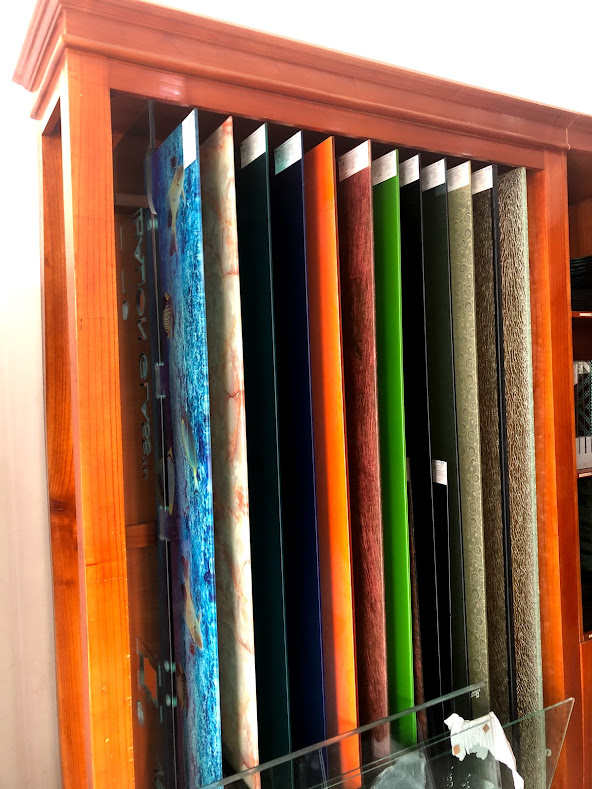
Common types of sandblasted glass and their specific applications.
- Uniformly frosted sandblasted glass: creates a slightly frosted surface, often used for bathroom doors and partitions to ensure privacy while still allowing light to pass through.
- Sandblasted patterned glass: creates diverse decorative patterns such as stripes, polka dots, and floral designs, suitable for high-end interior products and artistic glass doors.
- Frosted sandblasted glass: highly opaque, often used in applications requiring complete light blockage or to create special aesthetic effects.
- High aesthetic appeal: the ability to create a wide variety of patterns and surface effects, suitable for many design styles.
- Enhanced privacy: the frosted surface limits visibility while still allowing light to pass through, making it ideal for spaces requiring privacy.
- Scratch resistance: The sandblasted surface of the glass minimizes scratches compared to regular clear glass.
- Easily combined with other materials: sandblasted glass can be combined with colored glass, laminated safety glass, or tempered glass to enhance functionality and durability.
- Difficulty in cleaning: the rough surface easily attracts dust and stains, requiring more thorough and frequent cleaning compared to clear glass.
- Higher production costs: Due to the complex sandblasting process and the need for specialized equipment, sandblasted glass is usually more expensive than regular glass.
- Transparency limitations: Sandblasted glass is not suitable for applications requiring complete transparency or maximum light transmission.
Standards and regulations related to sandblasted glass
- Safety glass standards: Sandblasted glass is often combined with laminated or tempered glass to meet safety standards such as EN 12150 and ANSI Z97.1.
- Environmental and occupational safety standards: Sandblasting procedures must comply with OSHA or equivalent regulations regarding dust control, emissions control, and worker protection.
- Surface quality standards: ensuring that the opacity, roughness, and pattern meet the technical and aesthetic requirements as per the contract or industry standards.
Impact on Quality and Safety,
Economic and Social Benefits,
Benefits of Standard Compliance,
Positive Environmental Impact
Sandblasted glass is a special material whose surface is treated using a sandblasting method to create a matte, textured, or decorative pattern. The sandblasting process uses small abrasive particles fired at high pressure onto the glass surface, removing impurities, creating roughness, or producing various aesthetic effects. This is one of the most common glass surface treatment techniques in the construction, interior design, and arts and crafts industries.
Sandblasting not only enhances the aesthetic appeal but also improves the technical properties of glass, such as scratch resistance, reduced light reflection, and increased adhesion for subsequent coatings. Sandblasted glass can be applied in various fields, from glass doors and partitions to interior decoration products and advertising signs.

The sandblasting process for glass production involves many complex technical steps to ensure the quality and durability of the final product. First, the raw glass is thoroughly cleaned to remove dust, grease, and other impurities adhering to the surface. Then, the glass is placed in a sandblasting chamber, where abrasive particles such as silica sand, aluminum oxide, or glass beads are blasted onto the glass surface under high pressure.
Spray pressure, abrasive particle size, spray distance, and spray time are key technical factors affecting the opacity and pattern on glass. Precisely adjusting these parameters allows for the creation of diverse surface effects, from subtle opacity to complete opacity or complex patterns as required by the design.
To ensure safety and quality, the sandblasting process is usually carried out in a closed environment with a dust extraction system and strict personal protective equipment. In addition, sandblasted glass can be combined with other surface treatment techniques such as film coating, painting, or decal application to enhance functionality and aesthetics.
Sandblasted glass is classified based on the degree of opacity and the type of pattern created on the surface. Some common types include:
Each type of sandblasted glass has its own advantages, suitable for different uses in construction and interior design. For example, uniformly frosted sandblasted glass is preferred in offices to create privacy while maintaining an airy feel. Meanwhile, patterned sandblasted glass is widely used in showrooms, hotels, or restaurants to enhance aesthetics and luxury.
Sandblasted glass possesses many outstanding advantages, making it a top choice in many fields:
However, sandblasted glass also has some limitations that need to be considered during use:
To ensure quality and safety when using sandblasted glass, products must comply with international and domestic technical standards. Some important standards include:
The Significance of Adhering to Standards
Adherence to these standards not only helps improve product quality but also ensures safety for users and the surrounding environment.
Adhering to standards helps businesses enhance their reputation in the market, building trust with customers and partners. At the same time, it contributes to minimizing legal risks and costs arising from product defects or unforeseen incidents.
Adopting environmentally friendly standards helps reduce waste and toxic emissions, protect natural resources, and promote sustainable development. This not only brings long-term benefits to society but also enhances the company's image within the community.
Furthermore, the strict application of standards contributes to minimizing maintenance costs, reducing accident risks, and enhancing brand reputation in the market. This creates sustainable economic benefits while promoting comprehensive social development.
Contact Ngoc Quyet Company to receive samples and detailed price quotes for sandblasted glass, meeting all your technical and aesthetic requirements.
Ngoc Quyet specializes in distributing construction glass to glass dealers, aluminum and glass contractors, processing workshops, and construction projects. For large orders, customers should provide the type of glass, thickness, size, quantity, and delivery location to receive appropriate configuration advice and pricing.

bài viết mới

Consultation Hotline: 0966 321 655
Chuyên gia tư vấn Care For - Live Your Dream
Connect directly via Zalo at 0966 321 655.
Khám phá sản phẩm Care For - Live Your Dream
WHAT CUSTOMERS SAY ABOUT US

I am very satisfied with the attentive and professional customer service team. Even though it was quite a while after the project was handed over, they were very enthusiastic and quick to assist me when I needed it!
Anh Tuấn Phương
Thu Duc - Ho Chi Minh City

We are very pleased to cooperate with Ngoc Quyet Glass Agency – a reputable supplier of glass for aluminum and glass contractors and construction projects.
Mr. Bao Ngoc
District 10 - Ho Chi Minh City
Liên hệ
HanoiHo Chi MinhHai PhongQuang Ninh
PROJECT PHOTOGRAPHS
Ngoc Quyet Company specializes in distributing construction glass, serving dealers, aluminum and glass contractors, processing workshops, and construction projects.















































NGỌC QUYẾT
With extensive experience in the field of building glass, we specialize in distributing building glass to dealers, aluminum and glass contractors, and construction projects.
Professional consulting
Success stems from preparation; we always advise our clients on the most suitable solutions for their project requirements.

Ngoc Quyet Company
Delivery policy to the construction site.
Return policy: 24-48 hours
Warranty policy, if applicable.
Nationwide Glass Supply
Ngoc Quyet Company's team specializes in distributing building glass to dealers, aluminum and glass contractors, and construction projects.










