Elevator price quote for townhouses in Hanoi
Elevator price quote for townhouses in Hanoi
The unique characteristics of Hanoi's tube houses and factors influencing elevator pricing.
Townhouses in Hanoi typically have narrow facades, considerable depth, are 4-8 stories high, constructed of reinforced concrete, and have many limitations in terms of technical space. These specific characteristics mean that elevator installation costs for townhouses in Hanoi are heavily influenced by a range of factors: shaft dimensions, load capacity, number of stops, type of traction machine, machine room layout, landing door solutions, and construction conditions in narrow alleys. A general price cannot be applied to all projects; a detailed survey of the existing conditions, structural drawings, and the family's actual needs are necessary.
The first factor directly impacting costs is the elevator load capacity . For townhouses, common load capacities include 250kg, 300kg, 350kg, and 450kg, corresponding to 3–6 users. The higher the load capacity, the greater the requirements for elevator shaft dimensions, motor power, cabin size, and counterweight, leading to higher equipment and installation costs. In addition, the number of floors served is also a significant variable: each additional stop adds costs for landing doors, door locks, sensors, guide rails, cables, and installation labor.
Space in narrow townhouses is often limited, so the choice of elevator with or without a machine room significantly impacts the price. Traditional elevators with machine rooms usually have lower equipment costs, but require a large attic height and a separate machine room. Conversely, machine-roomless elevators (MRLs) use a traction machine located in the elevator shaft, optimizing overall height and making them suitable for renovated townhouses or houses in narrow alleys with height restrictions; however, the equipment cost and installation requirements are higher.
For projects within Hanoi's inner city, transportation and construction conditions are also factors that cause price fluctuations. Projects located in narrow alleys where trucks cannot access require equipment to be transported by smaller vehicles or manually, resulting in additional labor costs and extended construction time. Furthermore, requirements for safety standards, fire prevention, noise control, and vibration damping in densely populated residential areas necessitate the use of higher-quality components, thus impacting the overall cost.
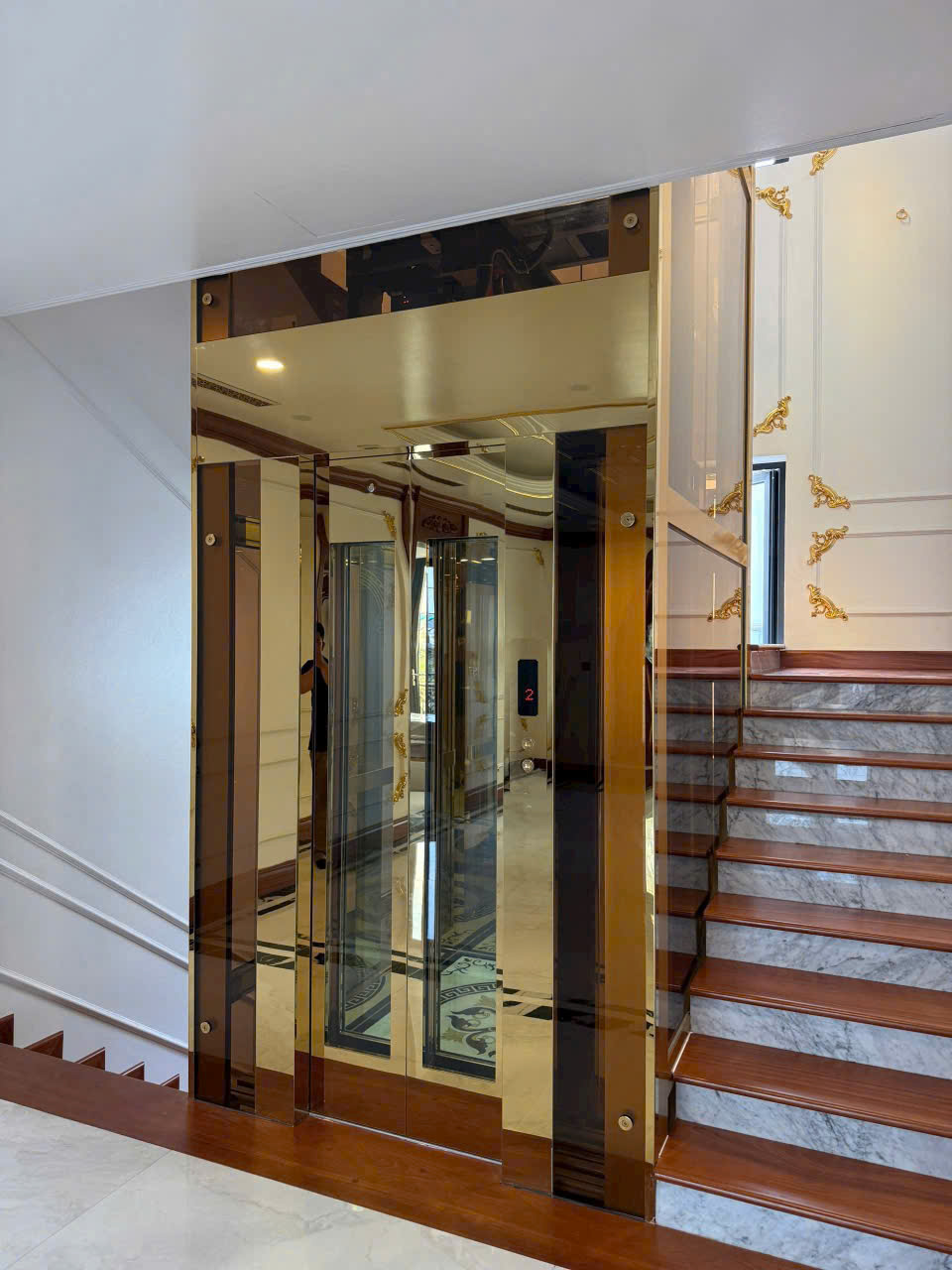
Reference price range for elevators in townhouses in Hanoi, based on common configurations.
To create a reasonable elevator cost estimate for a townhouse in Hanoi , it's necessary to clearly separate the costs of equipment, transportation and installation, and the construction of the elevator shaft. For 4-7 story residential buildings, the common configuration is an elevator with a load capacity of 300-450kg, a speed of 60-90 m/min, 4-7 stops, and using 1-phase or 3-phase electricity depending on the power supply. Each configuration will have a different reference price range, depending on the origin of the equipment (imported complete units or joint ventures – localized cabin and mechanical frame).
In the joint venture elevator segment (imported traction machines and control cabinets, domestically manufactured cabin and mechanical frame), the price for a 5-story townhouse elevator with a 350kg load and a speed of 60 m/min typically ranges from several hundred million VND, including basic equipment, inner-city transportation, and standard installation. If increased to 7-8 stories, with a 450kg load and a speed of 90 m/min, using a gearless traction machine and a modern inverter control system, the cost can increase significantly due to higher technical requirements and a greater number of components.
With elevators imported as complete units from major brands, the price for townhouses in Hanoi is usually significantly higher than that of joint-venture elevators, due to licensing fees, international logistics, import taxes, and maintenance requirements according to manufacturer standards. However, the advantages include high system compatibility, smooth operation, energy efficiency, and long component lifespan. Homeowners need to consider the balance between initial investment budget and long-term operating and maintenance costs to choose the appropriate configuration.
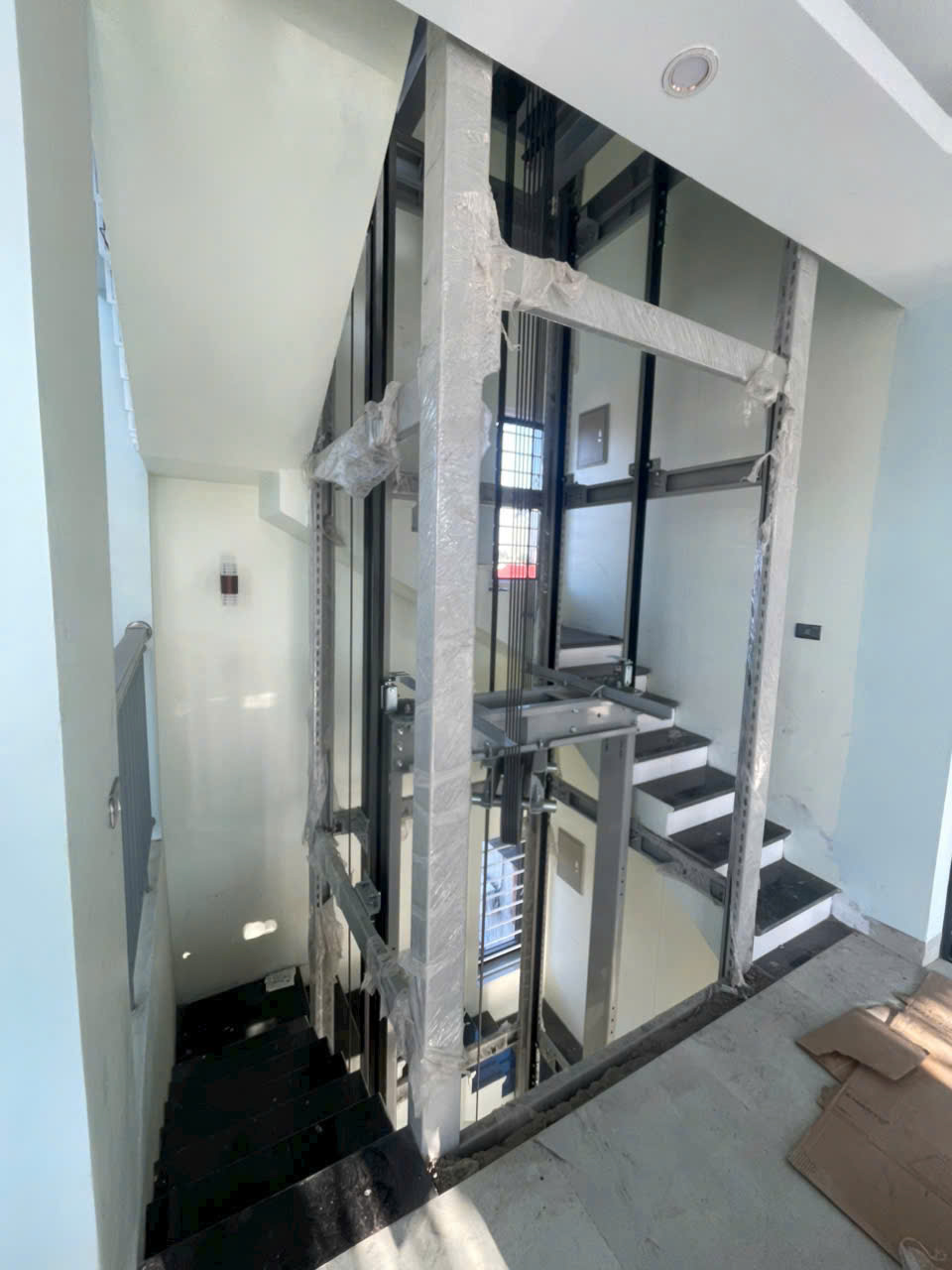
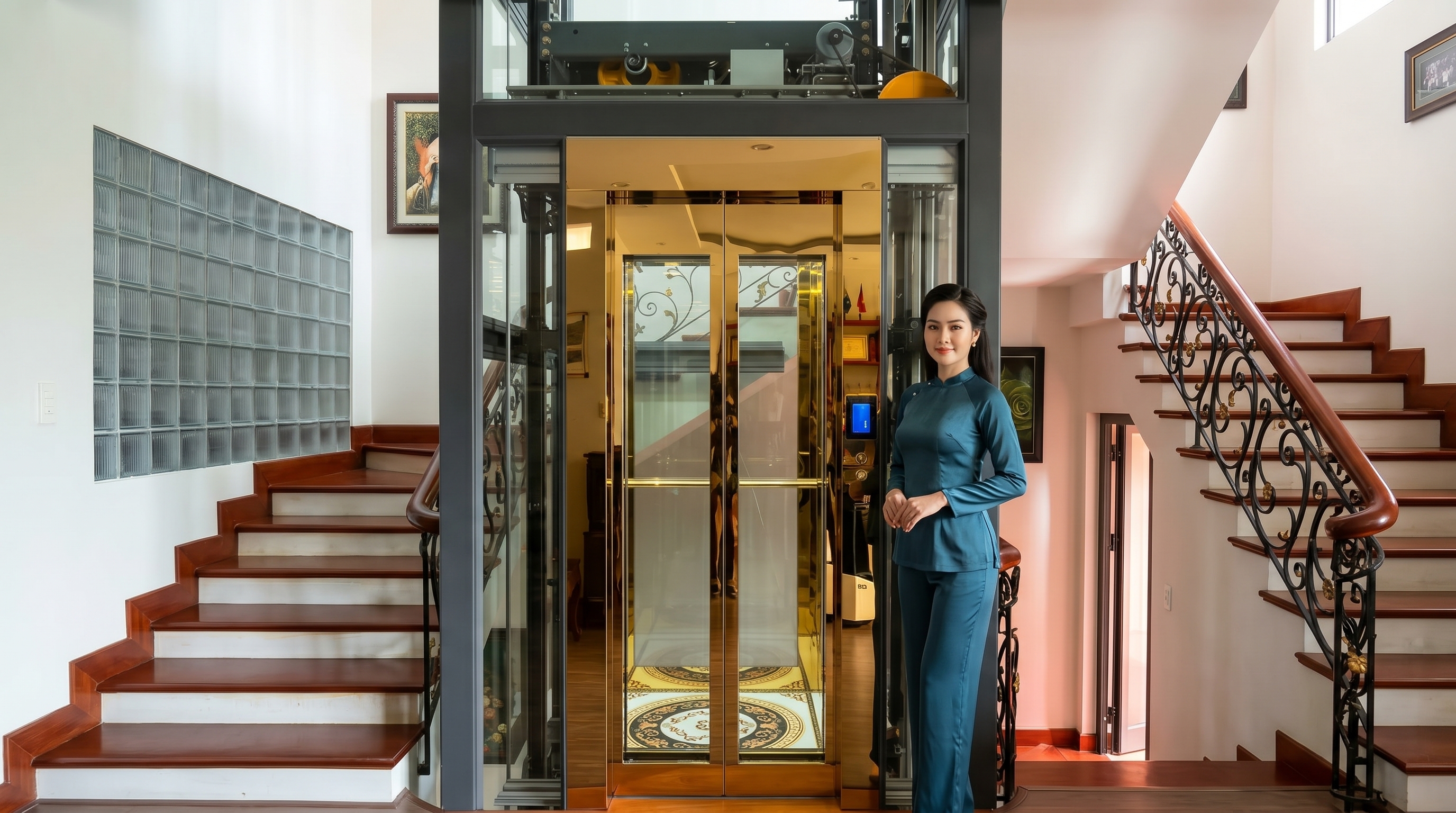
Besides equipment costs, the cost of constructing the elevator shaft (concrete pouring, wall construction, beam reinforcement, machine room or steel frame construction) often accounts for a significant proportion of the total investment. For renovated townhouses, if space is limited, a steel-framed glass elevator solution may be necessary , installed outside the house or in the atrium. The cost of the structure and tempered glass finishing will be higher than a traditional brick elevator shaft. Additionally, auxiliary items such as stainless steel landing doors, stone cladding for the cabin floor, handrails, false ceilings, and decorative LED lighting also affect the total cost estimate.
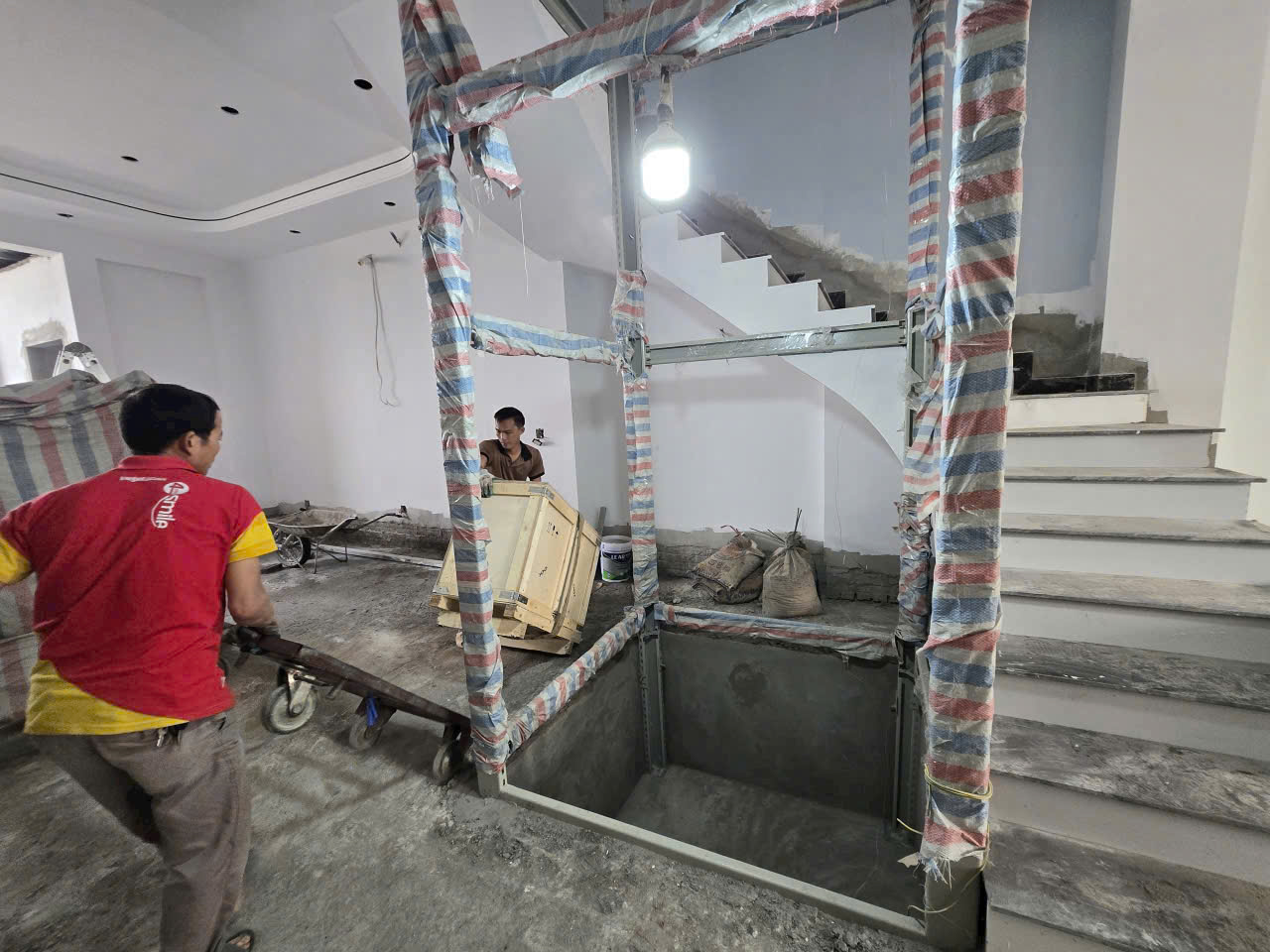
These items are usually priced separately in the quotation.
When analyzing detailed price quotes, it's important to note that many items are not included in the standard equipment package but are charged separately. Typically, 3-phase electrical wiring to the control panel , grounding system, voltage stabilizer (if needed), the cost of fire-resistant landing doors according to fire safety requirements, or high-end cabin interior finishing items (wood paneling, full-length mirrors, patterned stainless steel, natural stone flooring) will be listed separately in the price quote. Understanding the scope of services provided allows homeowners to compare quotes between different suppliers transparently, avoiding confusion between package prices and prices that exclude construction, electrical, and finishing costs.
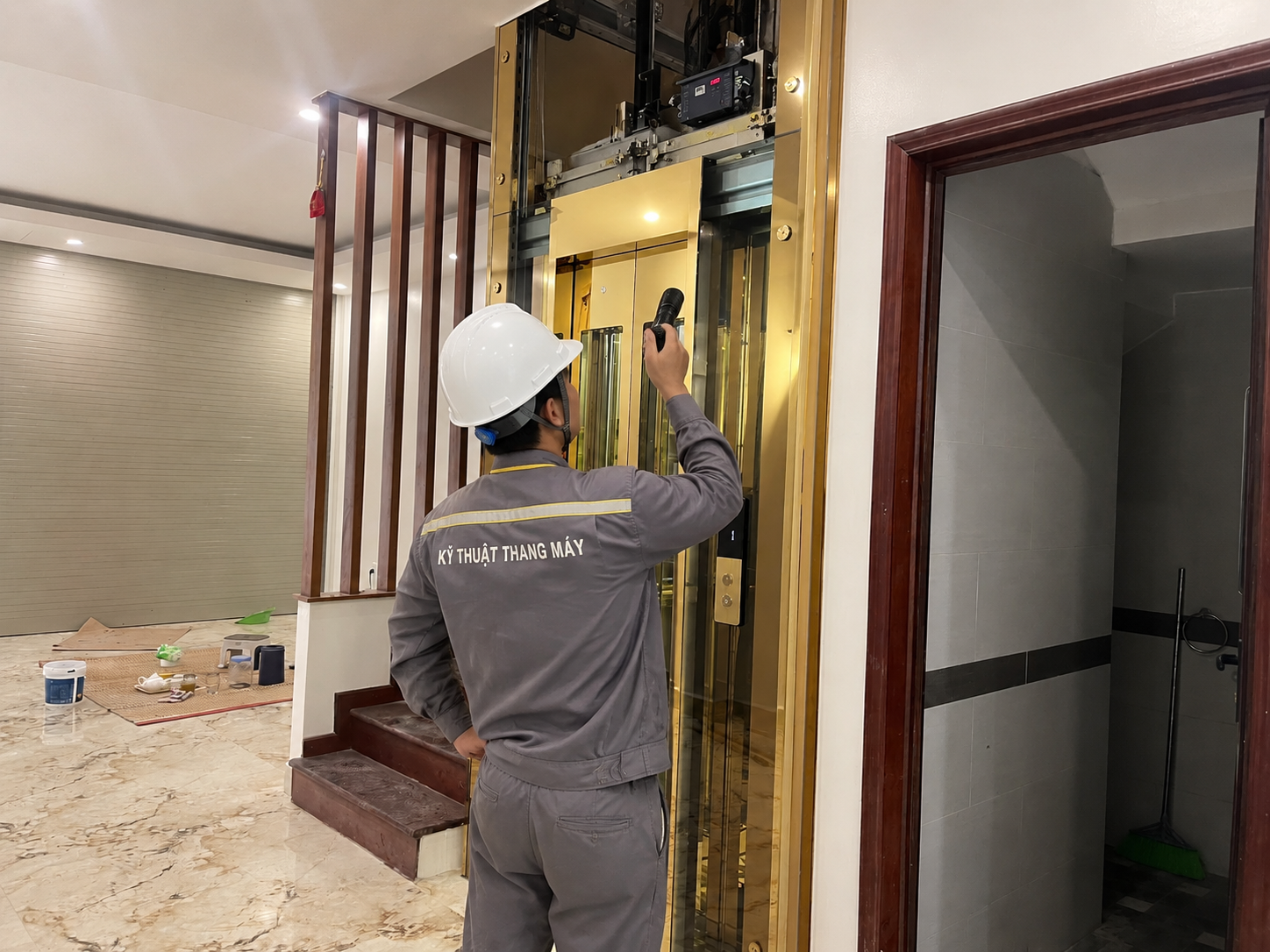
Furthermore, post-warranty maintenance costs are also a factor that needs to be clarified right from the quotation stage. Most elevator suppliers in Hanoi offer a 12-18 month warranty, along with free periodic maintenance during this period. After that, annual maintenance costs will depend on the elevator configuration, frequency of use, and commitment to response time in case of a malfunction. Choosing a supplier with a permanent technical team in Hanoi, readily available spare parts, and standardized maintenance procedures will help reduce the risk of prolonged elevator downtime, which is especially important for mixed-use buildings (residential and commercial).
Technical criteria and experience in selecting the optimal elevator for townhouses.
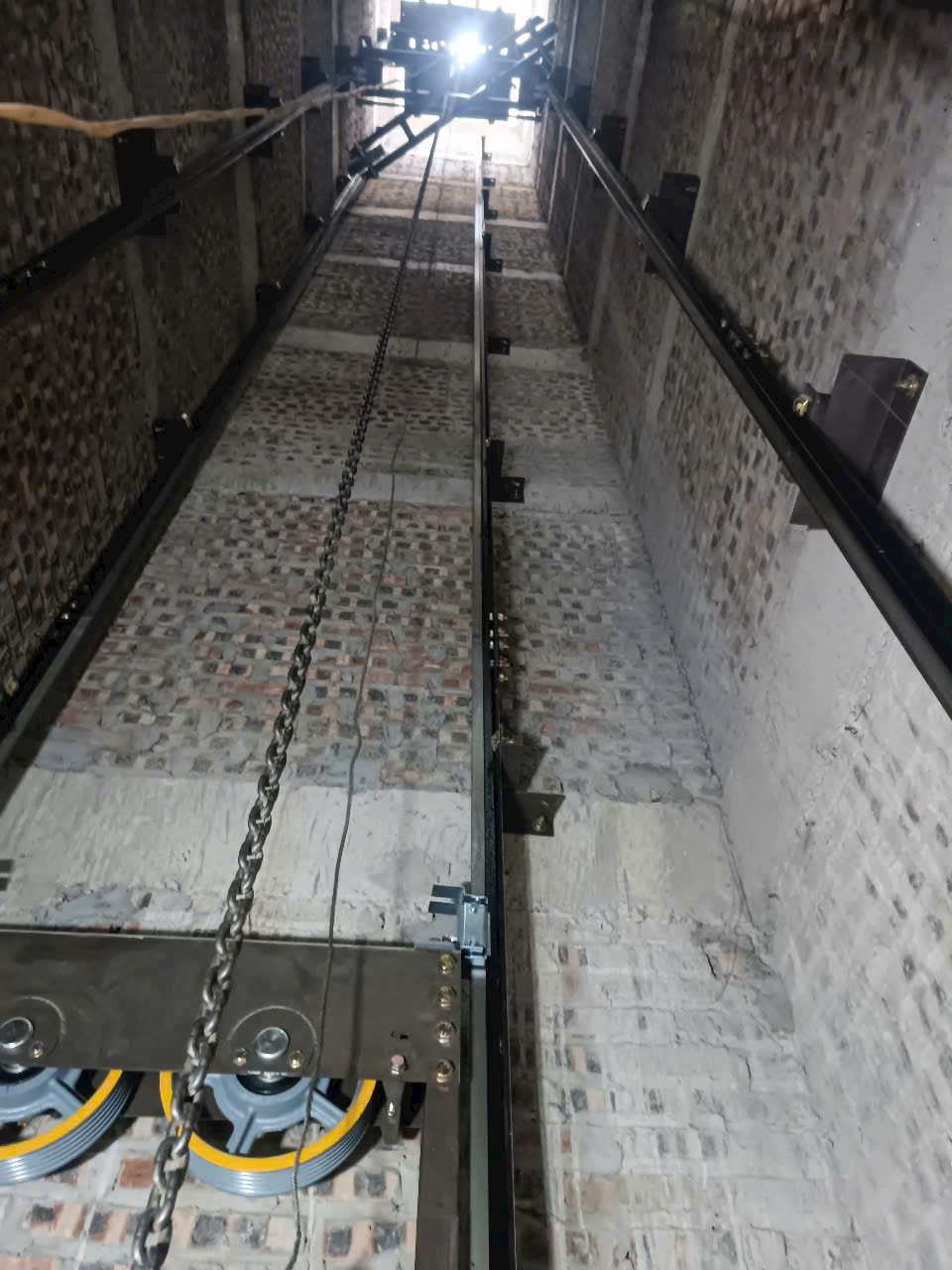
To optimize elevator pricing for narrow townhouses in Hanoi while ensuring safety and user experience, core technical criteria should be prioritized. Firstly, the size of the elevator shaft and cabin : with narrow facades, the principle of "maximizing the cabin within the allowable shaft limits" should be followed, while still ensuring safe clearance between the cabin and counterweight, and between the cabin and the shaft wall according to standards. Designing the elevator shaft correctly from the architectural stage will help reduce renovation costs and avoid having to narrow the cabin or change the technical plan during installation.
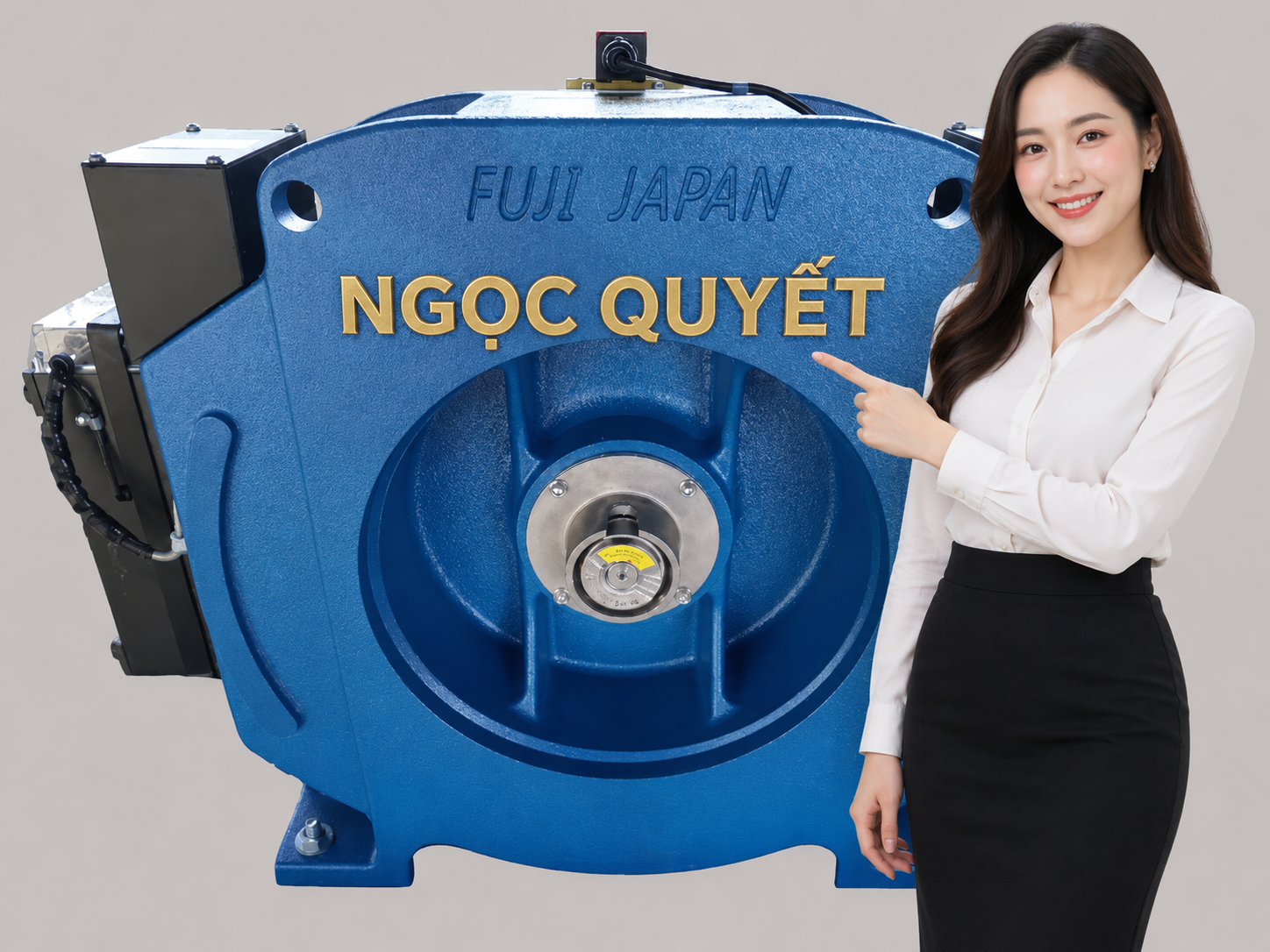
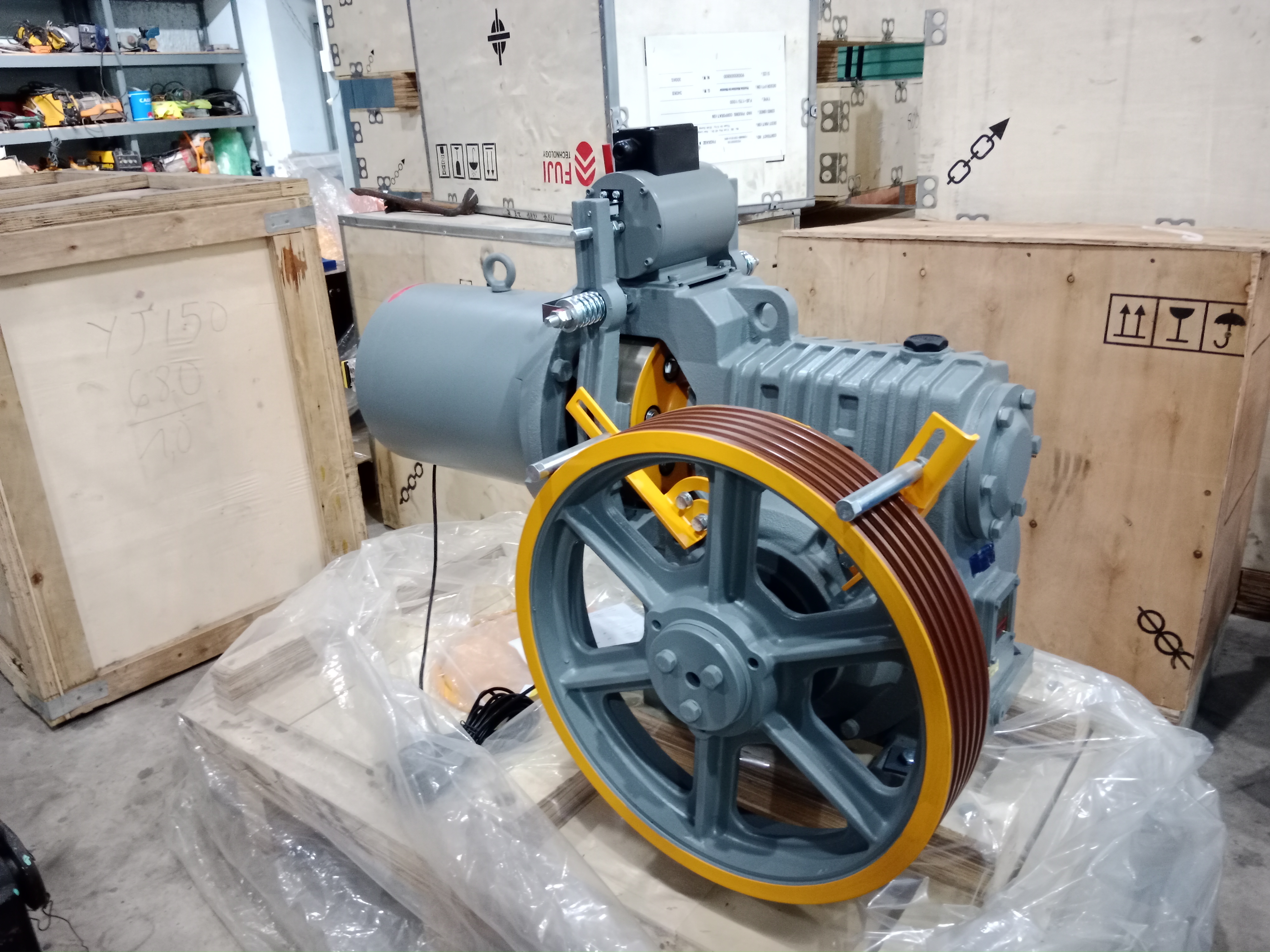
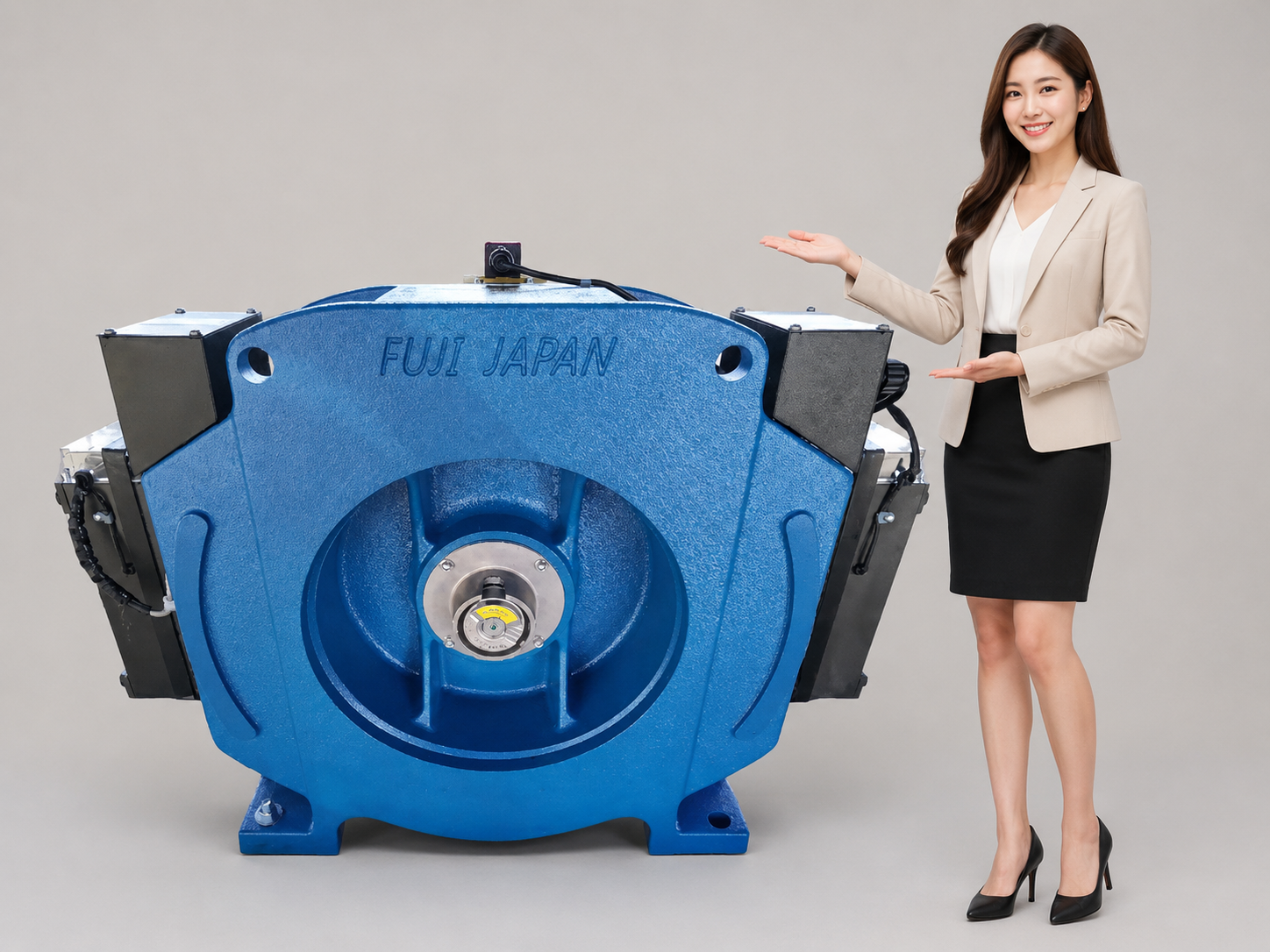
Secondly, choose the type of traction machine and control system . For 4-7 story townhouses, gearless traction machines combined with VVVF inverters are trending due to their advantages of quiet operation, energy efficiency, no need for periodic gearbox oil changes, and reduced maintenance costs. However, if the budget is limited, consider a good quality geared traction machine, provided it meets safety standards, has mechanical brakes, overload sensors, speed limits, and an automatic rescue system in case of power failure.
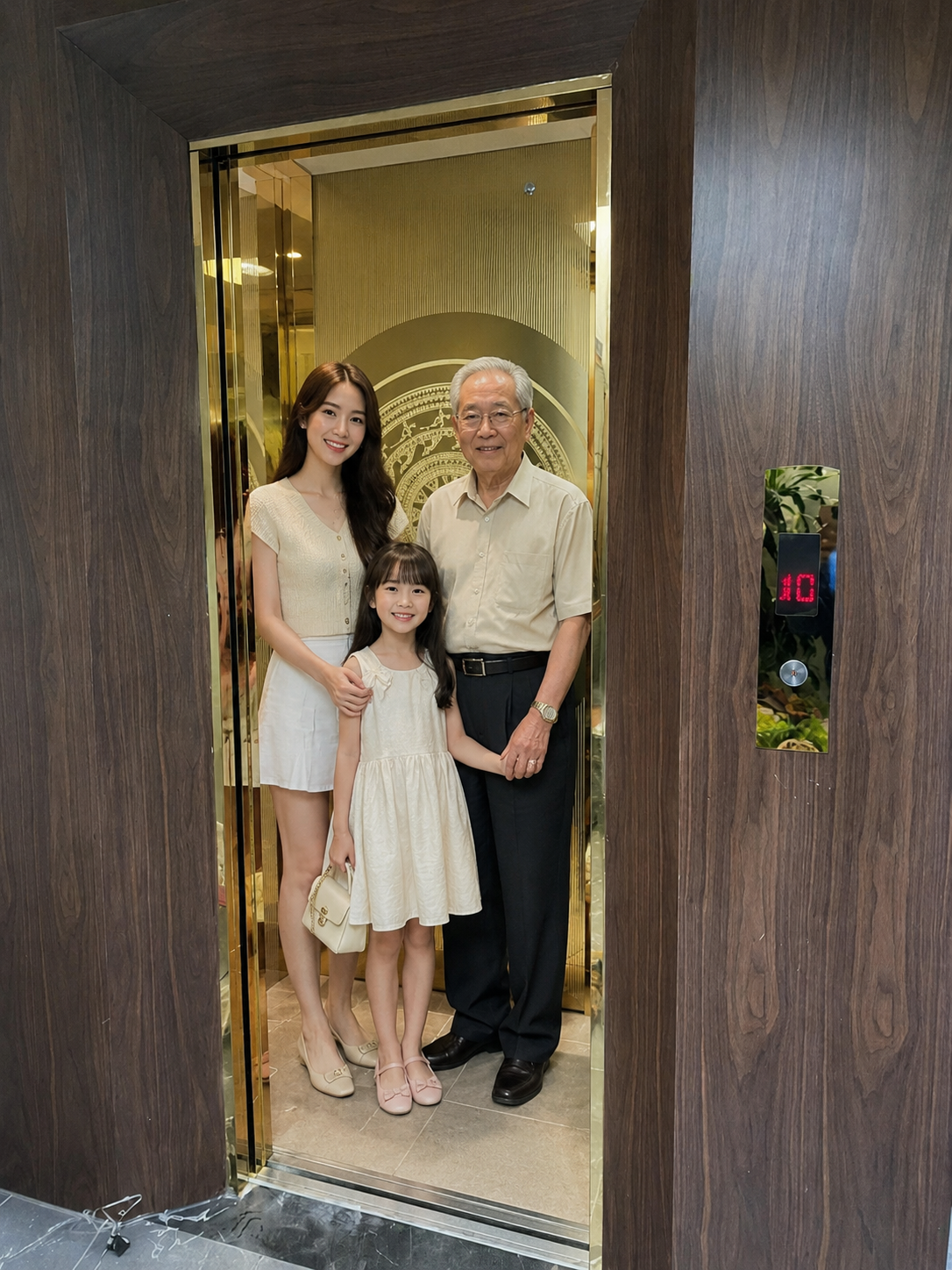
Thirdly, there are landing doors and cabin doors . Townhouses often have small waiting areas, so automatic double- or four-panel sliding doors are a popular choice. Multi-point door sensors with anti-jamming and anti-collision functions should be prioritized, especially for families with young children and the elderly. High-quality stainless steel and powder coating will ensure the landing doors maintain their color in Hanoi's humid climate, minimizing repair costs after a few years of use.
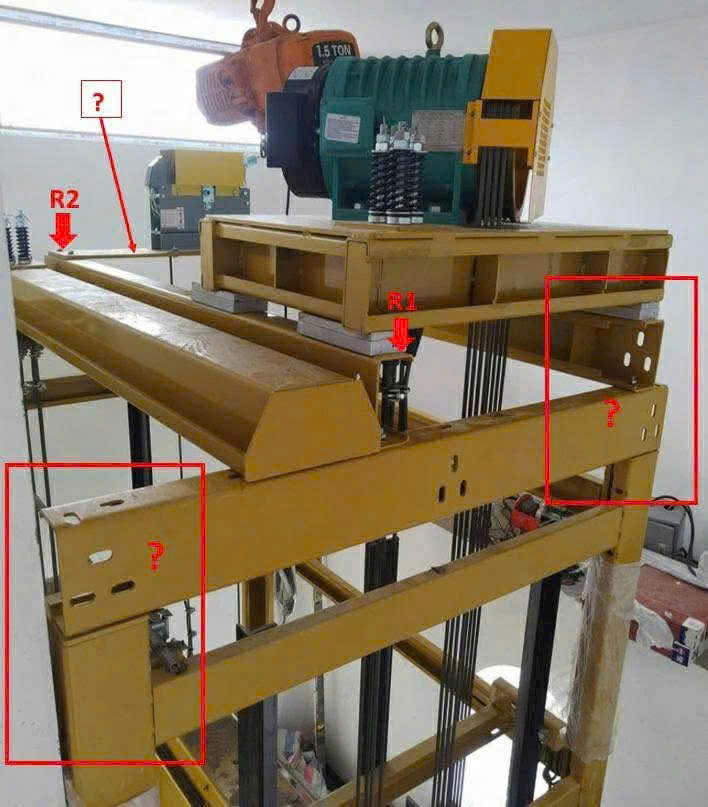
Experience working with elevator suppliers in Hanoi.
When requesting a quote, it's advisable to ask for an on-site survey and consultation so the supplier can accurately assess the construction conditions, elevator placement, and equipment transportation plan, thereby providing a suitable configuration. A standard quote should clearly state: detailed technical specifications, origin of each main component (traction machine, control panel, rails, cables), scope of supply, installation schedule, payment terms, warranty period, and maintenance commitment. Comparisons of quotes should be based on the same technical configuration, avoiding focusing solely on the total cost while overlooking differences in component quality and after-sales service.
To ensure transparency and long-term safety , homeowners should prioritize companies with offices, workshops, and technical teams based in Hanoi, with a proven track record, completed projects for similar townhouses, and the ability to provide design documents, installation drawings, and certificates of origin and quality for components. Contracts should include detailed technical appendices, acceptance clauses, and clearly defined responsibilities for both parties during construction, commissioning, and handover, helping to control costs and quality throughout the elevator's lifespan.