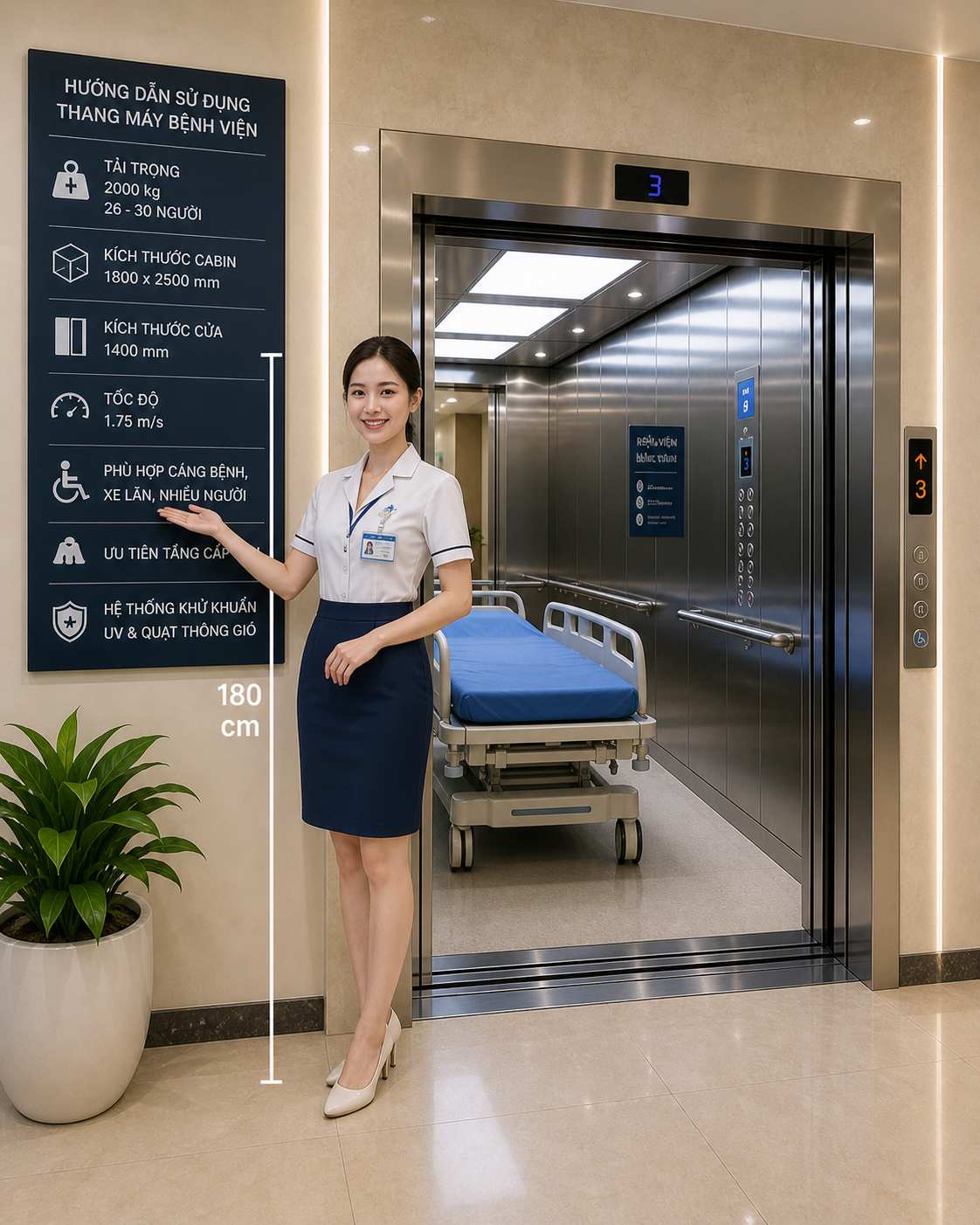
Home Elevator Price List 2026
Latest Home Elevator Price List 2026
Overview of home elevator price levels in 2026
Entering 2026, the home elevator market in Vietnam is clearly divided into two main groups: traditional ( built-in) shaft home elevators and glass-panorama (panorama) home elevators . Prices are influenced by the origin of the equipment (fully imported or joint venture), load capacity, number of stops, material configuration, and interior finishing requirements. With experience in implementing hundreds of townhouses, villas, and renovated homes, professional companies often establish a reference price framework to help homeowners visualize the initial investment cost, then adjust the details based on actual site surveys.

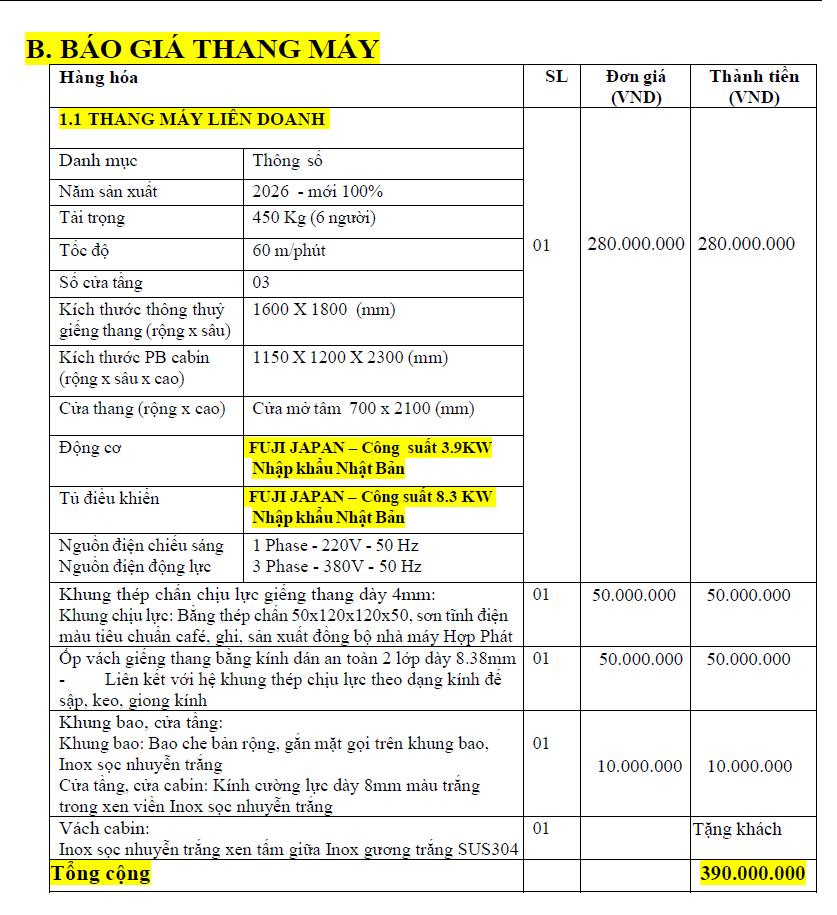
In the popular 300–450 kg (3–6 people) segment, home elevators in built-in shafts using cable traction or gearless traction machines have a basic price range of approximately 380–650 million VND depending on configuration and origin. Meanwhile, glass-clad home elevators with high aesthetic requirements, steel frames, tempered glass, and matching accessories typically range from 550–900 million VND for 4–7 story residential buildings. These figures are for reference only, as the price depends on material requirements , building conditions, and the finishing standards chosen by the homeowner.

Basic price quote for a home elevator in a built-in shaft.
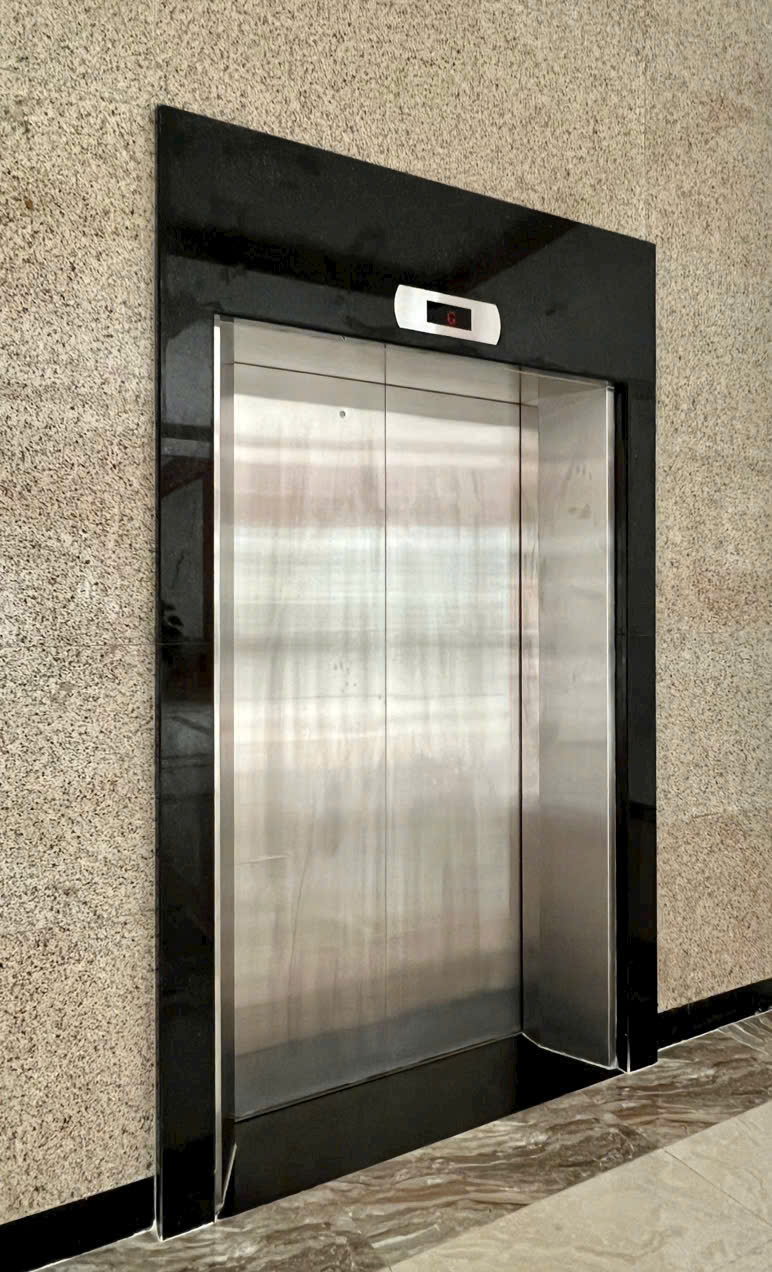
A home elevator with a built-in shaft is a traditional choice, suitable for townhouses where the elevator shaft can be constructed using reinforced concrete or brick walls, with flexible dimensions. Advantages include lower structural costs compared to glass-clad elevators, good sound and heat insulation, and easy integration with existing architecture. Technically, this type can use a cable-driven system with or without a machine room (MRL) , combined with a control cabinet inside or outside the machine room depending on the design.
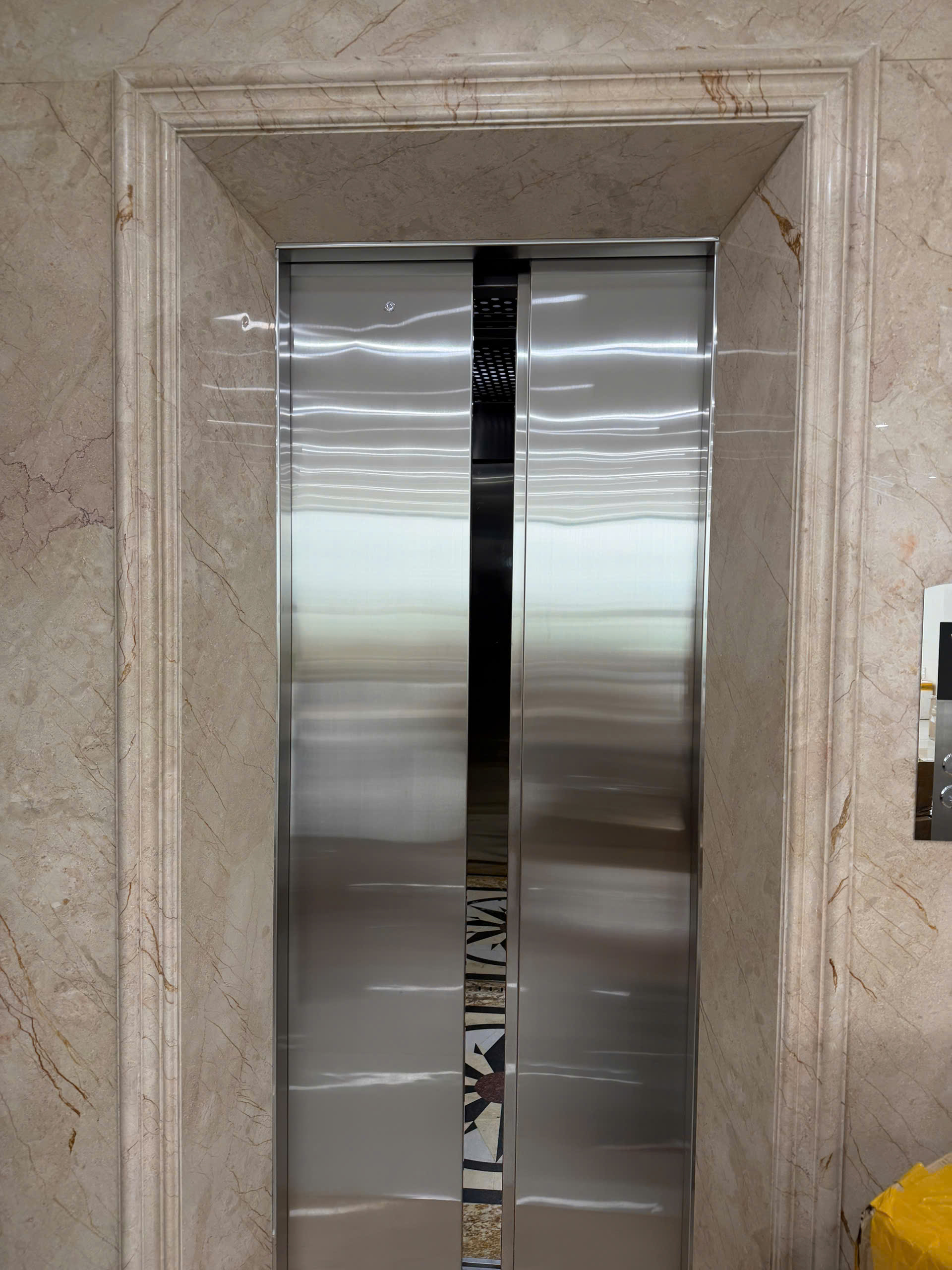
The reference price range for in-situ home elevators in 2026 is typically categorized by load capacity and equipment origin. For joint-venture elevators (imported traction machine and control system, domestically manufactured cabin and landing doors), the basic price for a load capacity of 300–350 kg and 4–5 stops is approximately 380–480 million VND. For elevators with a load capacity of 450–550 kg and 5–7 stops, the price ranges from 430–550 million VND. For fully imported elevators from major brands with the same load capacity and number of floors, the cost can increase by about 30–60% compared to joint-venture elevators, but this is in exchange for brand uniformity, inspection standards, and a comprehensive component ecosystem.
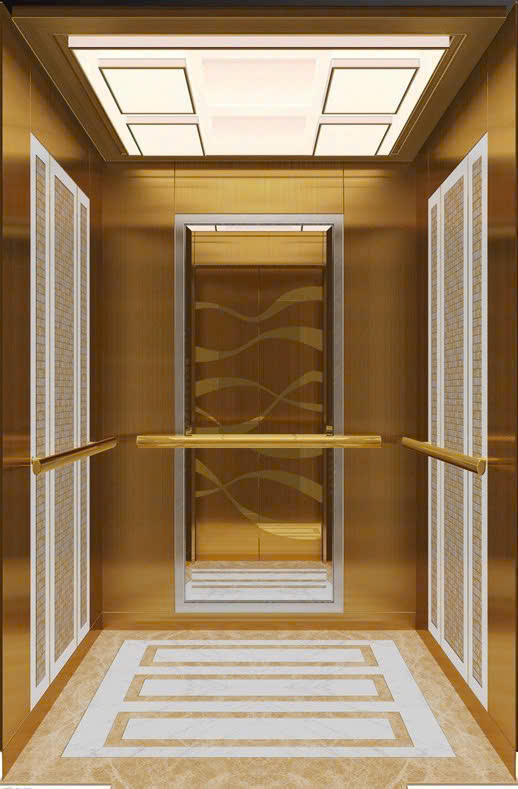
In a basic quotation, items are usually included: traction machine, control cabinet, guide rails, standard cabin, automatic landing doors, basic safety systems (overspeed control, mechanical brake, travel limit switch, landing door lock, interlock, door sensors). However, factors such as cabin material (mirror-finish stainless steel, patterned stainless steel, laminate, wood veneer) , door type (center-opening door, single-sided sliding door), ceiling, floor, and handrail decoration, lighting system, display screen, intercom, camera, etc., will significantly change the total contract value. Therefore, to get a realistic quote, homeowners should provide architectural drawings, floor height, elevator location, and specific finishing requirements so that elevator engineers can create a detailed breakdown.
Glass-paneled elevator

Technical factors affecting the cost of construction pits and ladders.
The cost of a home elevator in a built-in shaft depends not only on the load capacity and number of floors but also on several technical parameters. Firstly, floor height and total travel distance : houses with floor heights exceeding 3.4 meters or total travel distances greater than 20 meters typically require higher-end traction machine, rail, cable, and safety system configurations, leading to increased costs. Secondly, elevator speed : for residential homes, the common speed is 0.6–1.0 m/s; if the homeowner requires a higher speed to optimize travel time, the price of equipment and control panel will increase accordingly.
Thirdly, there's the machine room layout . Traditional elevators with machine rooms generally have lower equipment costs, but require a load-bearing roof structure and separate technical space. Machine-roomless elevators (MRLs) optimize overall height, suitable for renovated buildings or structures with height restrictions, but the cost of the traction machine and control panel is usually higher. Fourthly, there are safety standards and component origin : using components from European or Japanese manufacturers with CE, EN81, or ISO certifications will increase costs but in return offer greater durability, smoothness, and long-term maintainability. Finally, requirements for automatic rescue systems, UPS, anti-jamming doors, load sensors, and IoT connectivity are also common upgrade items in 2026 quotations.
Basic price quote for glass-panorama home elevators
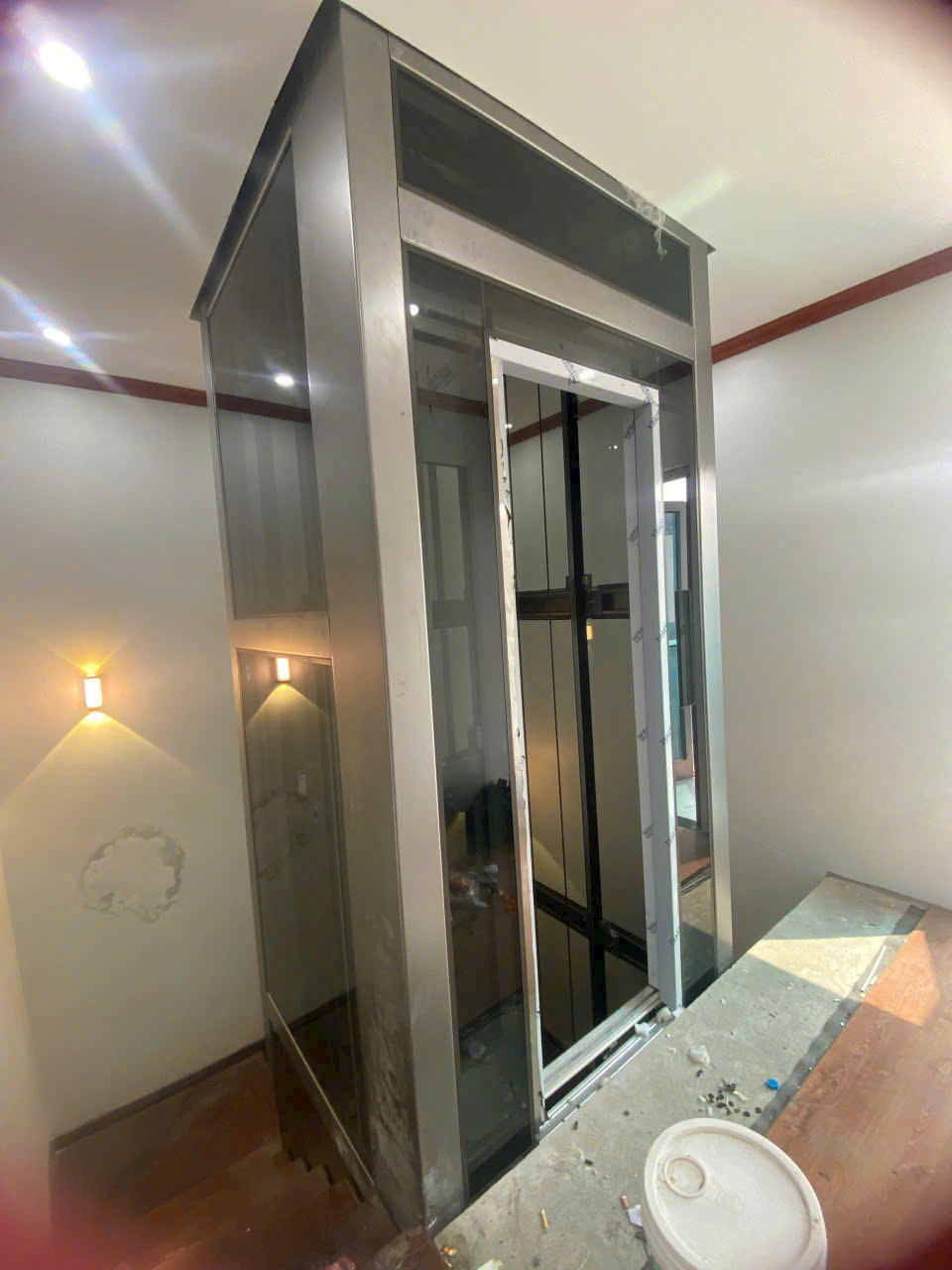
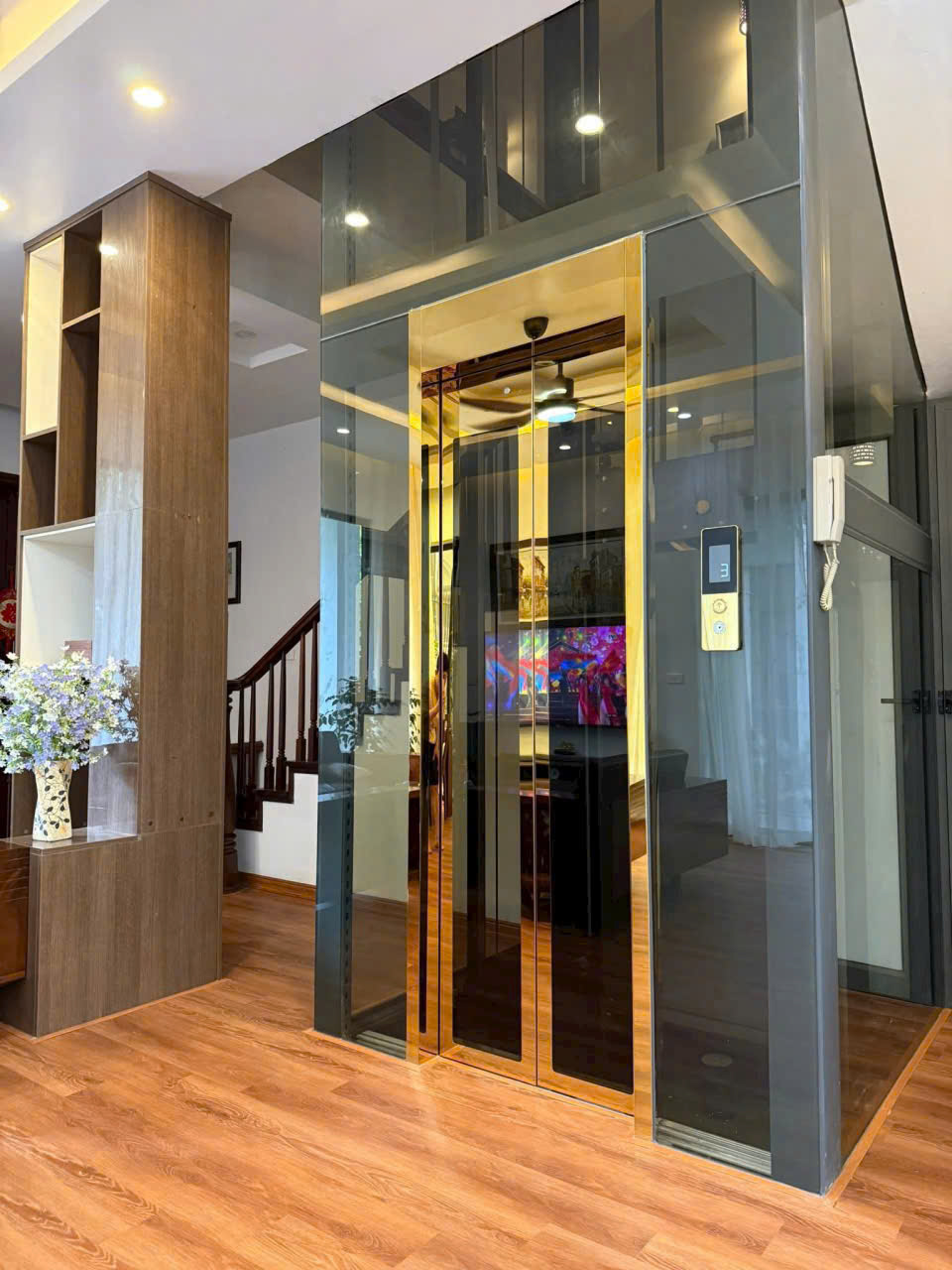
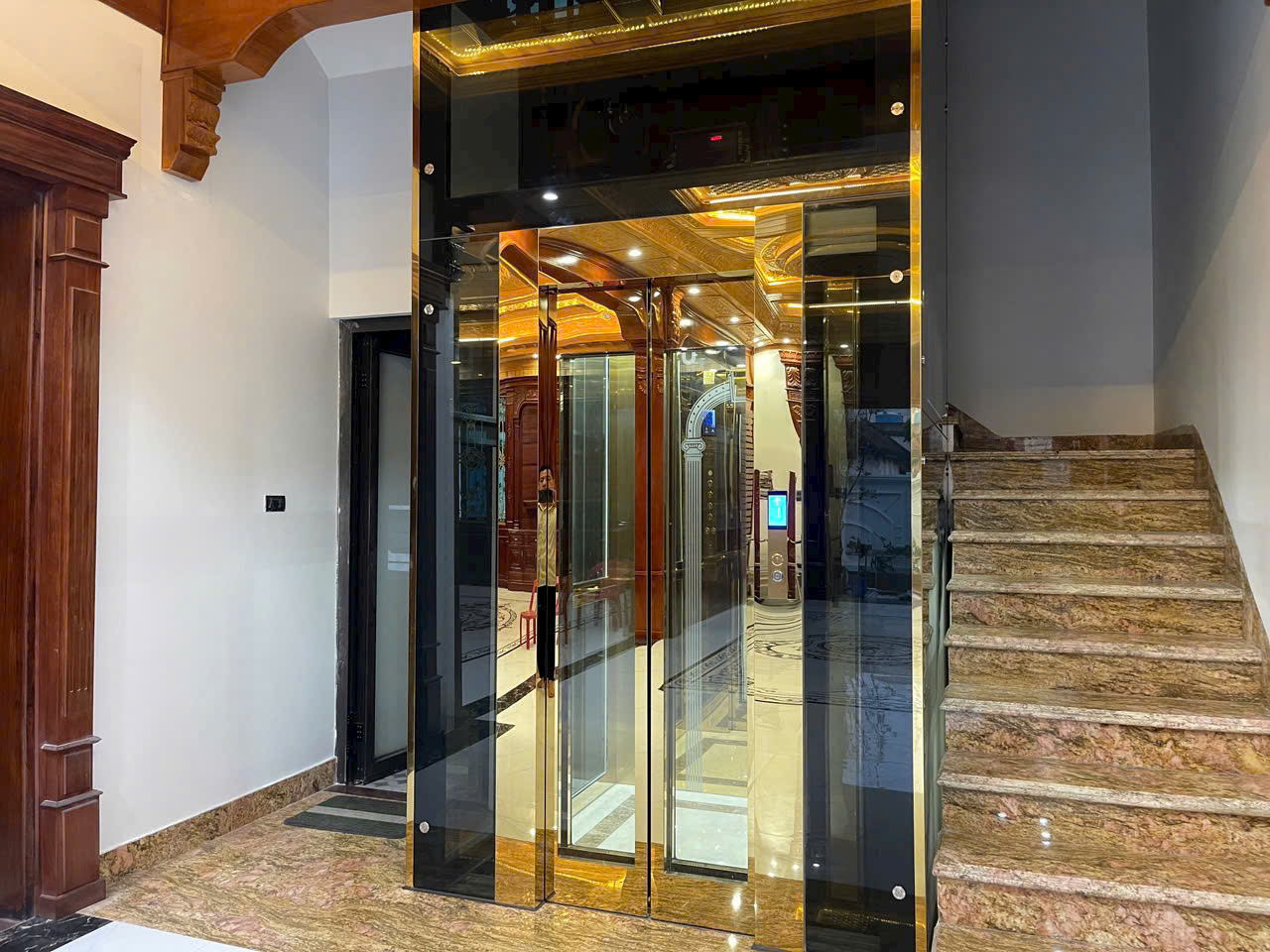
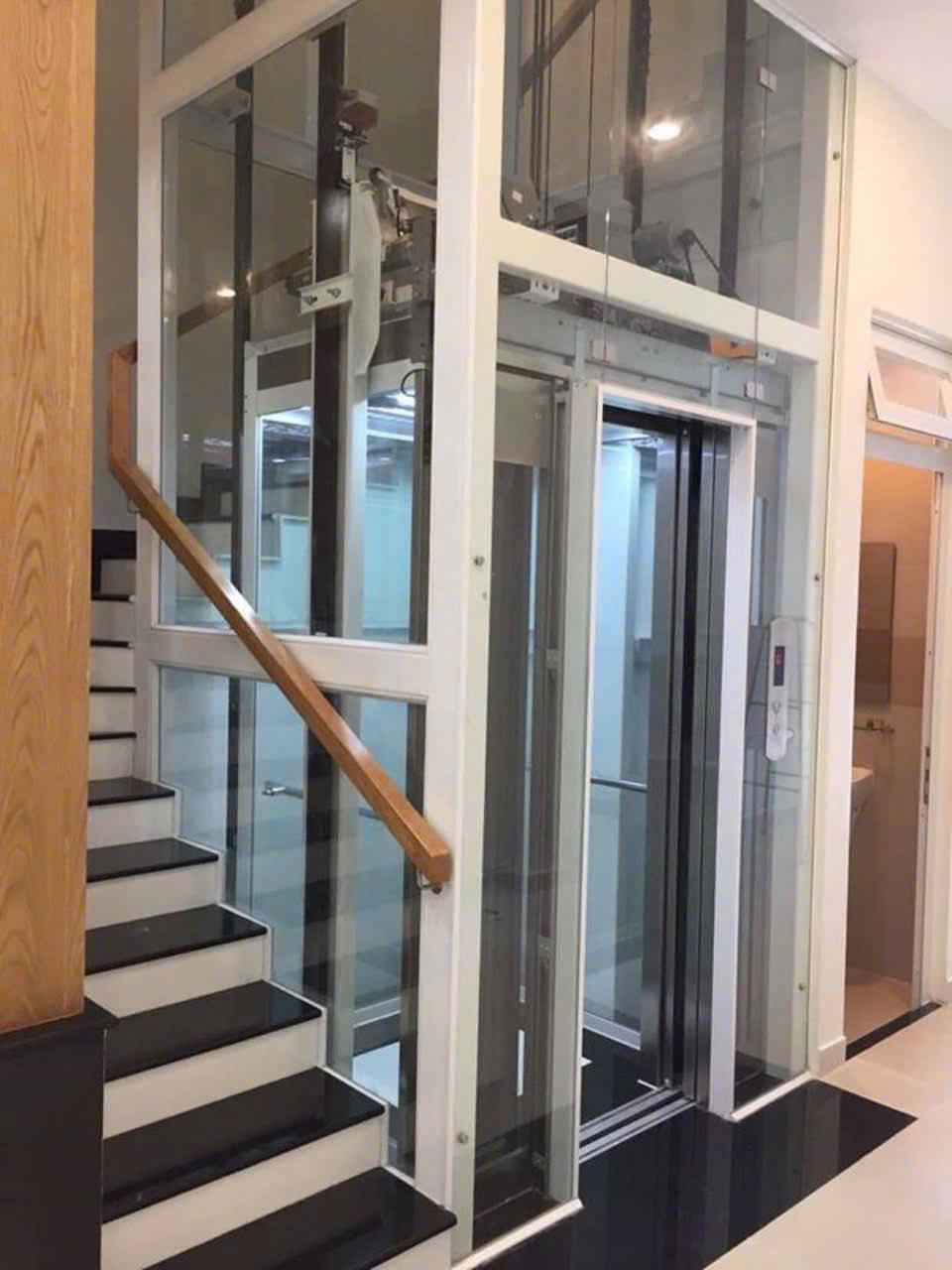
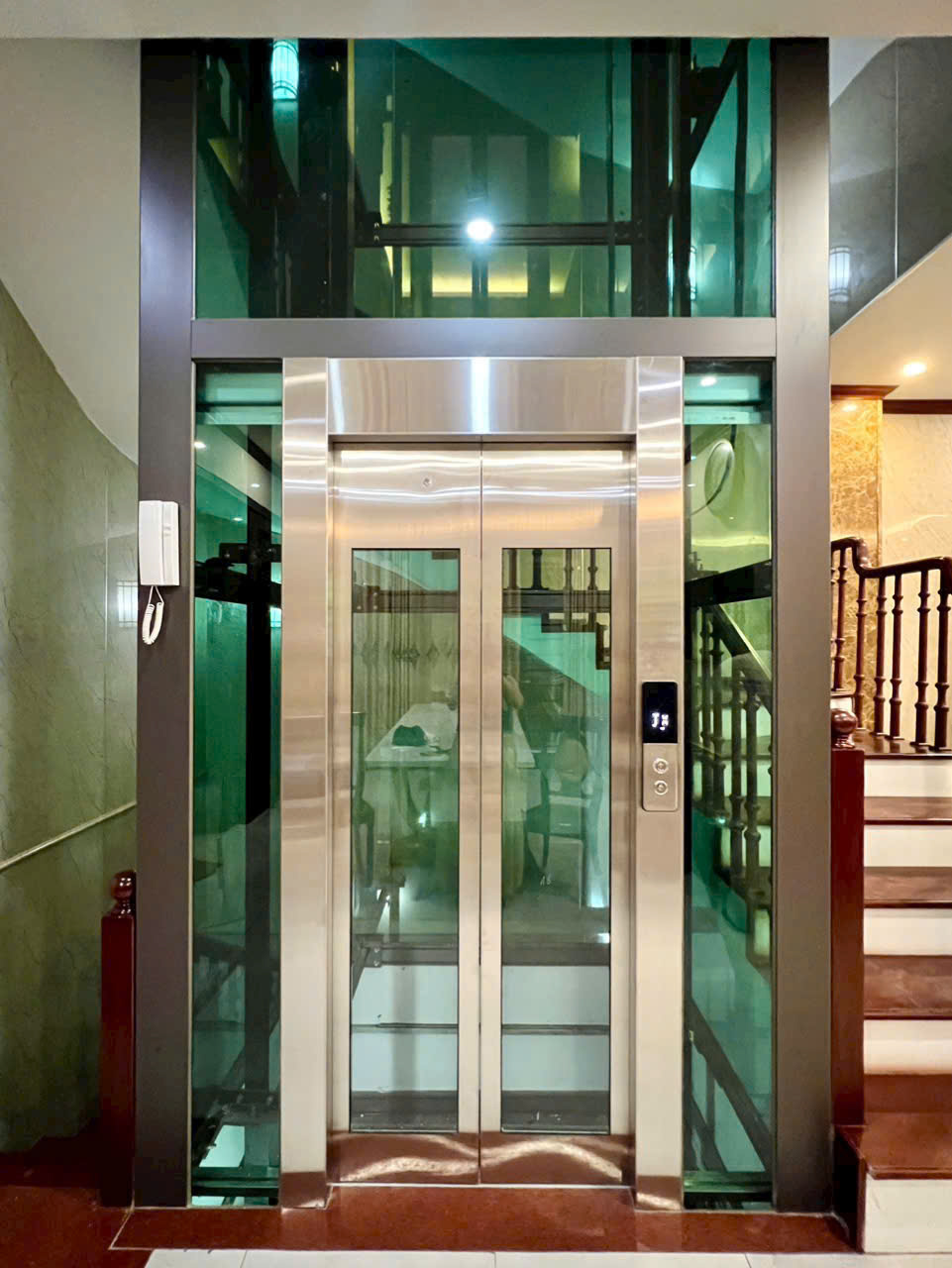
Glass-paneled home elevators , also known as panoramic elevators, are popular in high-end villas, townhouses, homestays, and resort villas due to their ability to create an architectural focal point and optimize natural light. Unlike traditional shaft elevators, this type uses a steel frame structure combined with tempered or laminated safety glass surrounding it, allowing for observation of the surrounding space during travel. Technically, glass-paneled elevators can use cable-driven or hydraulic systems; however, in Vietnam, the machine-roomless cable-driven configuration combined with a steel frame and glass is currently dominant.
The estimated price range for a glass-clad home elevator with a load capacity of 300–450 kg, 4–6 stops, using a powder-coated steel frame, 10–12 mm tempered glass, glass-stainless steel cabin, and glass landing doors with stainless steel frames, in 2026 is approximately 550–900 million VND, depending on the origin of the equipment and the level of finishing. If using low-e glass, multi-layered safety laminated glass, hot-dip galvanized steel frame, 304 hairline stainless steel, and high-end matching handrails and accessories, the cost could exceed 1 billion VND for multi-story villas.

In a quotation for a glass-clad elevator, besides the standard elevator equipment, the cost of the steel frame and glass accounts for a significant proportion. The steel frame must be calculated by a structural engineer to ensure load-bearing capacity, vibration resistance, and torsional resistance, while also meeting aesthetic requirements and harmonizing with the facade architecture. The glass system needs to meet safety standards, be strong, impact-resistant, and may incorporate heat-insulating and UV-resistant film. In addition, details such as aluminum trims, gaskets, connecting accessories, finishing paint, and anti-rust treatment are also included in the detailed cost estimate.
Cost difference between glass-paneled elevators and pit elevators
Compared to traditional in-ground elevators , glass-clad elevators have a higher initial investment cost due to the need for additional steel frames and glass, as well as requiring more precise construction techniques. However, considering the overall architecture and usability, many homeowners accept this investment to own a spacious, luxurious atrium, increasing the property value. In terms of operation, glass-clad elevators are often equipped with LED lighting, door sensors, and safety sensors along the glass frame, providing a safe and modern travel experience.
Some hidden costs that homeowners need to consider when comparing two types of elevators include: the cost of reinforcing the foundation for the steel frame, the cost of waterproofing at the roof-elevator frame junction, the cost of air conditioning and ventilation if the elevator is placed in an enclosed space, and the cost of regular glass maintenance and cleaning. Therefore, when receiving a quote, it is advisable to request that the supplier separate the items: elevator equipment , steel frame , glass and accessories , installation , inspection and acceptance costs , to have a complete picture and make an accurate comparison.
.jpg)
The price depends on the material requirements and finishing standards.
Whether it's a built-in shaft elevator or a glass-paneled elevator , the important commonality is that the price depends on the materials and finishing standards chosen by the homeowner. Several material groups significantly influence the price, including: the type of traction machine (geared, gearless, hydraulic), the brand of the control panel, the origin of the rails, cables, and landing doors, the cabin material (stainless steel, glass, wood, composite), the type of glass (standard, tempered, laminated, low-e), the lighting and decorative systems, and optional packages such as automatic rescue, cameras, and remote monitoring connectivity.
To optimize costs while ensuring safety and durability, prioritize investment in the "core" components, including the traction machine, control panel, rails, landing doors, and safety systems. Interior cabin finishes and decorative materials can be chosen at a reasonable level, avoiding the pursuit of aesthetics while cutting corners on crucial technical aspects. Comparing quotes between suppliers should be based on detailed technical specifications, not just the total contract value. When installation is needed, homeowners should contact suppliers for on-site surveys and consultations to receive design and pricing solutions that suit their specific conditions and budget.