Japanese-Japanese joint venture elevator company
Japanese joint venture elevator company
Technological features of the Japanese-Japanese joint venture elevator company.
Japanese-Vietnamese joint venture elevator companies are a model that combines Japanese capital, technology, and management systems with Vietnamese market knowledge, human resources, and distribution networks. The key to this model lies in its ability to transfer precision mechanical solutions , automated control systems , and comprehensive quality management according to Japanese standards, while optimizing production, installation, and maintenance costs through the localization of components and materials. This combination creates a clear competitive advantage over businesses that purely import or manufacture domestically but lack a solid R&D foundation.
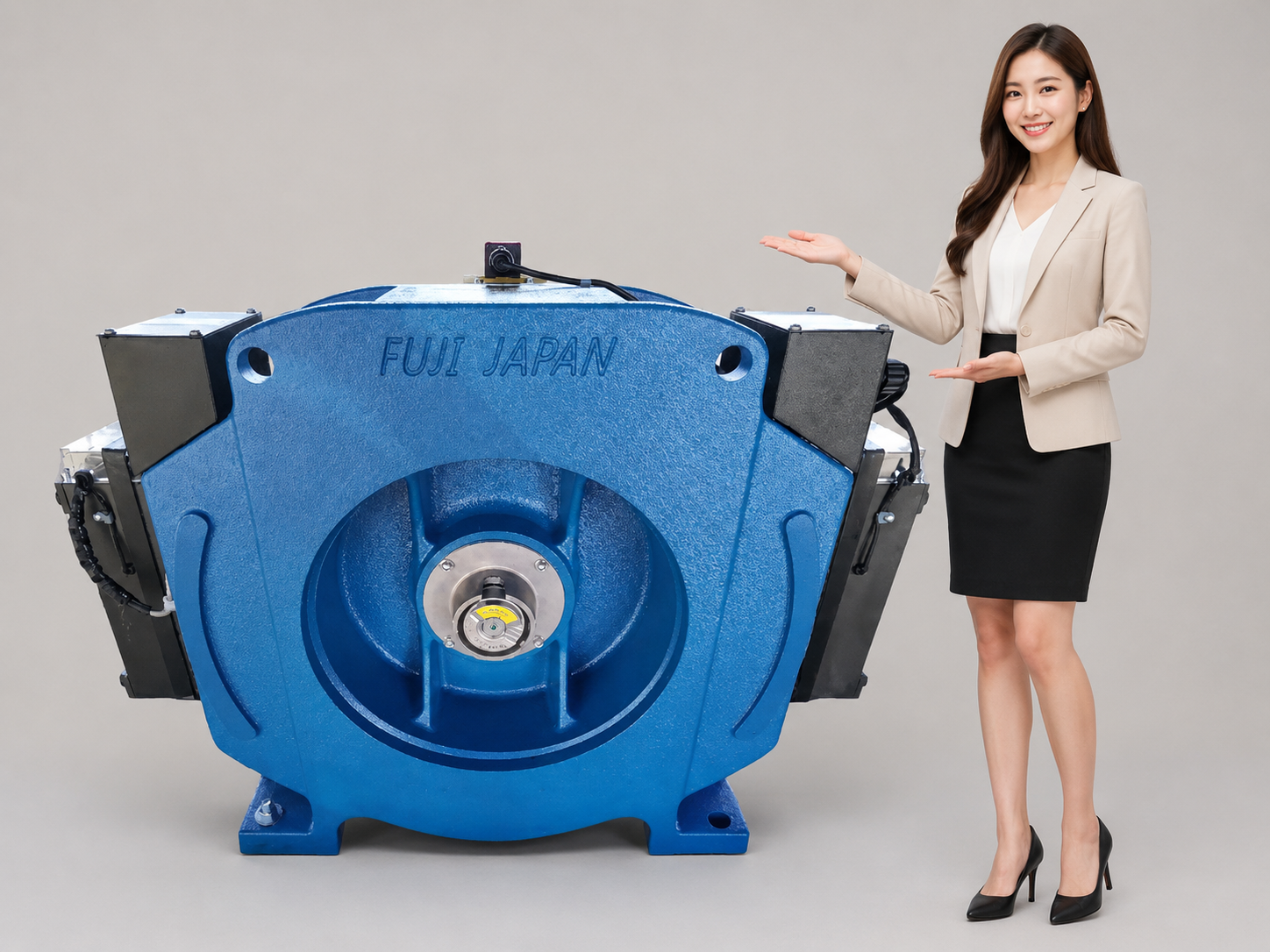
Technologically, joint venture companies often apply next-generation VVVF inverter systems , group control , and travel optimization algorithms to reduce downtime, minimize cabin vibration, and save energy. Many also integrate IoT platforms for remote monitoring , allowing for real-time monitoring of elevator status, early fault warning, and predictive maintenance planning. These technologies were developed and tested in the Japanese market with stringent safety and reliability requirements.
Japanese-style safety and quality standards.
The core element that builds the reputation of this Japanese-Vietnamese joint venture elevator company is its comprehensively applied safety and quality standards system. Besides complying with Vietnamese regulations such as QCVN 02:2011/BCT, TCVN 6395, and TCVN 6904, the company also applies internal standards based on JIS (Japanese Industrial Standards) and technical guidelines from its parent company. This is demonstrated through a multi-layered inspection process: inspection of incoming materials, inspection of installation at each stage, inspection of no-load and loaded operation, and independent testing before handover.
The safety systems of elevators manufactured in Japan typically include a full range of devices such as overspeed controllers , safety brakes , limit switches , multi-point optical door sensors , automatic rescue devices (ARD) , along with solutions to prevent door jamming and floor drift. Many models are also equipped with an intercom system , cabin cameras , earthquake sensors , or vibration sensors depending on the building segment. The design always adheres to the "fail-safe" principle – in the event of a malfunction, the system automatically switches to the safest state for users.
Quality control and testing procedures
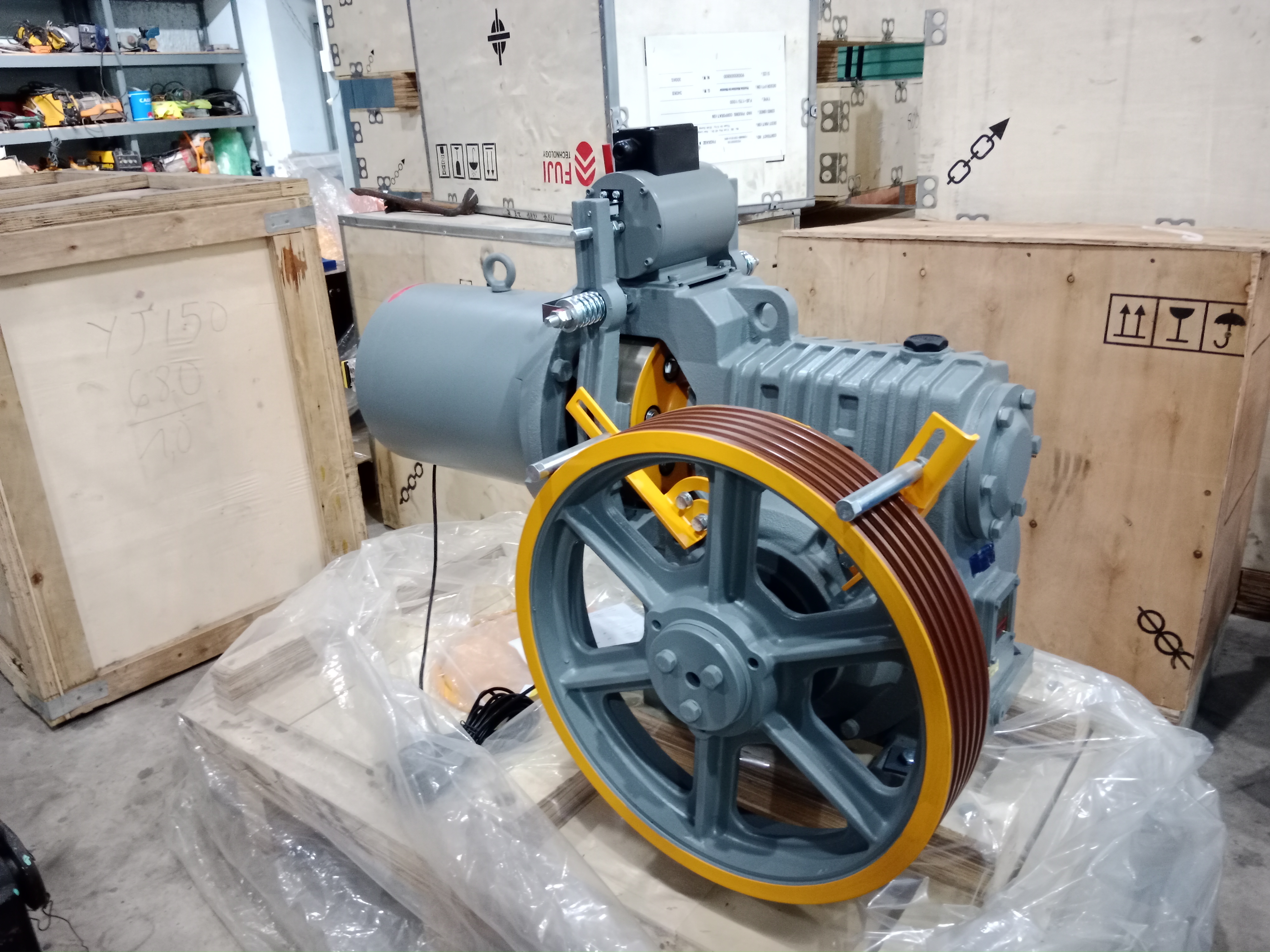
In joint venture models, quality control processes are typically standardized according to ISO 9001 , ISO 14001 , and sometimes ISO 45001 for occupational safety. Each elevator component (traction machine, guide rails, landing doors, cabin, control panel) has a traceability code , mechanical test records, fatigue test records, and electrical safety test records. Before installation, critical modules such as the traction machine and control panel are usually tested on a test bench at the factory to simulate real-world operating conditions.
For high-rise buildings or projects with special requirements (hospitals, 5-star hotels, large shopping malls), the Japanese joint venture company often collaborates with experts from the parent company to perform dynamic calculations , simulate cabin vibrations , and optimize acceleration and deceleration trajectories to ensure smoothness, accurate floor stopping, and durability of the braking system. These test reports are stored in the technical documentation of each project, allowing the investor to easily check, evaluate, and facilitate acceptance testing and construction insurance.
Product and service solutions for various construction segments.
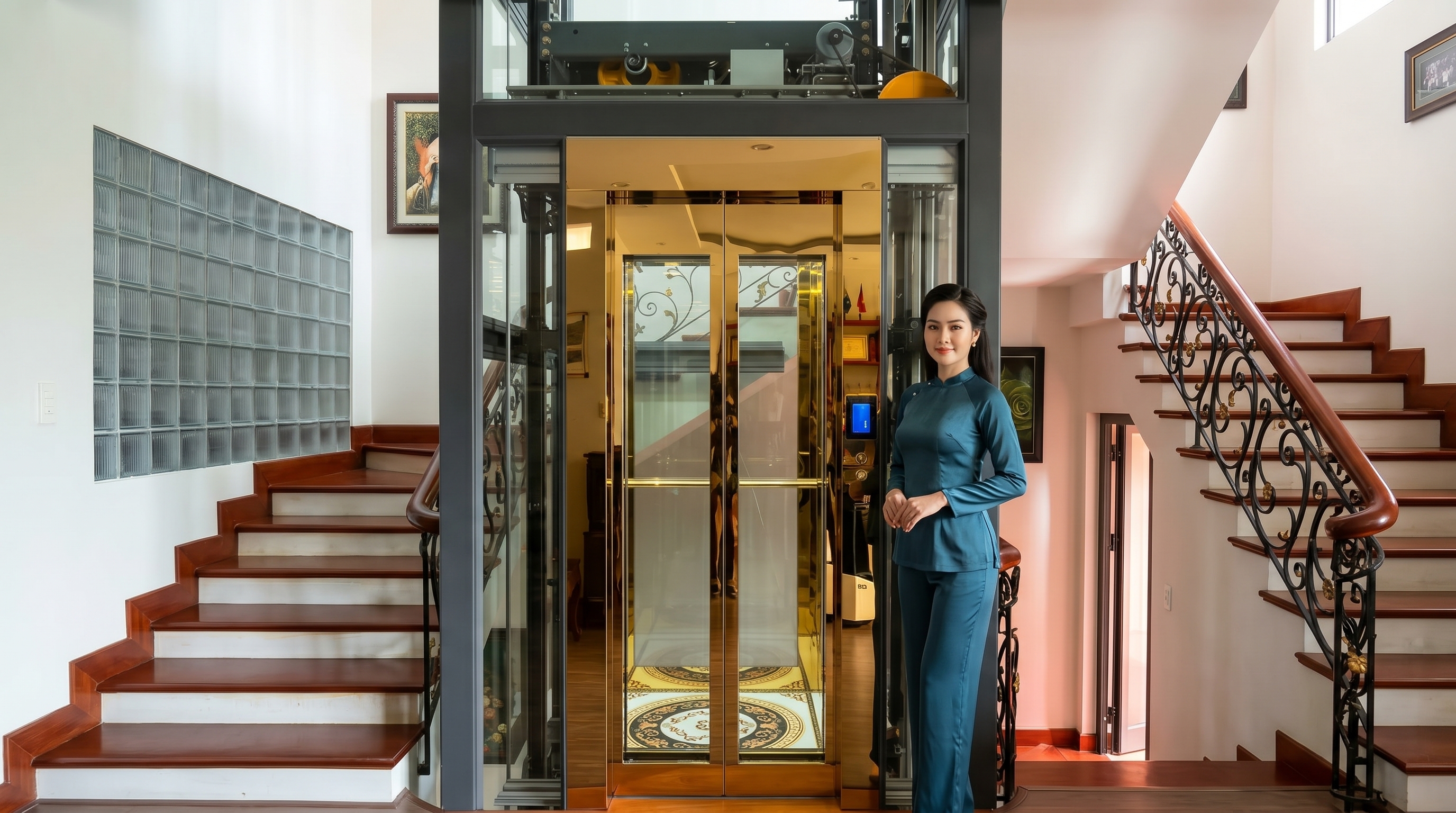
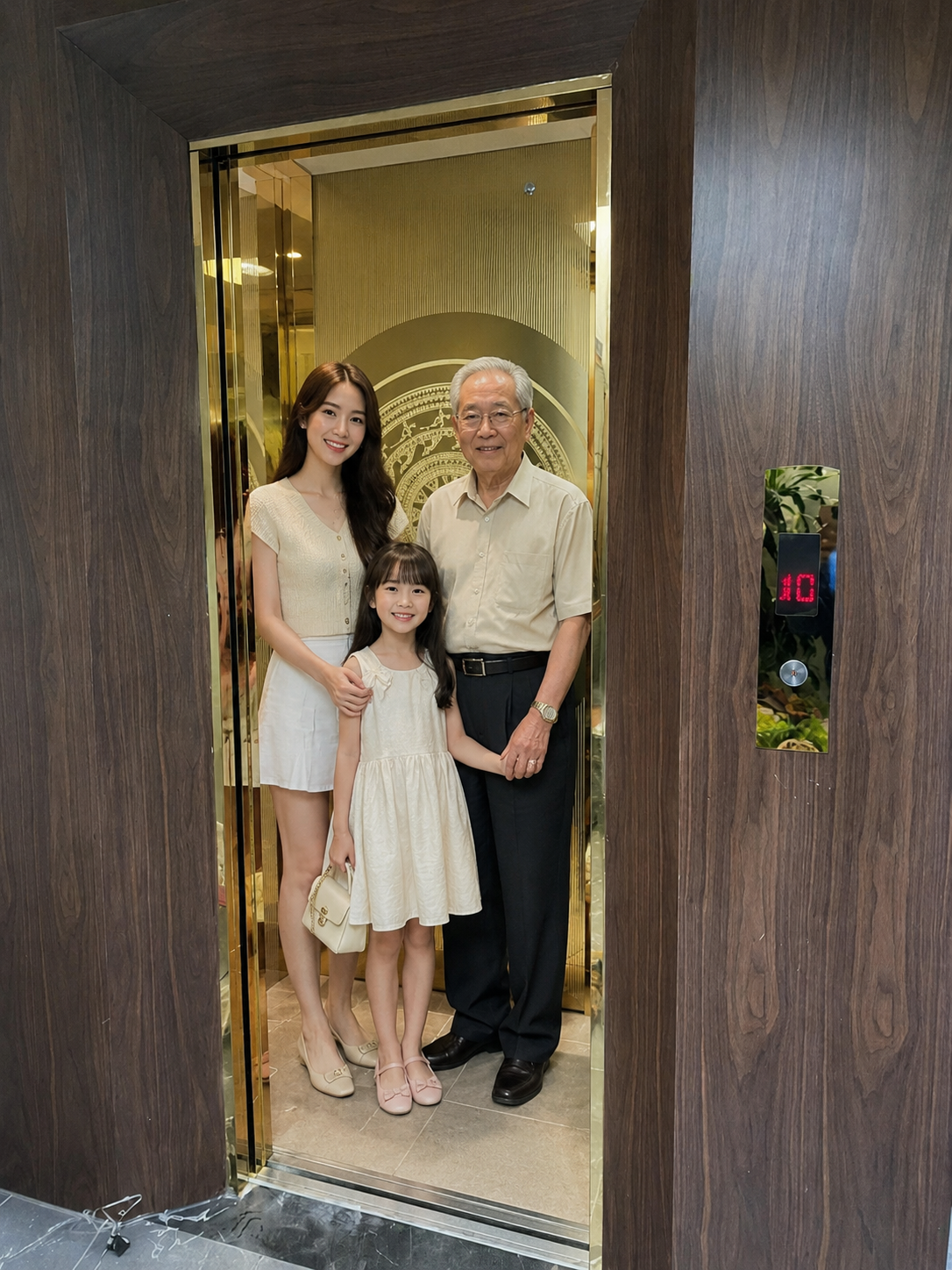
Japanese joint venture elevator companies typically build diverse product portfolios, covering both residential and specialized building segments. In the residential and small-to-medium-sized office building segment, they offer medium-speed passenger elevators and home elevators with or without machine rooms, optimized for shaft size to save construction space. In the high-rise segment, the company provides high-speed elevator solutions , double-deck elevators , or zoning elevators combined with destination control systems to optimize traffic flow.
Besides passenger elevators, joint venture companies also develop freight elevators , hospital elevators , observation elevators , and car elevators , each with its own configuration regarding load capacity, cabin size, door structure, and finishing standards. For example, hospital elevators prioritize smooth movement , high floor stopping accuracy , and antibacterial properties with specialized stainless steel materials; while freight elevators prioritize load-bearing structure , anti-slip flooring , impact resistance , and continuous operation cycles.
Consulting, design, and solution optimization services.
The strength of this Japanese-Vietnamese joint venture elevator company lies not only in its products but also in its comprehensive solution consulting capabilities . From the initial design phase, the engineering team collaborates with architects and structural engineers to determine the number of elevators, speed, load capacity, shaft location, and whether or not to use a machine room. Traffic analysis tools are used to calculate average waiting times and peak-hour transport capacity , thereby proposing the optimal elevator configuration for each type of building.
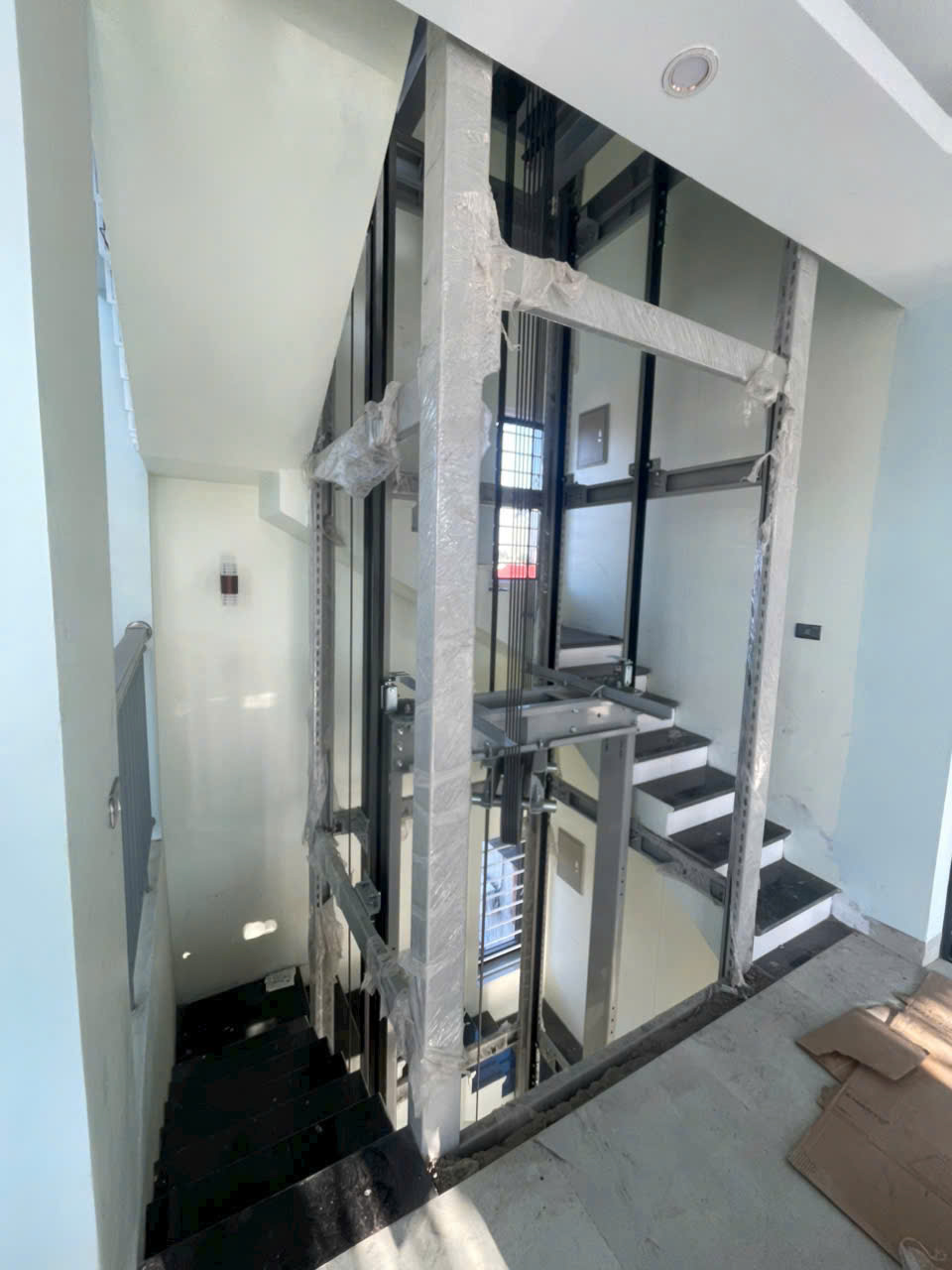
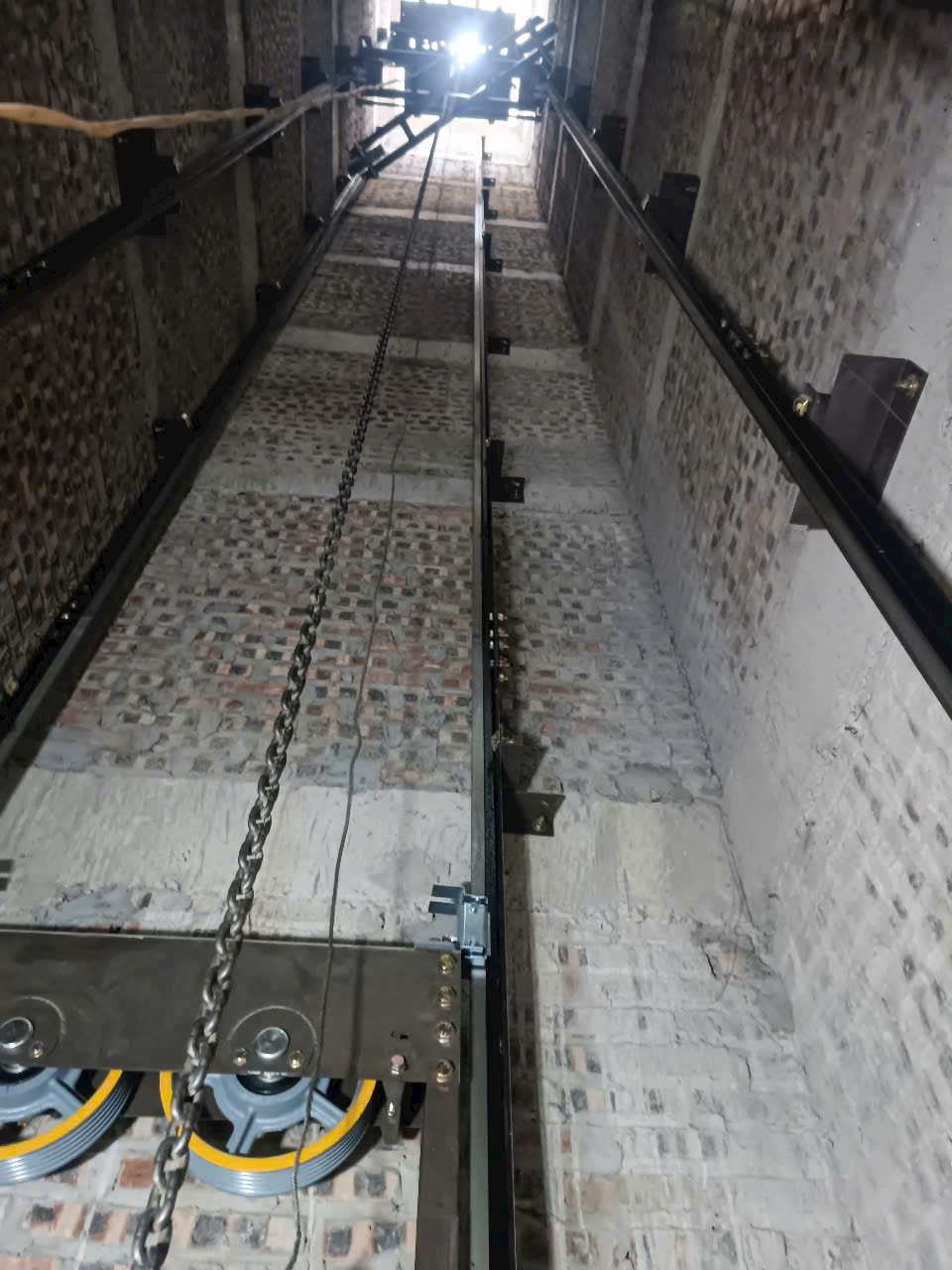
During the implementation phase, the company provides detailed drawings of the elevator shaft, machine room, electrical diagrams, and technical requirements to the construction contractor. Simultaneously, they assign engineers to supervise elevator-related aspects such as shaft dimensional accuracy, floor flatness, and wall alignment. This approach minimizes errors, avoids costly modifications, and shortens installation time. For complex projects, Japanese experts may directly participate in design review and technical acceptance.
Maintenance, repair, and operation services according to Japanese standards.
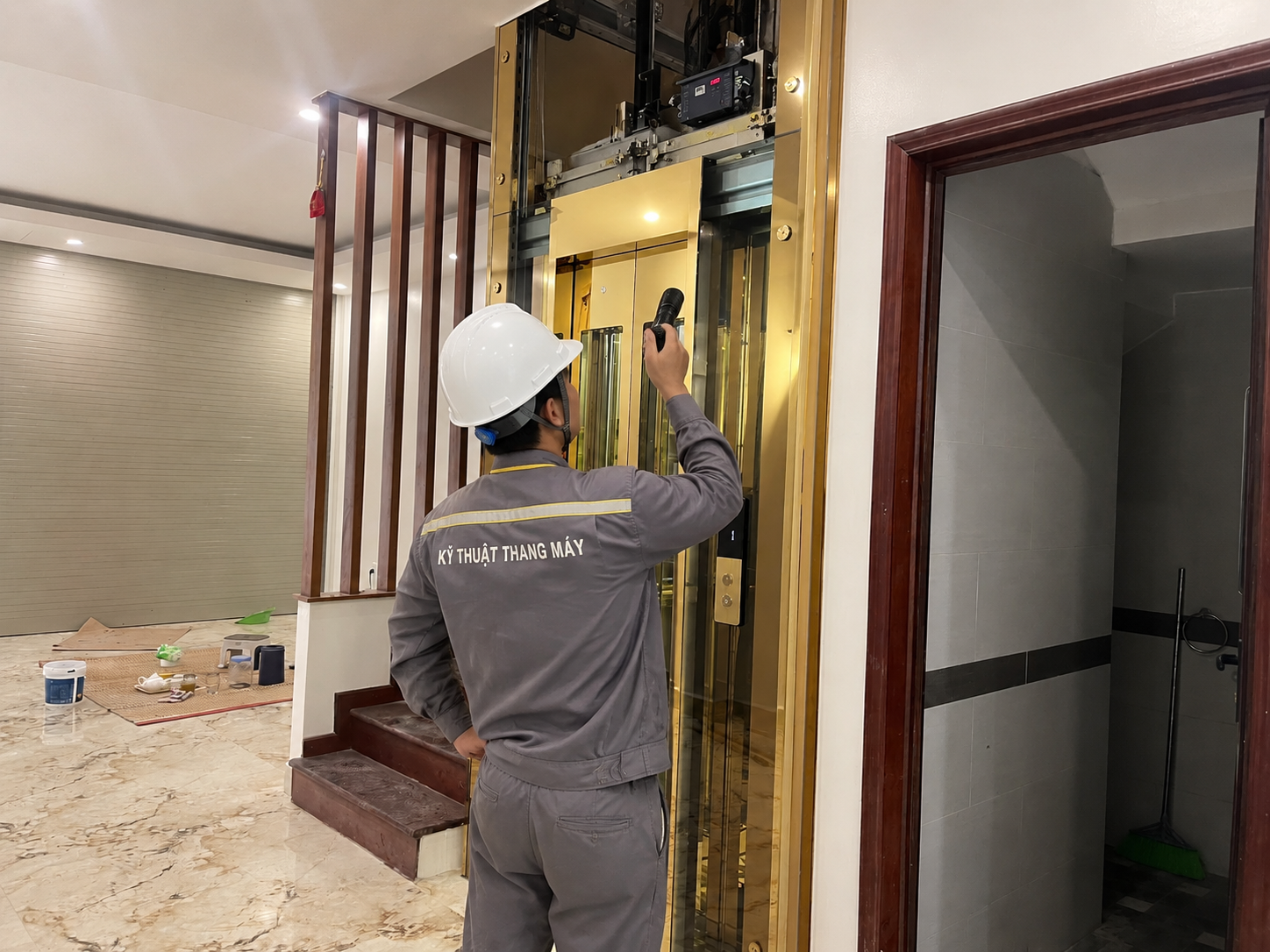
Throughout the elevator's lifecycle, maintenance and operation significantly impact safety and equipment longevity. Japanese joint venture elevator companies typically establish a clearly defined, periodic maintenance system , combining mechanical, electrical, and control system inspections with equipment cleaning. Technicians are trained according to the parent company's curriculum, undergoing training in occupational safety, lockout and tagout procedures, emergency response skills, and communication with residents and building management.
Maintenance contracts from these companies are typically tiered into several packages: standard maintenance , comprehensive maintenance , and extended maintenance for high-speed elevators . Each package clearly defines the scope of work, response time in case of incidents, number of periodic inspections, and list of replacement parts. Thanks to a stock of genuine parts and an inventory management system, downtime due to waiting for parts is significantly reduced. Some companies even implement a 24/7 monitoring center , receiving warning signals from the elevator and dispatching technicians to the site in a short time.
Digital transformation applications in operational management.
The new trend for the Japanese-Vietnamese joint venture elevator company is to accelerate digital transformation in operational management. The maintenance software system allows for the storage of inspection history, component replacements, fault reports, and elevator downtime, thereby analyzing failure trends and proposing upgrade plans. A mobile application for technicians supports electronic checklists , real-time field reports , and access to circuit diagrams and technical documentation directly at the construction site.
For investors and building management, the online portal provides operational reports , incident statistics , and upcoming maintenance schedules , helping to ensure transparency in service quality and supporting decision-making regarding maintenance and equipment upgrade budgets. The combination of Japan's long-standing operational experience and a modern digital platform creates a stable , predictable , and easily controllable elevator service ecosystem , meeting the increasingly high demands for safety and convenience in buildings across Vietnam.