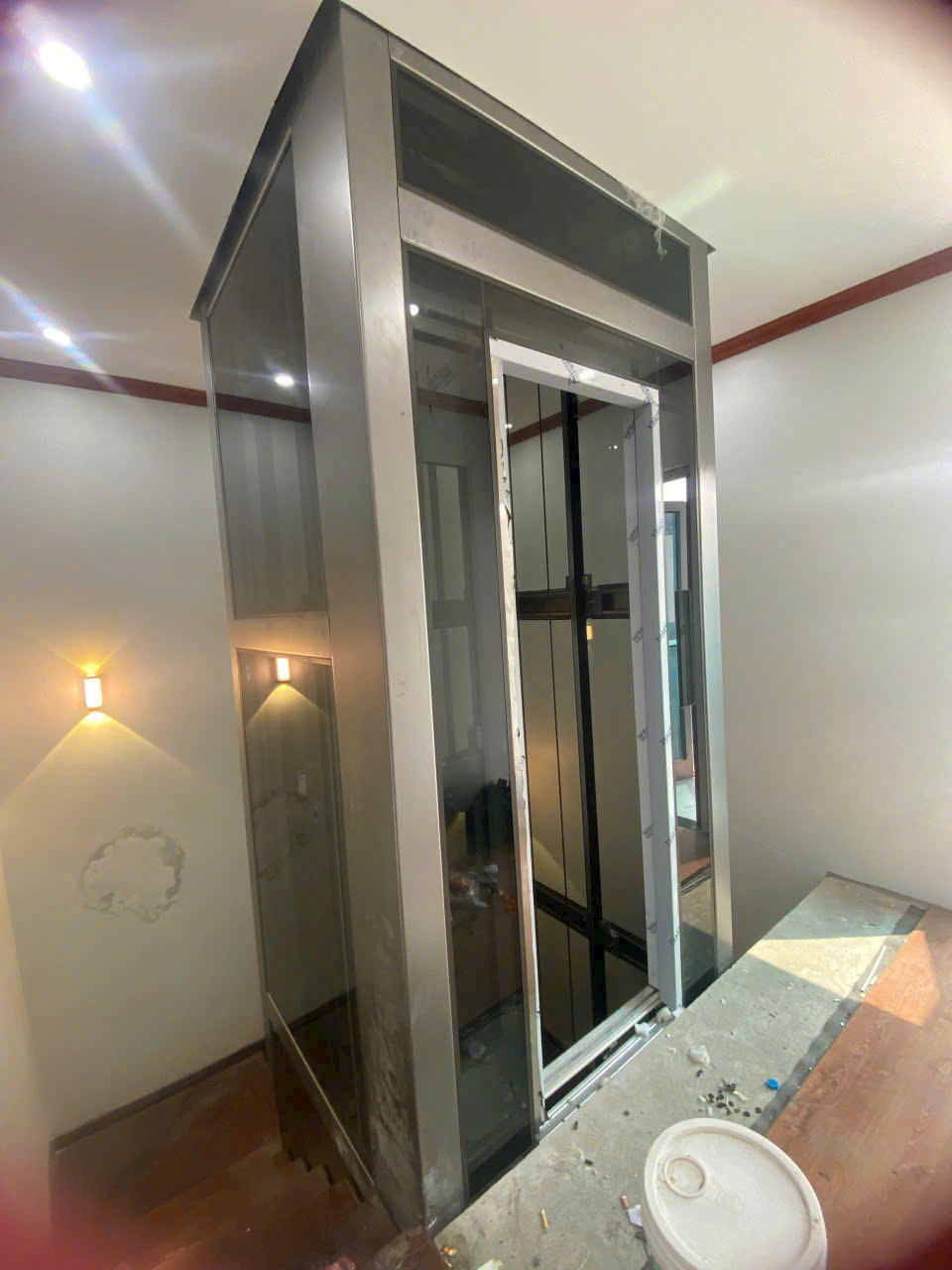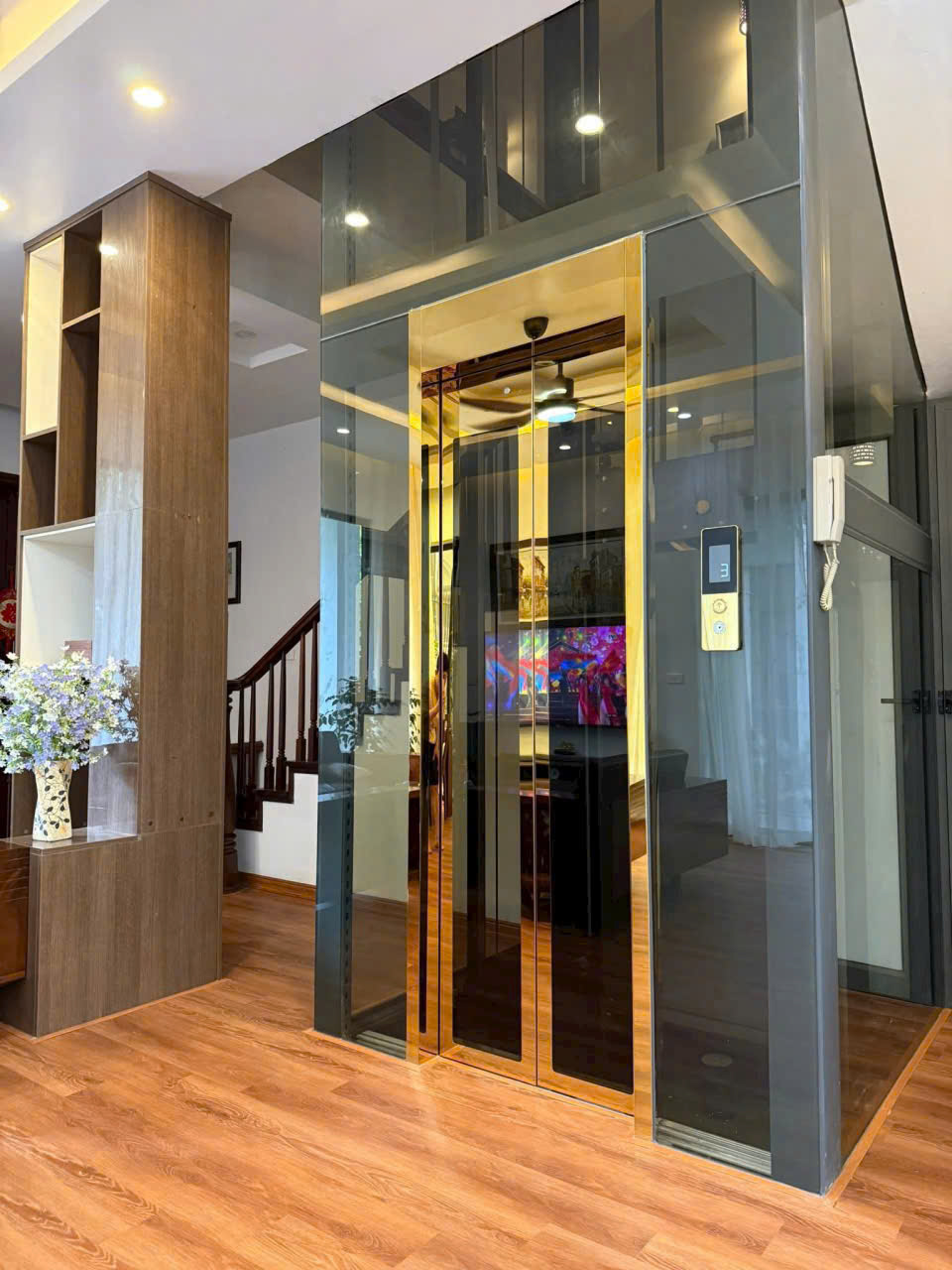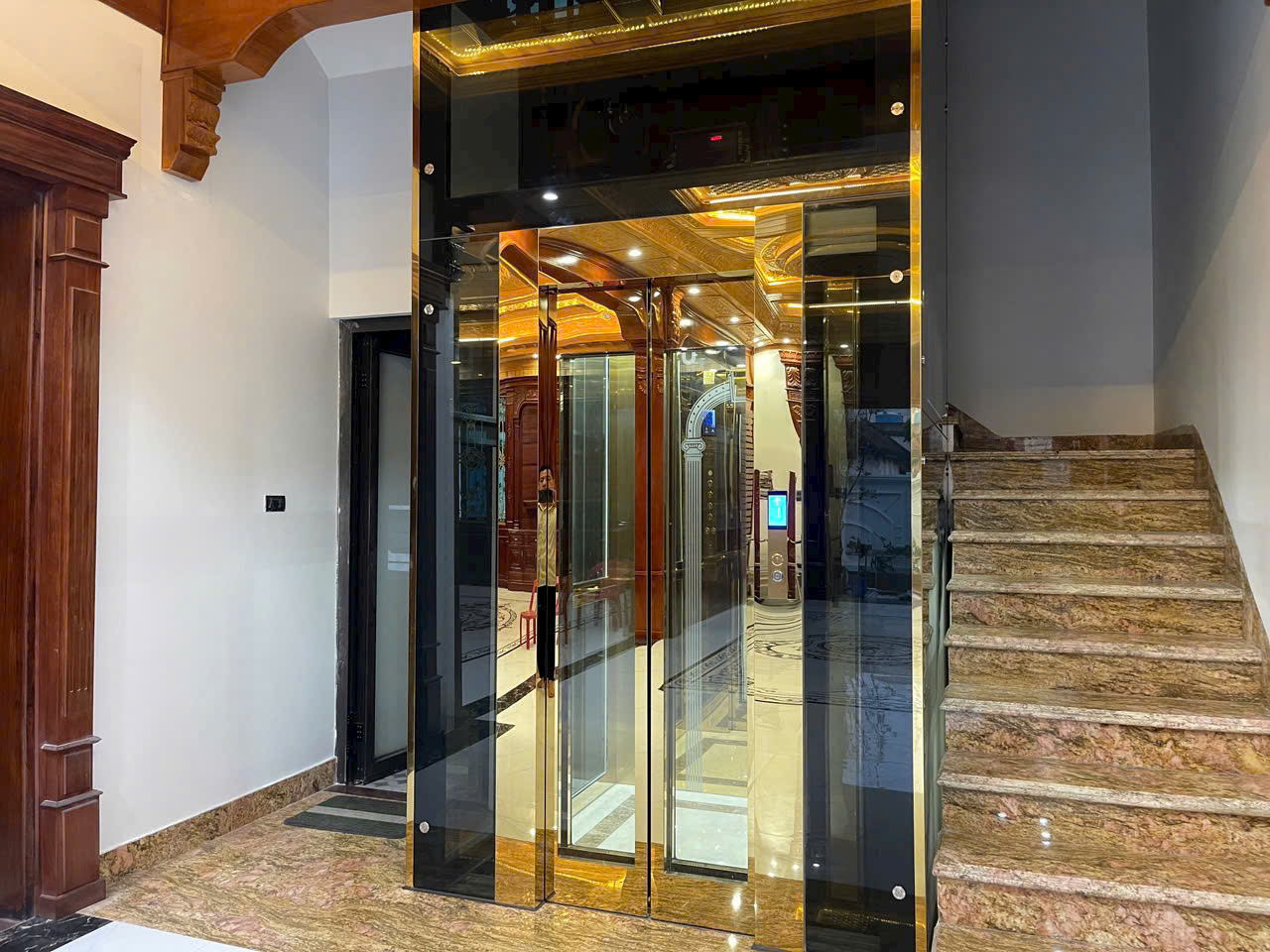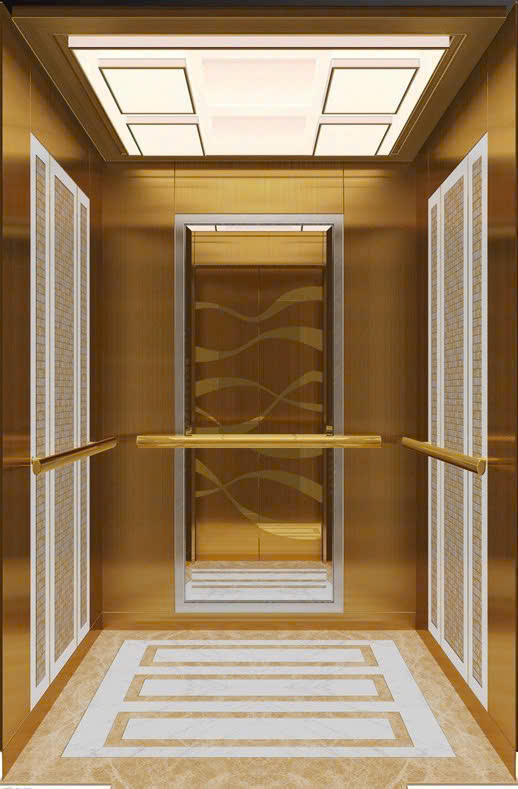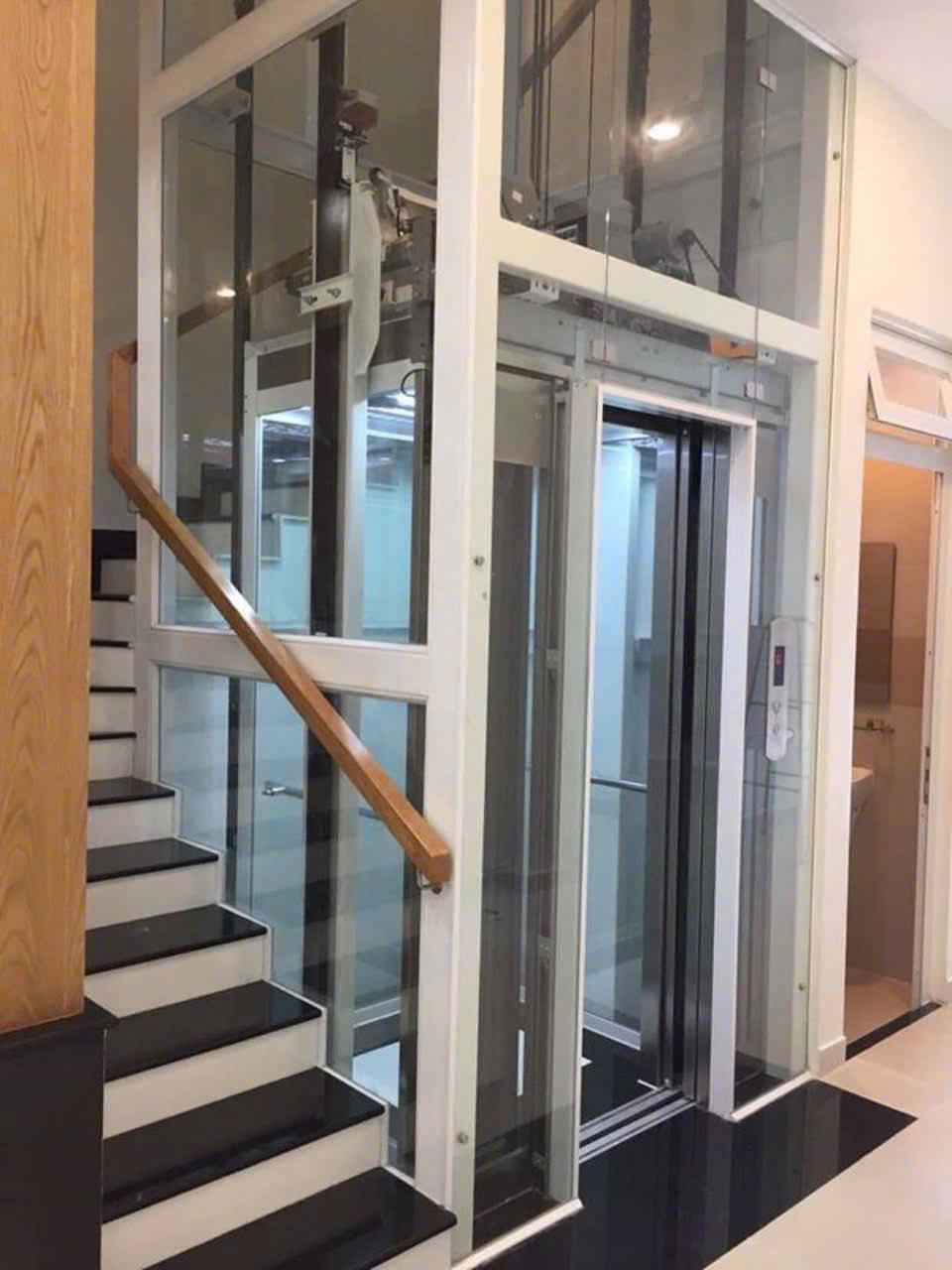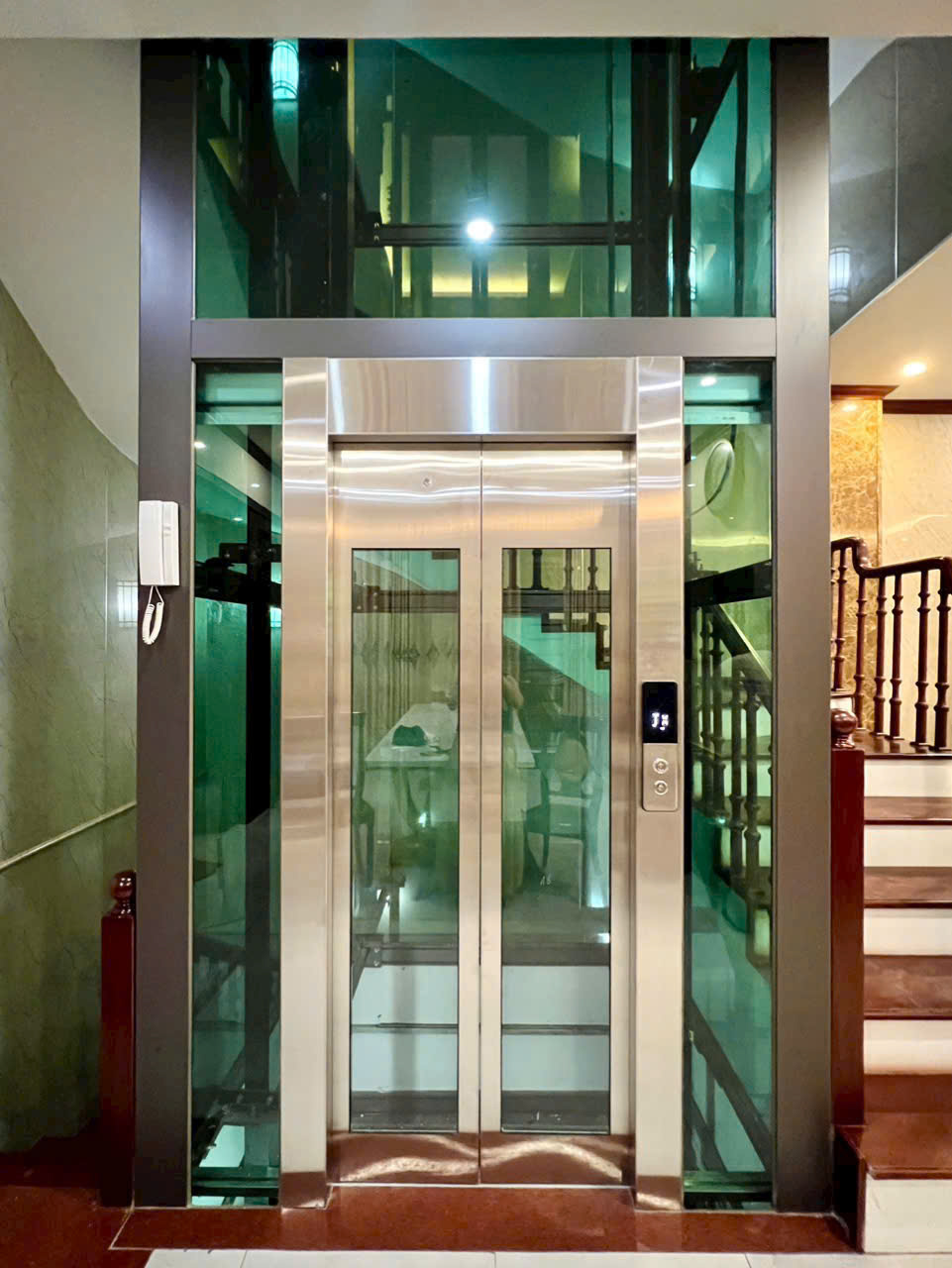


Elevator for Villas in Ha Nam
Elevators for villas in Ha Nam – Premium elevator solutions for luxurious living spaces.
Elevators in villas in Ha Nam are not merely a means of transportation, but also a symbol of luxury, class, and convenience in modern architecture. With the strong development of the real estate market and the demand for improved quality of life, choosing the right elevator for a villa has become a key factor in design and construction.
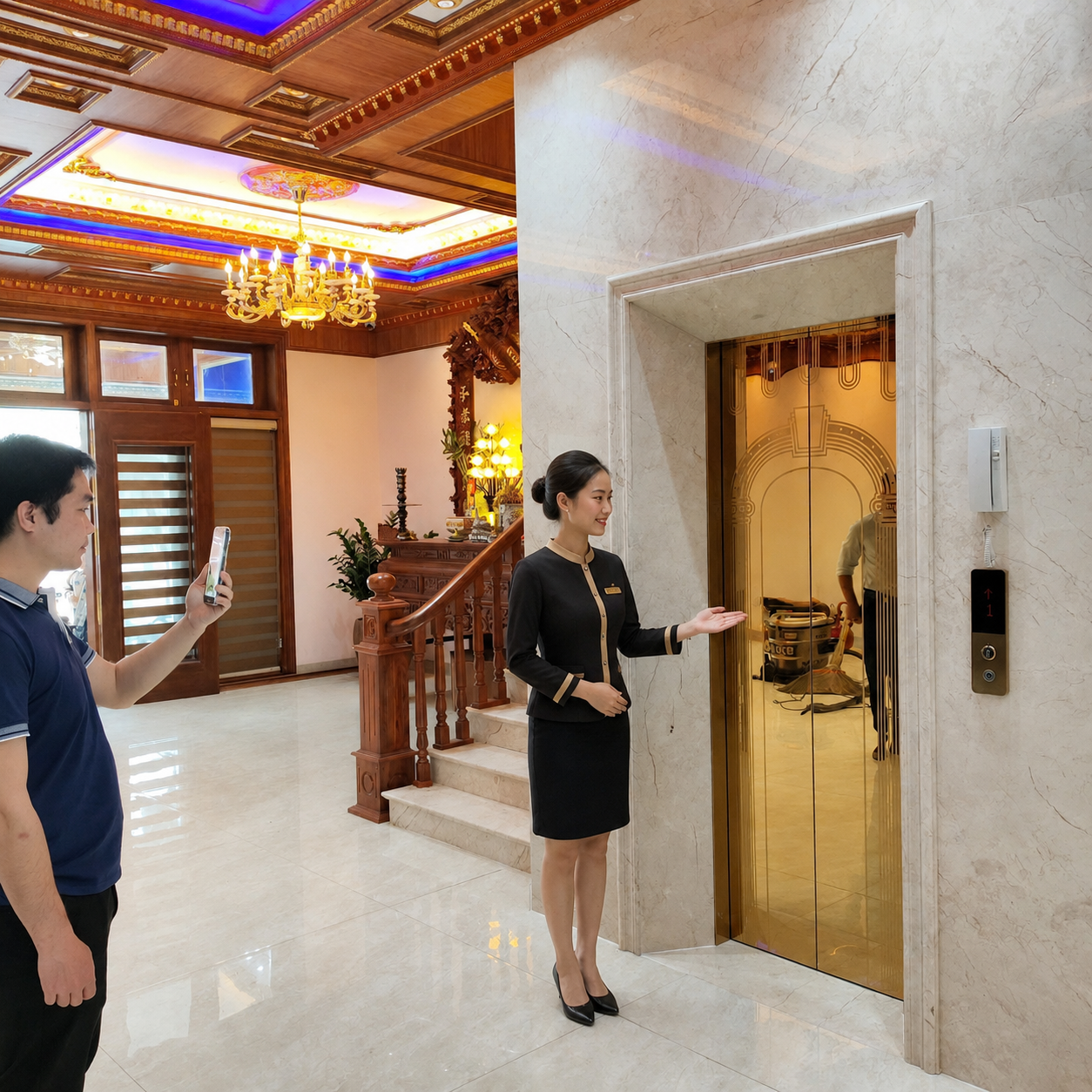
1. Specifications and technology of villa elevators in Ha Nam
Elevators in villas are typically designed with compact dimensions, suitable for limited spaces while still ensuring maximum comfort and safety for users. High-end elevator brands such as FUJI, imported from Japan, are favored due to their application of advanced technology.
- Microprocessor Control System: Optimizes operation, minimizes noise, and increases accuracy in floor stopping.
- Gearless Traction Machines: Increase operational efficiency, reduce power consumption, and extend equipment lifespan.
- Multi-layered safety system: Includes door sensors, emergency braking, anti-jamming system, and automatic rescue device in case of power failure.
- Premium cabin materials: Utilizing rust-resistant stainless steel, tempered glass, or composite materials, combined with sophisticated interior design, perfectly suited to the villa style.
2. Benefits of installing a villa elevator in Ha Nam
Installing an elevator in a villa not only increases property value but also brings many practical benefits:
- Enhanced aesthetics and luxury: The elevator is designed to blend seamlessly with the overall architecture, creating a striking focal point for the living space.
- Convenient and time-saving: Allows for quick movement between floors, especially useful for the elderly, young children, or large families.
- Absolute safety guaranteed: Safety systems undergo rigorous testing, minimizing risks during use.
- Energy saving: Gearless motor technology and intelligent control system help reduce power consumption, making it environmentally friendly.
- Easy maintenance and upgrades: Modern elevator models have a modular design, making routine maintenance and technological upgrades convenient.
3. Criteria for selecting a suitable villa elevator in Ha Nam
To ensure the elevator operates efficiently and harmonizes with the villa's space, homeowners should consider the following factors:
- Size and load capacity: Suitable for the number of family members and the available installation space.
- Design and materials: Choose cabin styles, colors, and materials that match the villa's architectural style.
- Brand and origin: Prioritize reputable brands such as FUJI, OTIS, and Mitsubishi with good warranty and after-sales service.
- Operating technology: Priority is given to elevator models that utilize energy-saving technology and operate smoothly.
- Investment and maintenance costs: Balance the initial investment budget and recurring maintenance costs to ensure long-term economic efficiency.
4. Professional villa elevator installation process in Ha Nam
Installing a villa elevator requires close coordination between the design, construction, and equipment supply parties.
- Site survey: Assess the space, building structure, and usage requirements to select the appropriate elevator type.
- Engineering design: Create detailed drawings of the installation location, electrical system, mechanical system, and cabin interior.
- Choosing a supplier and equipment: Select a reputable elevator brand that guarantees quality and support services.
- Construction and installation: Follow standard procedures, ensuring workplace safety and construction quality.
- Inspection and acceptance: Carry out inspection, load testing, and acceptance procedures as prescribed by the Ministry of Construction.
- Maintenance and servicing: Develop a regular maintenance plan to maintain the performance and durability of the elevator.
5. Trends in the development of villa elevators in Ha Nam.
In the context of ever-evolving technology, villa elevators in Ha Nam are moving towards smart and environmentally friendly solutions:
- IoT-connected elevators: Enabling remote monitoring and control, enhancing user experience, and increasing safety.
- Renewable energy applications: Utilize solar panels or renewable energy systems to reduce operating costs.
- Personalized design: Customize interiors and technology to match the homeowner's preferences and lifestyle.
- Machine Roomless Elevators (MRLs): Save construction space, suitable for villas with limited area.
Choosing and installing a villa elevator in Ha Nam requires careful consideration of technical, aesthetic, and economic aspects to bring optimal value to the living space.
Outstanding technical features of villa elevators in Ha Nam
Elevators in villas in Ha Nam are not simply a means of transportation between floors, but also an important part of the architectural design and lifestyle of the family. The selection and design of an elevator requires high technical precision to ensure stable, safe operation and harmony with the villa's space. Below is a detailed and in-depth analysis of the outstanding technical specifications of villa elevators in Ha Nam.
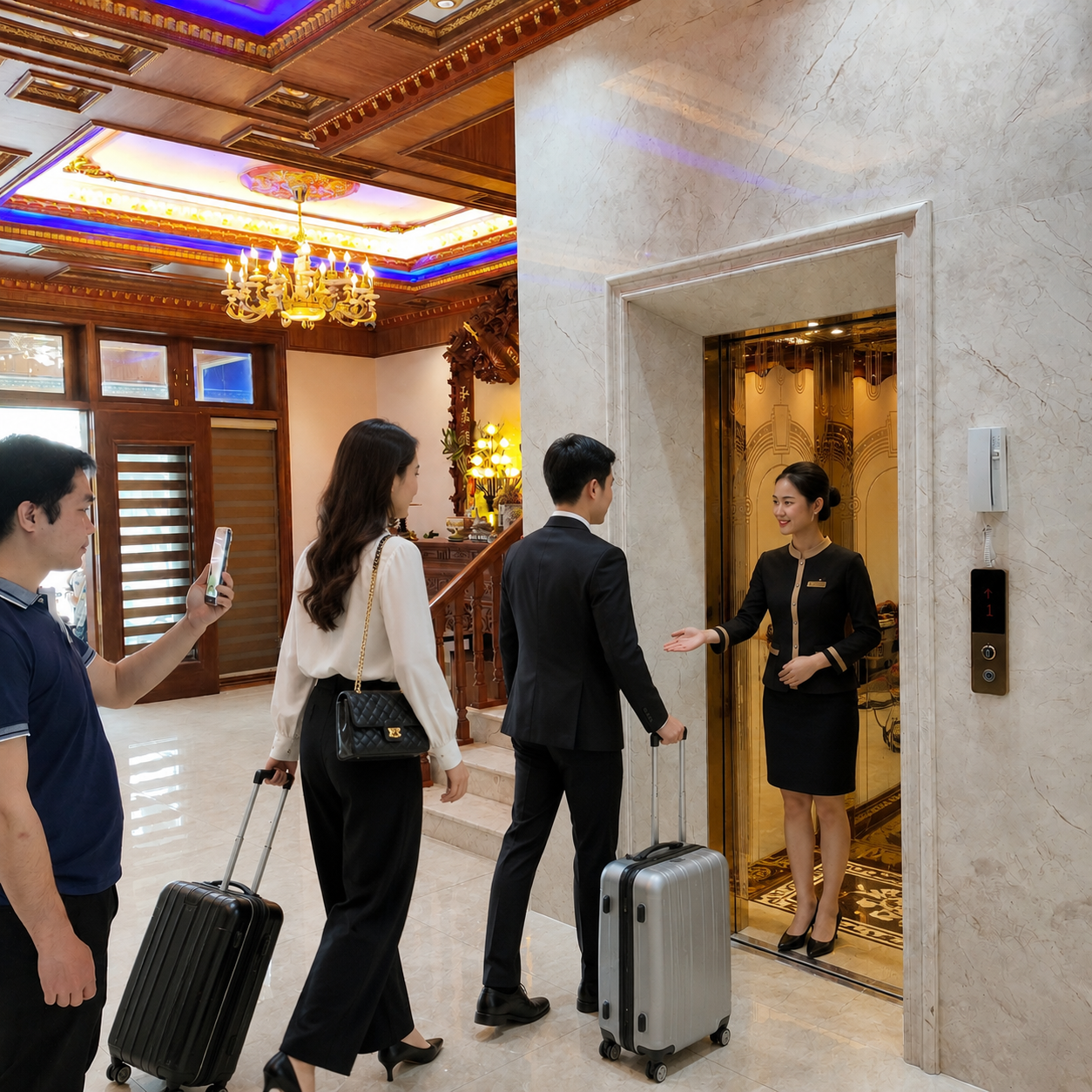
- Load capacity:
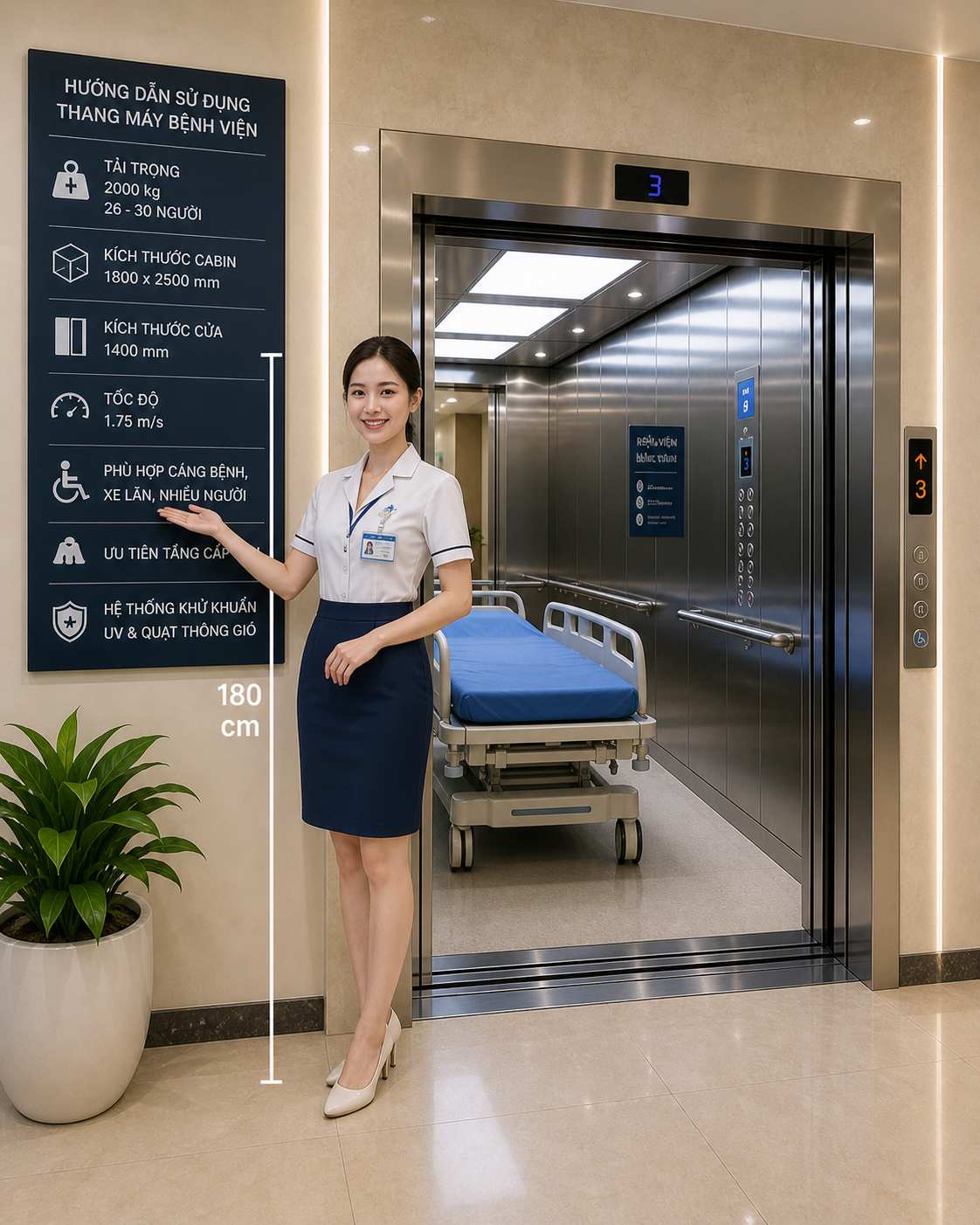
The load capacity of a villa elevator typically ranges from 350kg to 630kg, equivalent to a capacity of 4 to 8 people. Determining the appropriate load capacity depends not only on the number of users but also on factors such as cabin size, the weight of interior materials, and auxiliary equipment. Standard load capacity ensures stable elevator operation and prevents overloading that could damage the motor or drive system.
In villa elevator designs, a 350kg load capacity is typically used for villas with few floors, low transportation needs, and limited space. Conversely, a 630kg load capacity is suitable for villas with many floors, high transportation needs, or can be used for transporting small goods.
- Operating speed:
The speed of villa elevators in Ha Nam is typically between 0.4m/s and 1.0m/s. This speed is chosen to balance travel time with smoothness and safety for users. Speeds lower than 0.4m/s are generally not recommended as they can feel sluggish, while speeds exceeding 1.0m/s can create unwanted vibrations and noise in the living space.
Speed adjustment also depends on the building's height and number of floors. For multi-story villas, higher speeds help reduce waiting and travel time, while low-rise villas prioritize stability and smoothness.
- Cabin dimensions:
The size of elevator cabins in villas is designed flexibly, typically ranging from 900mm x 1100mm to 1100mm x 1400mm. This size not only affects capacity but also determines the convenience and aesthetics of the elevator within the villa space.
Cabin design requires careful consideration of installation space, load capacity, and interior requirements such as handrails, lighting systems, mirrors, and control devices. Additionally, the cabin size must be compatible with the shaft size and door system to ensure smooth operation.
- Control system:
Elevators in villas in Ha Nam are often equipped with modern microprocessor control systems. This technology allows the elevator to operate accurately, optimizes operation, and minimizes energy consumption.
The microprocessor-controlled system also supports intelligent features such as automatic load balancing, speed adjustment based on load, and travel schedule management to reduce waiting time. In addition, this technology helps reduce noise and vibration, enhancing the user experience.
- Safety system:
Safety is always the top priority in villa elevator design. Standard safety features include:
- Mechanical brake: Ensures the elevator can stop immediately in case of emergency or power failure.
- Door sensors: Prevent elevator doors from closing when there is an obstruction or a person standing in the doorway, avoiding unwanted accidents.
- Automatic rescue system: In the event of a power outage or elevator malfunction, this system will automatically bring the cabin to the nearest floor and open the doors to allow occupants to safely exit.
- Overspeed protection device: Prevents the elevator from traveling at speeds exceeding the permitted limit, protecting users from the risk of accidents.
- Emergency alarm and communication system: Allows users to contact the outside world in case of needing assistance.
The seamless integration of these safety devices not only complies with international standards but also suits the practical usage conditions in villas in Ha Nam, where absolute safety and stable operation are required.
Materials and Finishes: In addition to basic technical specifications, villa elevators also prioritize materials and cabin interior design. High-end materials such as stainless steel, tempered glass, natural wood, or composite materials are often used to create a luxurious space that harmonizes with the villa's architecture.
Installation and Maintenance Standards: The installation of villa elevators in Ha Nam must strictly adhere to technical standards regarding elevator shaft dimensions, electrical systems, ventilation, and fire safety. In addition, regular maintenance is crucial to ensure the elevator operates smoothly, detects technical faults early, and extends the equipment's lifespan.
Green technology application: Many modern villa elevator models in Ha Nam have integrated energy-saving technologies such as gearless motors and energy regeneration systems when the elevator brakes or descends, helping to minimize electricity consumption and be environmentally friendly.
FUJI elevators, manufactured in Japan – The perfect choice for villas in Ha Nam.
FUJI elevators , a symbol of sophistication and cutting-edge technology from Japan, have established their position in the high-end elevator market, especially in villa projects in Ha Nam. The combination of meticulous craftsmanship, premium materials, and aesthetic design has created a product that not only meets transportation needs but also enhances the architectural value of the home.
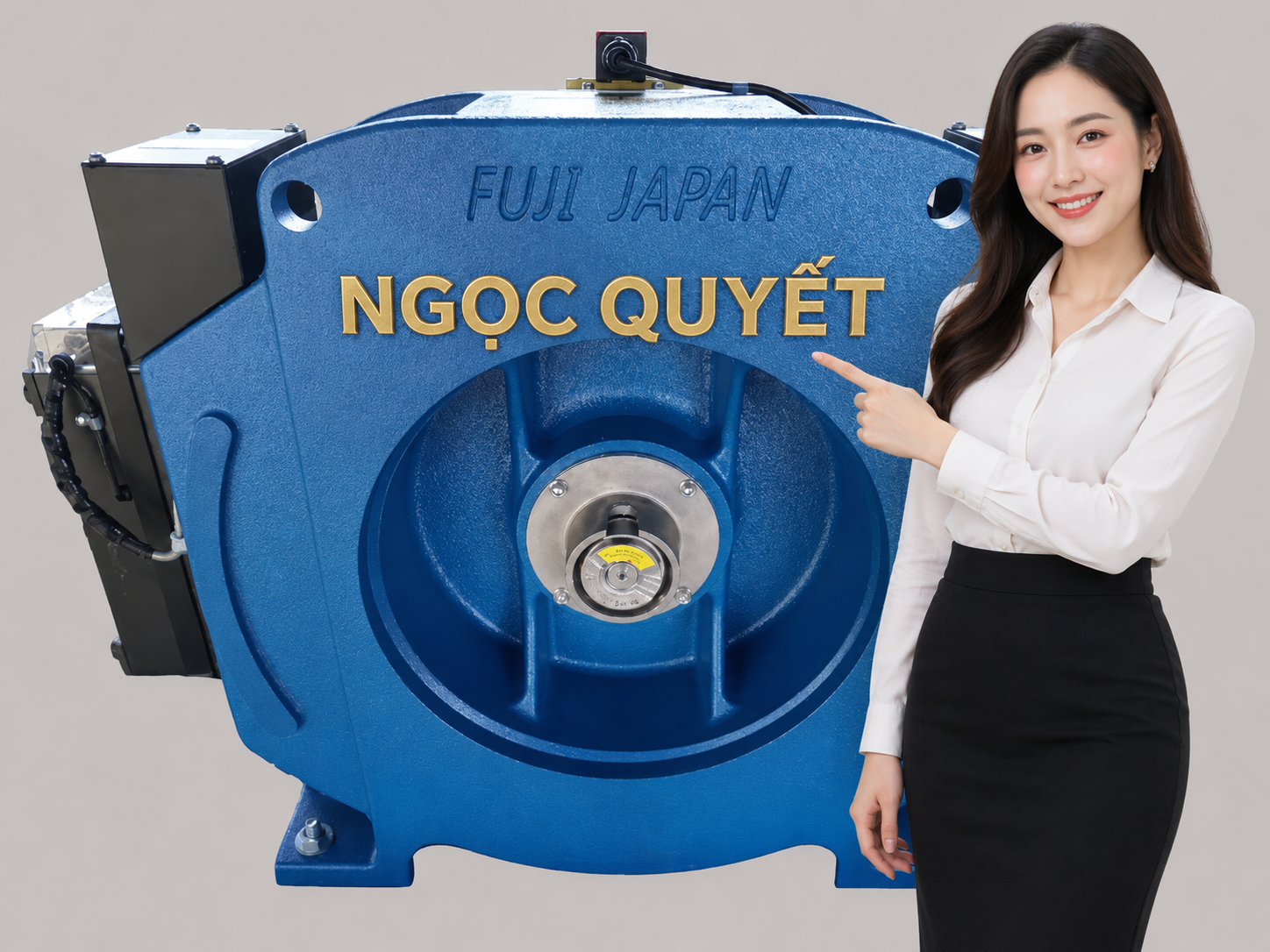
Advanced Japanese technology – The foundation for optimal operation.
FUJI employs a new generation microprocessor control system, integrating IoT technology and smart sensors to ensure high-precision elevator operation, minimizing vibration and noise. Gearless motors are commonly used in FUJI elevators, saving up to 30% energy compared to traditional motors while also increasing equipment lifespan.
The electromagnetic braking system and automatic speed control ensure absolute safety during operation, making it particularly suitable for villa constructions that require high stability and user safety.
Exceptional durability – Materials and manufacturing techniques suitable for the climate of Ha Nam.
FUJI elevators are constructed from SUS304 stainless steel and high-grade aluminum alloy, offering effective corrosion and oxidation resistance in high-humidity and temperature-varying environments like Ha Nam. Electronic and mechanical components undergo rigorous testing according to JIS (Japanese Industrial Standards), ensuring high load-bearing capacity and long-term durability.
The integrated anti-vibration and shock absorption system minimizes the impact of external factors such as minor earthquakes or vibrations from surrounding construction activities, helping the elevator maintain stable operation over a long period.
Luxurious and diverse designs – Celebrating the villa style.
FUJI elevator cabins are designed with a wide range of finishing materials such as tempered glass, polished stainless steel, natural wood, and granite, suitable for all architectural styles from modern to classic. Customers can customize the cabin size, color, LED lighting system, and interior decorative details to create an elevator space that harmonizes with the overall villa design.
The touch-screen control panel and sharp LCD display make it easy for users to operate and monitor the elevator's status. In addition, FUJI offers advanced options such as an internal sound system, surveillance cameras, and network connectivity to enhance the user experience.
Professional after-sales service – Ensuring continuous and safe operation.
FUJI is committed to providing regular maintenance services with a team of well-trained technicians using modern testing equipment to detect early signs of wear and tear or damage. The maintenance process is carried out according to Japanese standards, including inspection of electrical systems, mechanical systems, safety, and cabin cleaning.
In case repairs are needed, FUJI ensures the prompt supply of genuine parts, minimizing downtime. The 24/7 customer support system helps answer questions and resolve issues promptly, providing complete peace of mind for villa owners in Ha Nam.
- Energy saving: Gearless motor technology and intelligent control systems help reduce power consumption, aligning with the trend of sustainable development.
- Maximum safety: Door sensor system, electromagnetic brakes, and automatic rescue device ensure user safety in all situations.
- Highly customizable: Flexible design in terms of size and interior to meet all architectural requirements and personal preferences.
- Long lifespan: High-quality materials and modern manufacturing technology ensure that FUJI elevators operate reliably for many years without requiring major replacements.
- Comprehensive after-sales service: Regular maintenance, prompt repairs, and 24/7 technical support ensure the elevator is always in top condition.
The process of installing villa elevators in Ha Nam according to technical standards and safety regulations.
Installing a villa elevator in Ha Nam is not simply a matter of putting the equipment into use; it requires a rigorous technical process to ensure absolute safety and optimize operational efficiency throughout the elevator's lifespan. Each step in the process needs to be carried out by a team of highly specialized technicians who understand the specific characteristics of villa construction as well as international and Vietnamese elevator standards.
Survey of the current condition of the building:
- This is the first and most important step, aimed at gathering accurate data about the installation space, including floor height, elevator shaft area, elevator placement within the villa, and the building's load-bearing structure.
- Technicians will use modern surveying equipment such as electronic total stations and laser measuring devices to ensure high accuracy.
- Building structural assessment includes checking the load-bearing capacity of foundations, walls, and factors affecting drilling or elevator shaft construction.
- Analyze the homeowner's usage requirements, such as the number of users, frequency of operation, maximum load capacity, and any special aesthetic or technological requirements.
Choosing the right elevator model:
- Based on the survey results, the consultant will suggest elevator models with suitable load capacities (usually from 250kg to 1000kg for villas), cabin sizes compatible with the elevator shaft space, and designs that harmonize with the villa's architecture.
- Consider factors such as the type of motor (cable-driven or hydraulic), operating speed, intelligent control system, and safety features such as anti-jamming sensors and automatic rescue systems.
- Suggest cabin finishing materials such as stainless steel, tempered glass, natural wood, or composite materials to match the villa's interior style.
- Evaluate investment and maintenance costs to ensure the optimal choice in terms of both economics and technology.
Technical drawing design:
- Detailed technical drawings include shaft layouts, installation locations of mechanical and electronic equipment, control systems, and safety devices.
- The design must comply with international standards such as EN 81 or TCVN 6397:2018 on elevator safety, while also conforming to local construction regulations in Ha Nam.
- Coordinate with the architect to ensure the elevator does not affect the overall structure and aesthetics of the villa.
- The design of the electrical system and control network must ensure noise immunity, stability, and ease of maintenance.
- Develop a detailed plan outlining the construction schedule, materials, and personnel involved.
Construction of the elevator shaft:
- Prepare the elevator shaft according to the design dimensions, ensuring high vertical alignment and accuracy to avoid misalignment during equipment installation.
- The foundation should be treated and the structure reinforced if necessary to ensure long-term load-bearing capacity and stability for the elevator.
- Installation of electrical systems, including power supply, lighting system, and control signal wiring.
- Conduct a thorough inspection of the elevator shaft after completion to detect and promptly address any defects such as cracks, moisture, or insulation issues.
- Ensure site hygiene and workplace safety throughout the construction process.
Elevator installation:
- Install the elevator cabin with components such as the frame, walls, floor, ceiling, lighting system, and control buttons.
- Install the hoisting cable system, traction pulleys, and cable traction motor or hydraulic system depending on the type of elevator selected.
- Install the central control panel, safety sensor system, automatic rescue device, and other auxiliary equipment.
- Inspect each component thoroughly during installation to ensure there are no technical faults or damage.
- Perform electrical connections and test the control system, ensuring accurate and stable signal transmission.
Test and run a trial:
- Perform a comprehensive inspection of safety functions such as door sensors, braking systems, emergency alarms, and rescue systems.
- Conduct elevator tests with real loads to evaluate operational performance, smoothness, speed, and stability.
- Check the technical specifications against standards such as speed, vibration, noise, and power consumption.
- Record and address any errors that arise during the testing process to ensure the elevator meets standards before handover.
- Conduct acceptance testing in accordance with the regulations of the construction management and labor safety authorities.
Handover and user instruction:
- Provide homeowners with complete technical documentation, user manuals, and elevator maintenance instructions.
- Provide direct training to users on safe operation, basic troubleshooting, and routine maintenance procedures.
- Establish a schedule for regular maintenance and inspections to maintain the performance and lifespan of the elevator.
- We provide after-sales service, technical support, and prompt repairs in case of any problems.
- Ensure homeowners are fully aware of the safety regulations and responsibilities regarding elevator use.
Criteria for selecting the right villa elevator in Ha Nam for each project.
Choosing an elevator for a villa in Ha Nam requires careful consideration based on many professional factors to ensure the equipment not only operates efficiently but also suits the architecture and feng shui of the building. Below are detailed and in-depth criteria to help homeowners and designers make the right decision:
- Villa area and structure:
First, a thorough survey of the existing or planned elevator shaft dimensions is necessary. The shaft must meet minimum technical size standards to ensure safe and stable elevator operation. For villas with limited space, mini elevators or machine-roomless elevators (MRLs) are optimal choices, saving space while still ensuring functionality. Furthermore, the elevator installation location needs to be carefully considered to avoid impacting the villa's load-bearing structure and disrupting the overall architectural layout.
- Load capacity and number of users:
Elevators in villas typically serve the needs of families with a relatively small number of users, therefore choosing the appropriate load capacity is crucial. Common load capacities for villa elevators range from 250kg to 450kg, equivalent to 3-6 people. Choosing an excessively large capacity will waste electricity and investment costs, while a capacity that is too small can lead to overloading, affecting equipment lifespan and user safety. Calculations should be based on the number of family members, frequency of use, and specific needs such as transporting large items.
- Cabin design and materials:
A villa elevator cabin is not just a means of transportation but also a crucial aesthetic element, contributing to the value and style of the house. Homeowners should choose a cabin design that matches the overall architectural style: modern, classic, or neoclassical. Common materials include 304 or 316 stainless steel with delicate decorative patterns, clear or frosted tempered glass to create a sense of spaciousness, or high-quality natural wood combined with artistic LED lighting to create a luxurious focal point. Furthermore, attention should be paid to the handrail system, cabin floor, and ceiling to ensure harmony and maximum comfort.
- Safety and technology standards:
Elevators in villas must strictly comply with international and Vietnamese safety standards such as TCVN 6394:2018 on elevators, ensuring safe braking systems, anti-jamming door sensors, automatic rescue devices in case of power failure, and emergency alarm systems. Operating technology is also very important, prioritizing elevator models using gearless motors to save energy, reduce noise, and operate smoothly. In addition, smart features such as smartphone control, fingerprint recognition, or magnetic card access are increasingly being applied to enhance security and convenience.
- Investment budget:
The investment cost for a villa elevator includes the purchase price of the equipment, installation costs, cabin interior finishing, and incidental expenses during use such as maintenance and repairs. Homeowners need to balance their budget to suit their financial capabilities while still ensuring the quality and durability of the elevator. Choosing reputable brands with good after-sales service will help minimize risks and long-term costs. In addition, investing in energy-saving technology and durable materials also contributes to reducing operating costs.
Contact us for consultation and contract for villa elevator installation in Ha Nam.
For homeowners in the process of building or renovating villas in Ha Nam, choosing a reputable elevator supplier is a crucial step to ensure quality and construction progress. Professional companies will provide free site surveys, detailed consultations on elevator design solutions suitable for each specific project, and transparent and reasonable pricing.
The installation contract should be clearly and comprehensively drafted, detailing technical terms, construction schedule, warranty, and maintenance to protect the rights of both parties. This helps avoid disputes and ensures the elevator operates according to technical standards, safely, and durably over time.
Our team of experienced technicians will assist homeowners in surveying the existing structure, developing optimal design plans, and advising on the selection of high-end elevator models such as FUJI elevators manufactured in Japan or other imported brands suitable for the demanding requirements of villas in Ha Nam. These products are highly regarded for their durability, safety features, and advanced technology, meeting both the functional and aesthetic needs of customers.