

Home elevators
Home elevators: The optimal mobility solution for townhouses and villas.
Home elevators are becoming increasingly popular in townhouses and villas, not only enhancing convenience but also increasing the value of the home. With prices ranging from 250,000,000 VND to over 1,000,000,000 VND, home elevators offer many options to suit different needs and budgets. Choosing the right elevator depends not only on price but also on origin, operating technology, load capacity, and design that complements the architectural space of each house.
Classification of home elevators by origin and technology
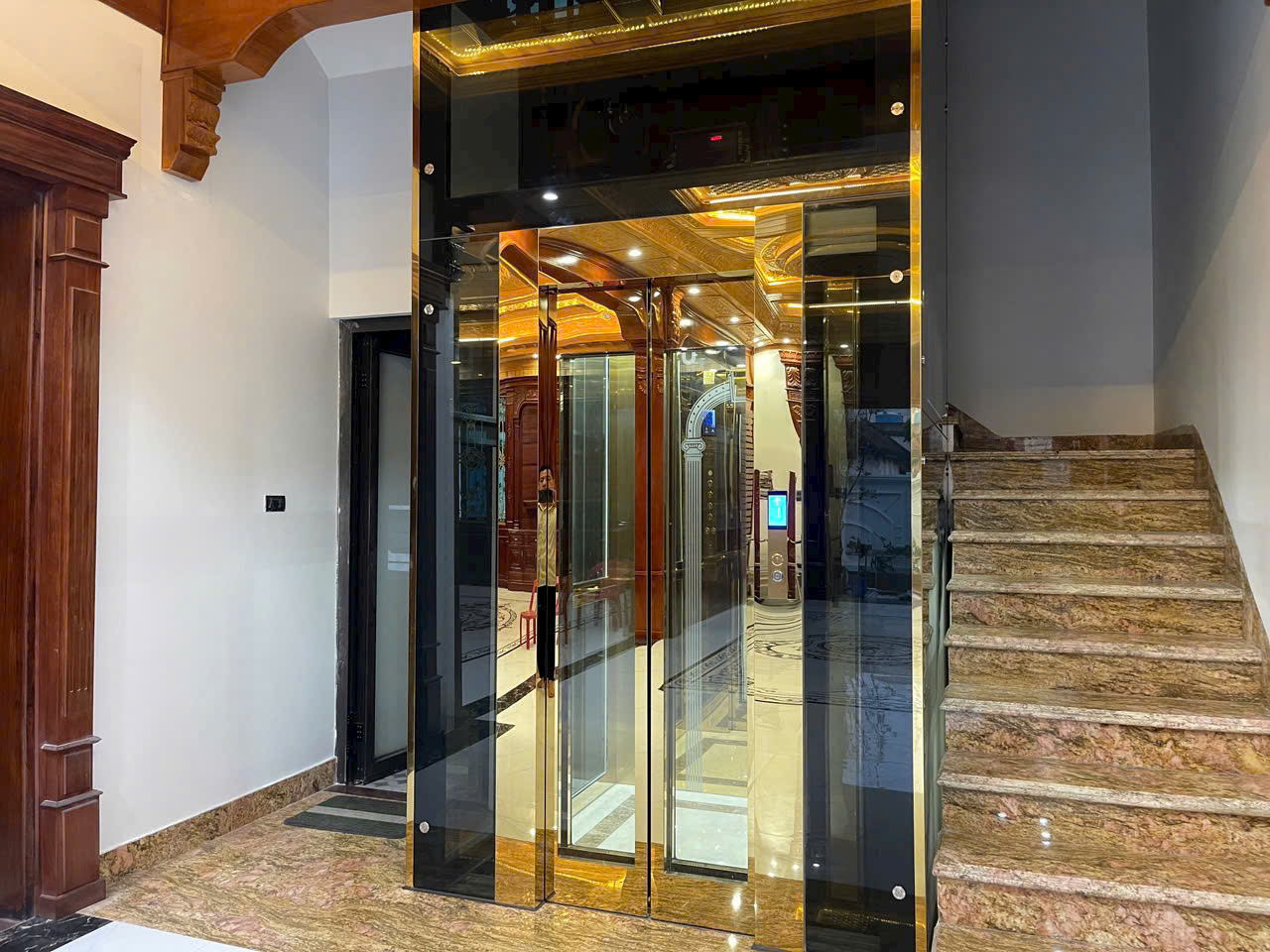
Home elevators are primarily classified based on their origin and operating technology . In terms of origin, joint-venture elevators combine imported and domestically manufactured components, offering reasonable costs and ease of maintenance, while fully imported elevators from reputable brands boast consistent quality, sophisticated design, and high safety features, suitable for high-end buildings. Regarding technology, traditional cable-driven elevators are popular due to their high speed and large load capacity but require a deep pit; modern screw-driven elevators do not require a deep pit, operate smoothly, and are suitable for limited spaces; and hydraulic elevators stand out for their smooth operation and high load capacity but require dedicated equipment space.
Classified by origin
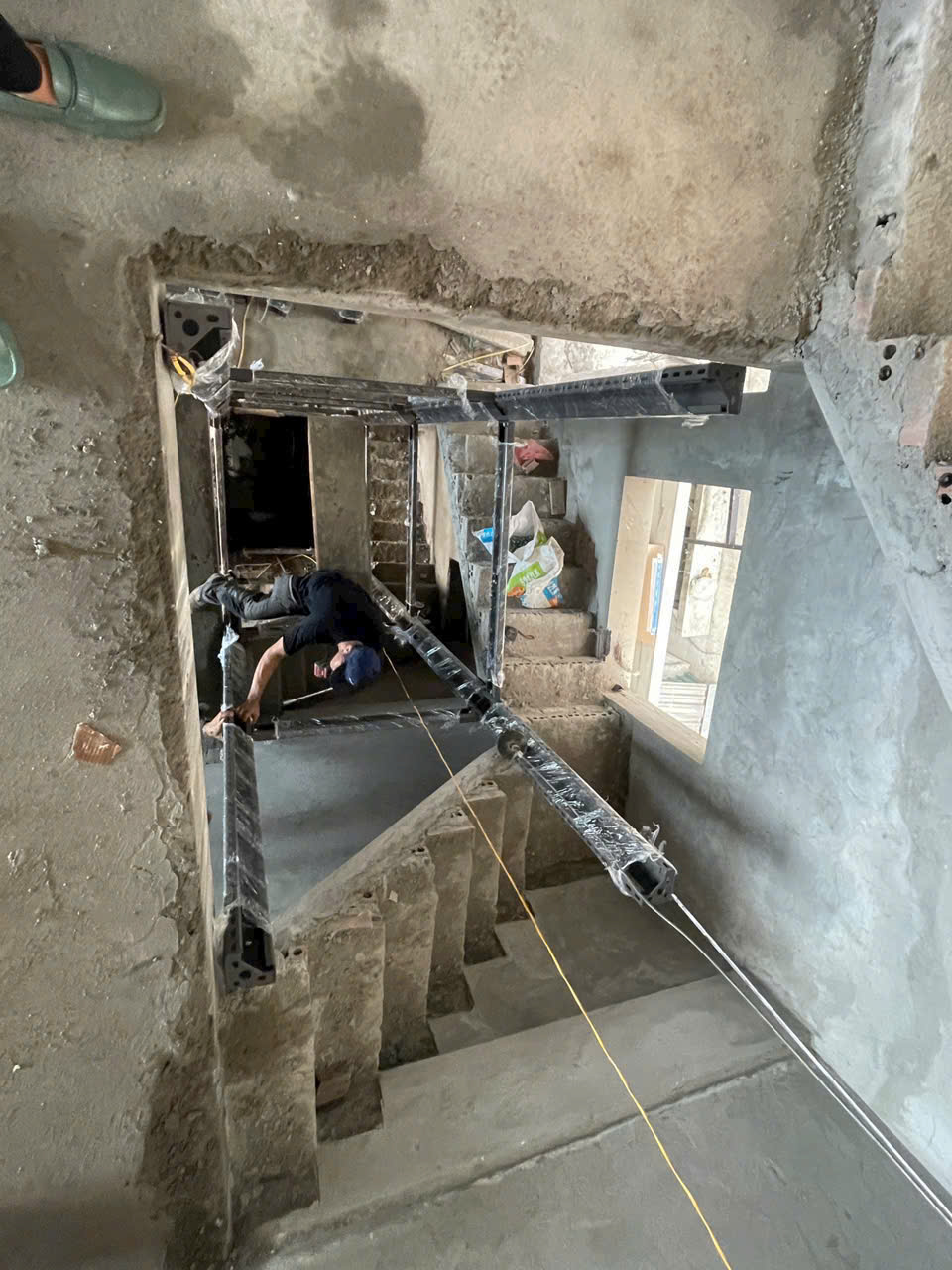
Joint venture elevators are a popular product line in Vietnam, where the cabin is manufactured domestically while key components such as the motor and control panel are imported from reputable suppliers. The advantages of this type of elevator include reasonable cost, quick delivery time, and ease of maintenance and repair due to readily available components. This is a suitable choice for families who want to save costs while still ensuring stable operation.
Fully imported elevators from major brands such as Mitsubishi and Fuji (Japan), and Cibes and Kalea (Sweden) offer consistent high quality, sophisticated design, and modern technology. These elevators are typically more expensive than joint-venture models, but they offer superior durability, smooth operation, and advanced safety features. Fully imported elevators are ideal for high-end villas or projects requiring stringent technical standards.
Classified by operating technology
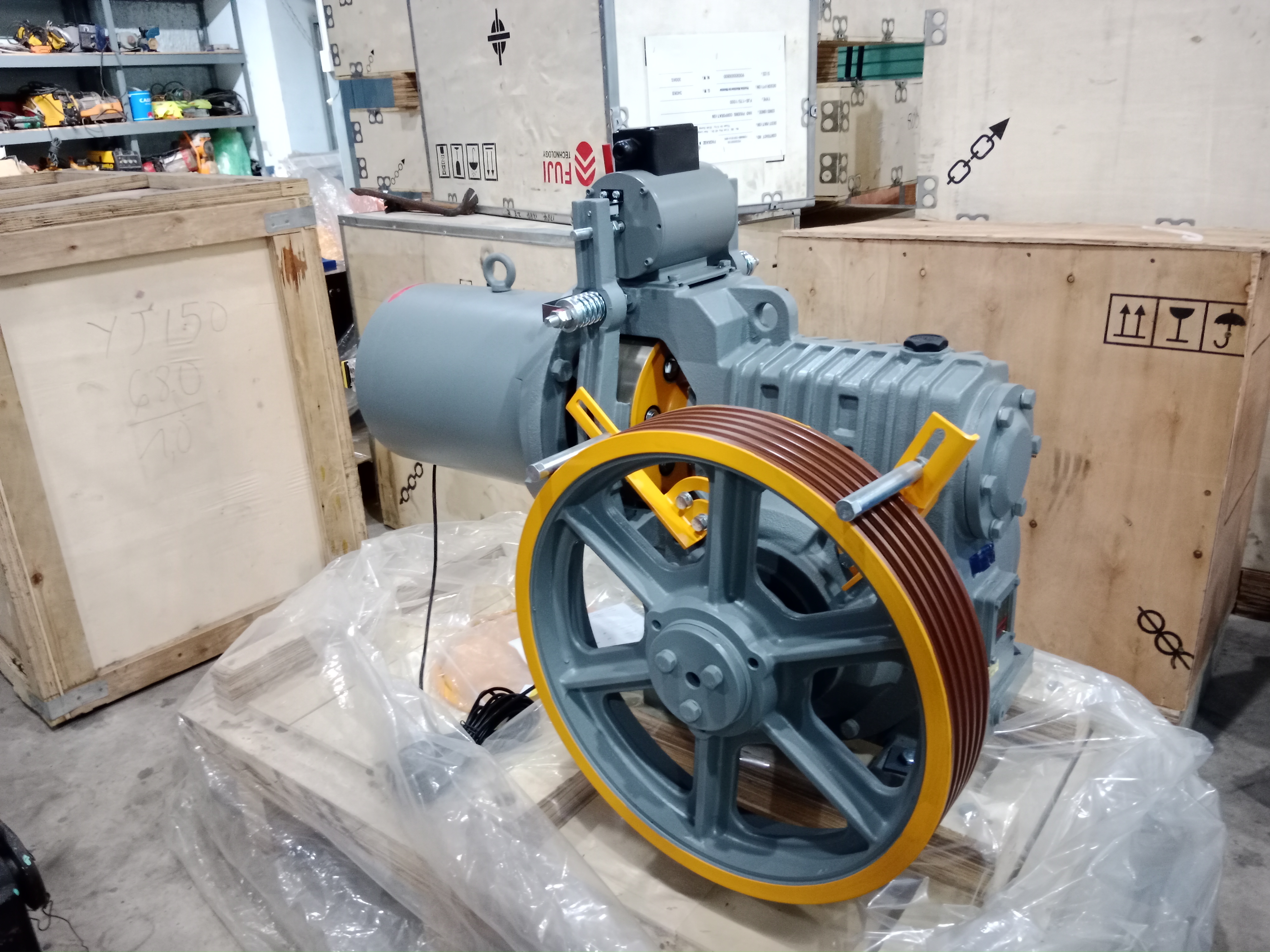
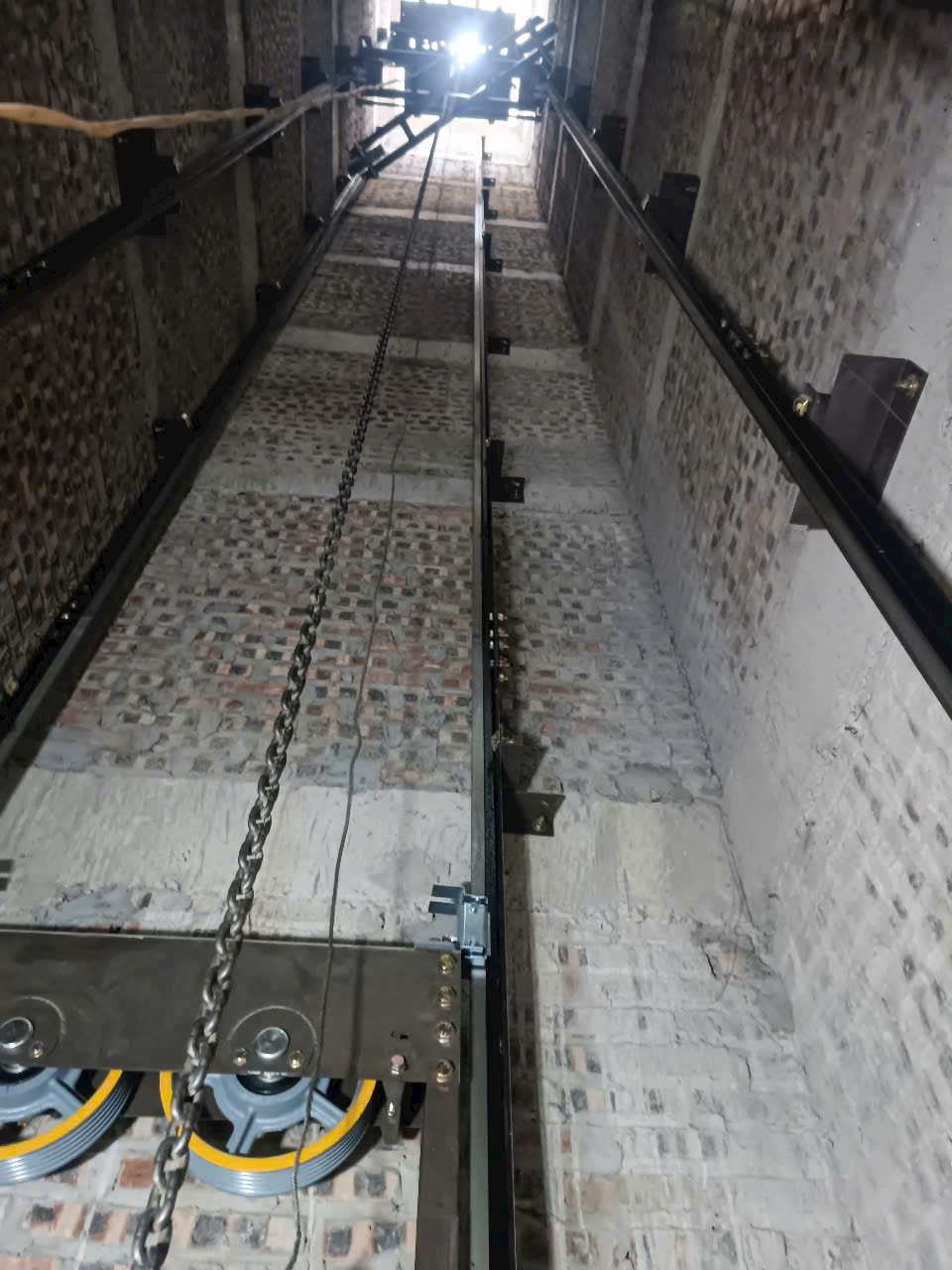
Traditional cable-driven elevators are the most common technology today, using a system of cables and counterweights to raise and lower the cabin. The advantages of this type of elevator are high speed, large load capacity, and relatively low cost. However, cable-driven elevators require a deep pit and often need a machine room on the roof to house the traction machine, which can be challenging in renovation projects or buildings with limited space.
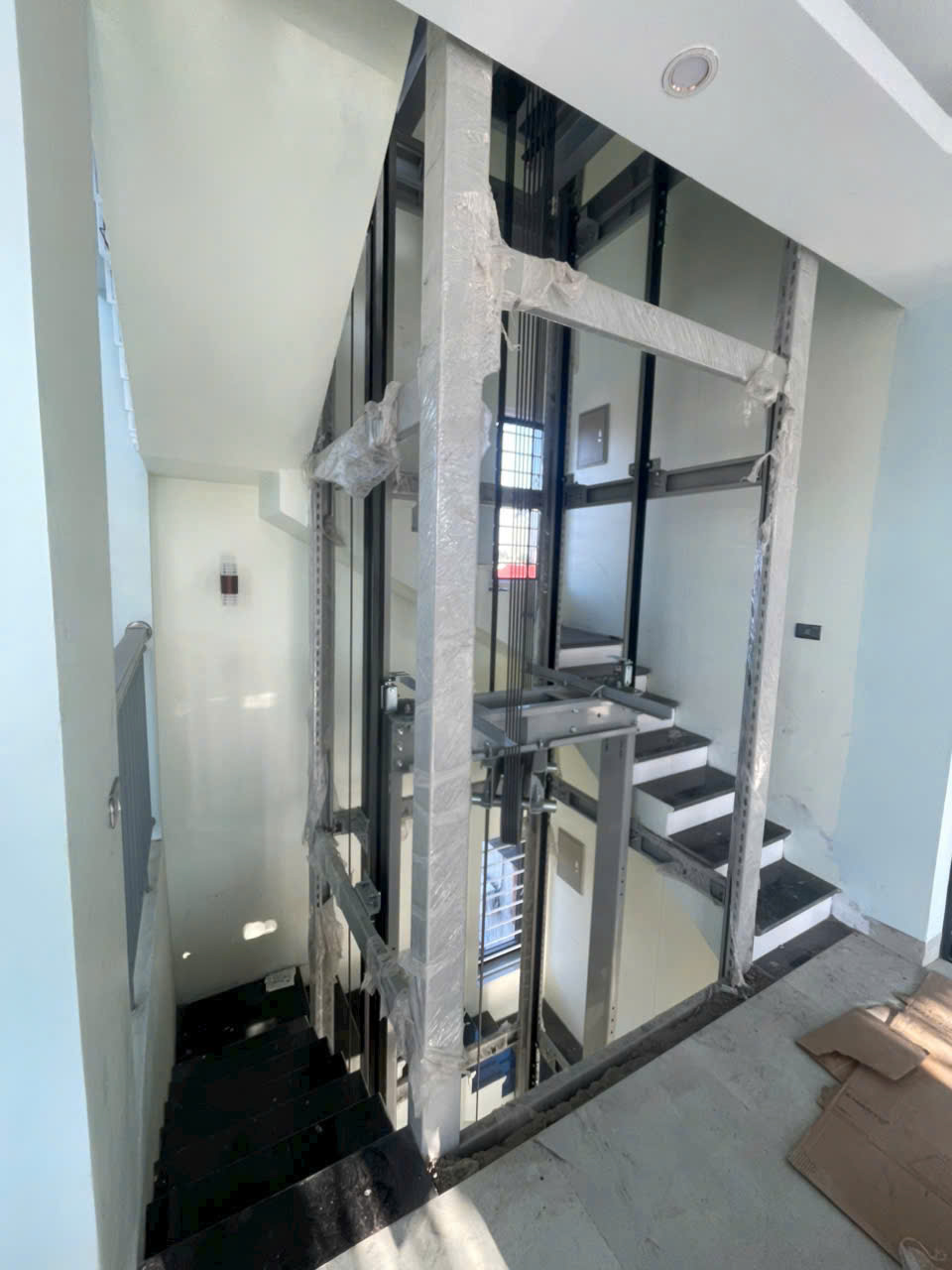
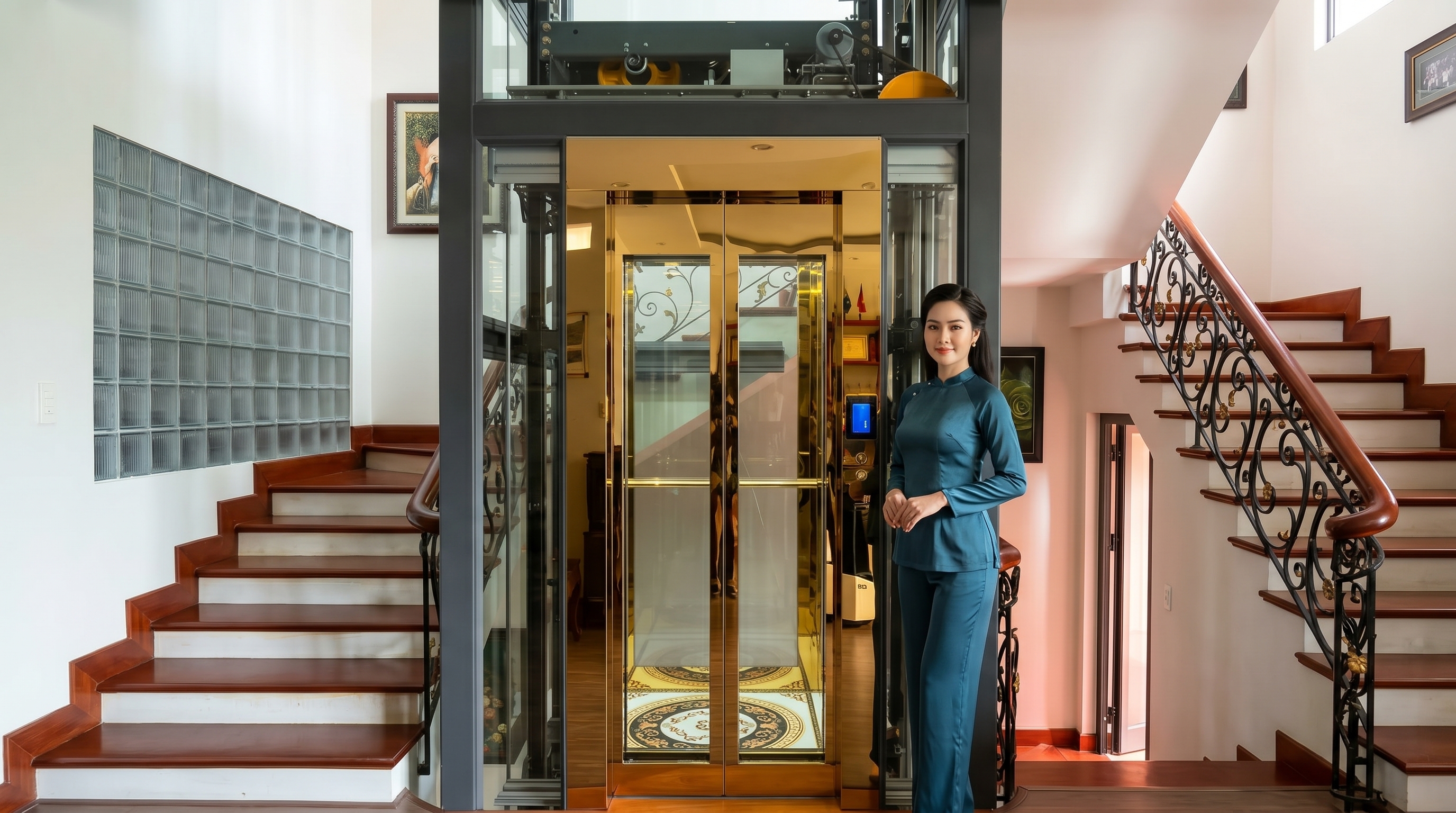
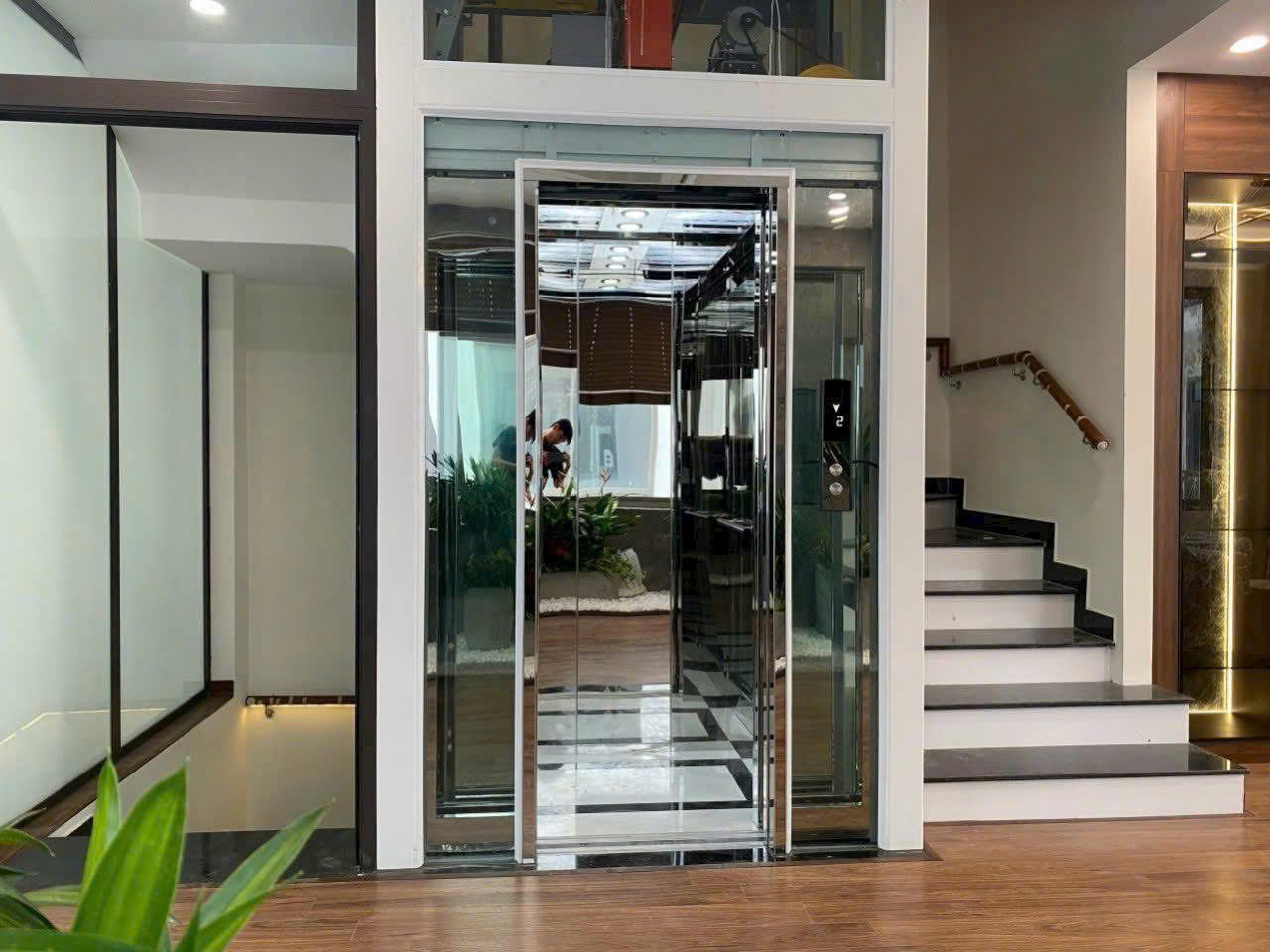
Screw-drive elevators are a new technology that uses a screw mechanism to lift and lower the elevator cabin instead of cables. This type of elevator requires no pit, or only a very shallow pit, and does not need a separate machine room. Screw-drive elevator designs often incorporate transparent glass walls, creating a luxurious and modern look for interior spaces. Furthermore, screw-drive elevators offer high safety and smooth operation, making them ideal for renovation projects or townhouses with limited space.
Hydraulic elevators operate on the principle of hydraulic oil pumping to raise and lower the cabin. A key advantage of hydraulic elevators is their smooth and quiet operation, as well as their ability to handle heavy loads. However, hydraulic elevators require dedicated space for the control panel and oil pump, and maintenance costs can be higher due to the complex hydraulic system. This type of elevator is commonly used in villas or houses with spacious interiors.
Criteria for choosing the right home elevator
Choosing a home elevator requires considering many technical and aesthetic factors to ensure harmony with the architecture and user needs. Some important criteria include:
- Load capacity and cabin size: Common load capacities for home elevators range from 250 kg to 630 kg, equivalent to 3 to 8 people. The cabin size should be appropriate for the elevator shaft area and actual usage needs.
- Floor height and operating speed: Home elevators typically have speeds ranging from 0.3 m/s to 1 m/s, suitable for low floor heights and indoor movement needs.
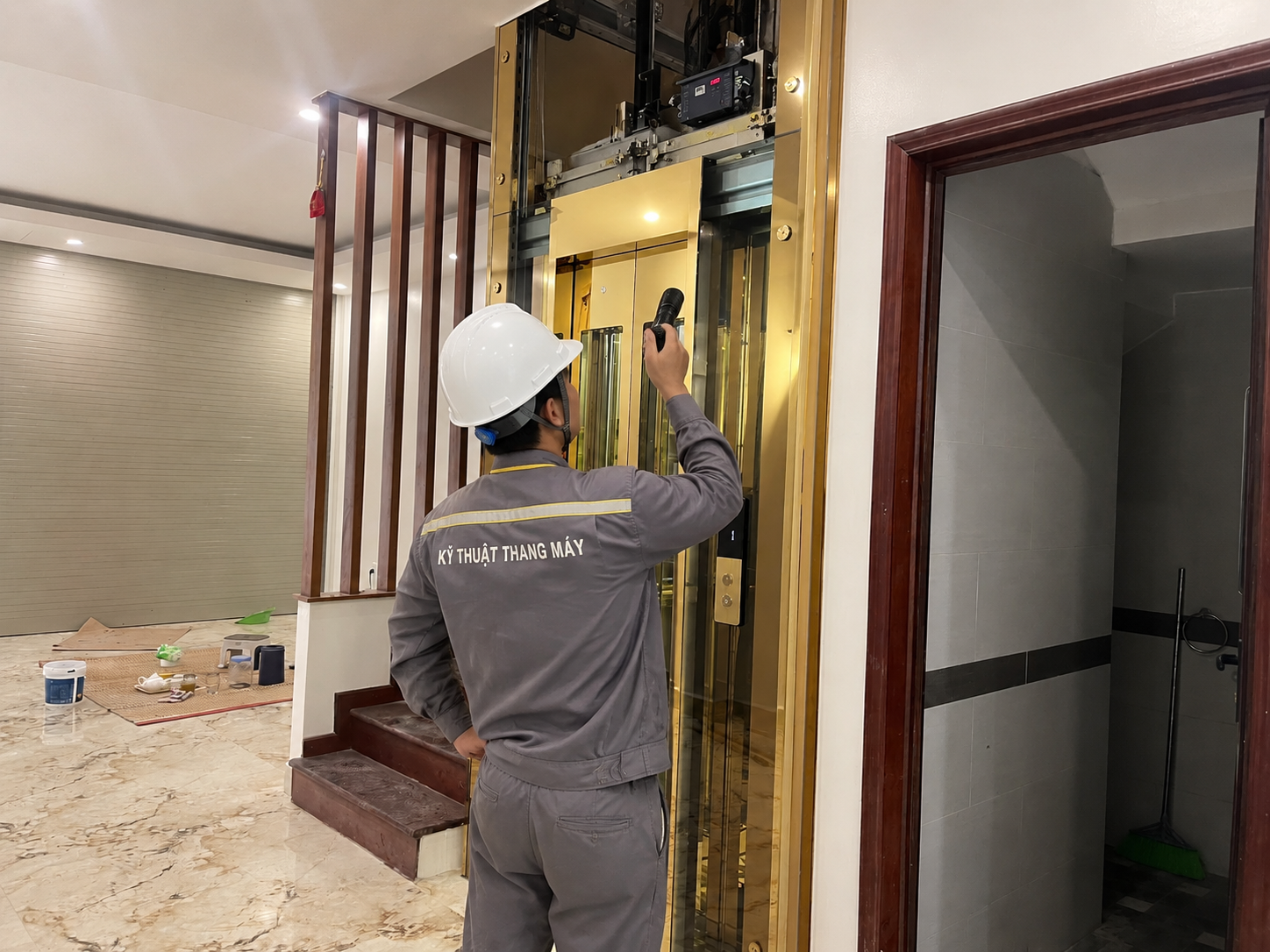
- Pit and machine room requirements: Newly constructed buildings can have pits and machine rooms designed to standard specifications, while renovated buildings need to choose elevator types that require little or no deep pits and machine rooms to save space.
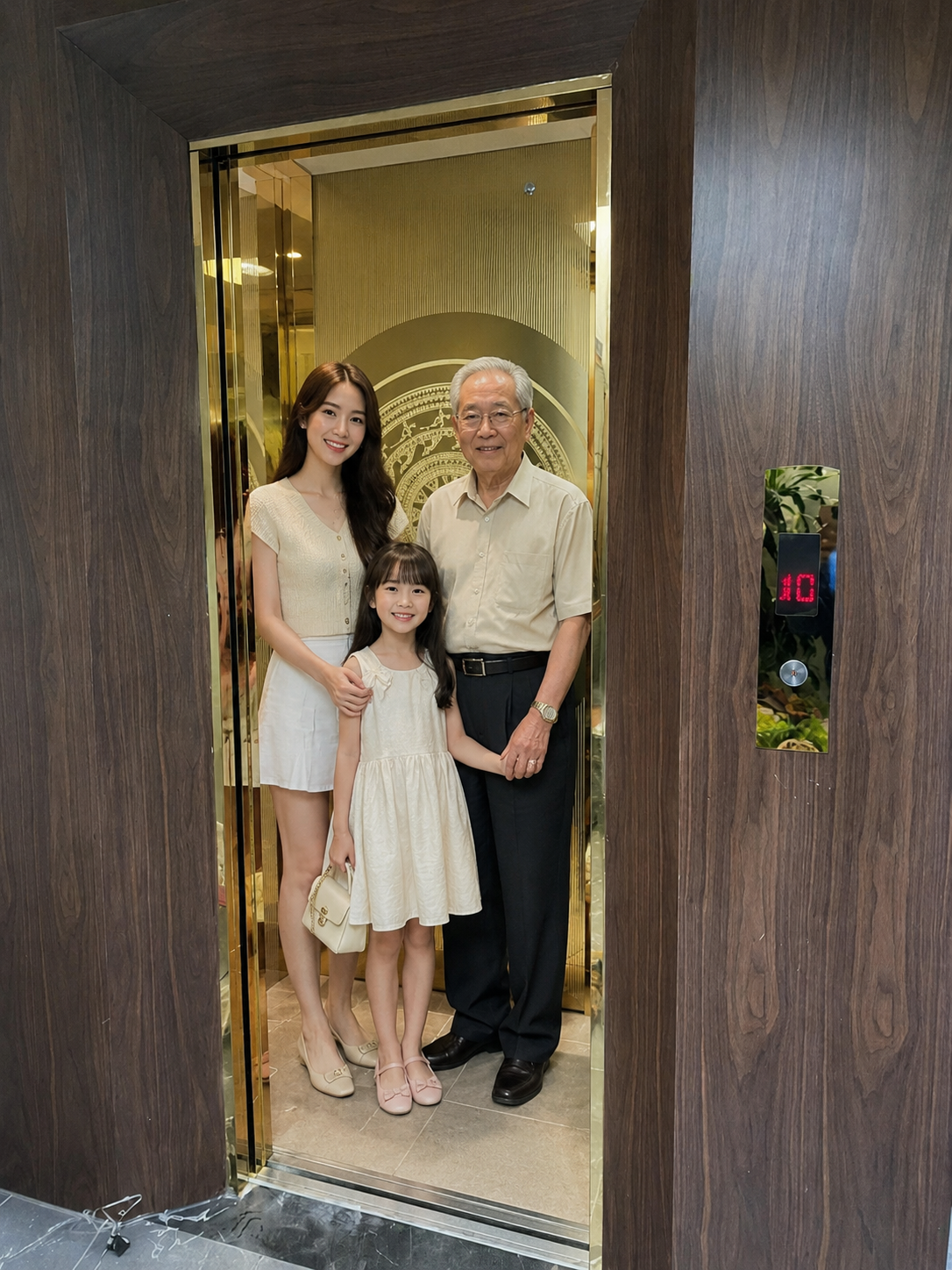
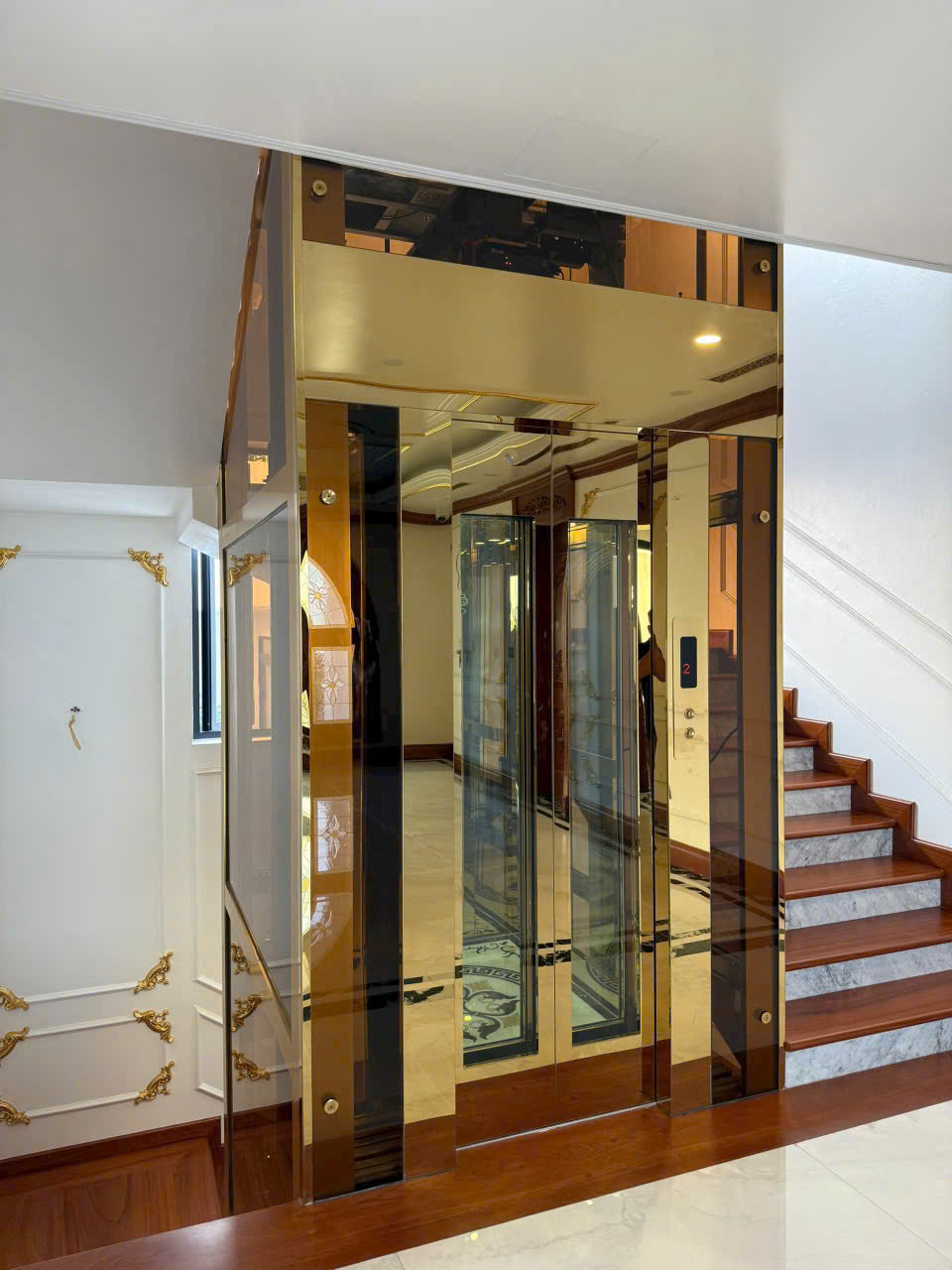
- Cabin design and materials: Elevator cabins can be made from stainless steel, tempered glass, or a combination of both, creating a modern and luxurious look for the interior space.
- Safety features: Features such as door sensors, safety brakes, automatic rescue systems, and backup power supplies are essential to ensure user safety.
Popular home elevator brands in Vietnam
The home elevator market in Vietnam is currently diverse, with many reputable brands catering to needs ranging from budget-friendly to high-end segments.
- HPVIN Elevators: A prominent joint venture brand known for its diverse product range, reasonable prices, and excellent after-sales service. HPVIN offers traditional cable-driven and screw-driven elevators suitable for various types of buildings.
- Mitsubishi: A renowned Japanese brand known for its fully imported elevators, known for their high durability, smooth operation, and integration of many modern technologies.
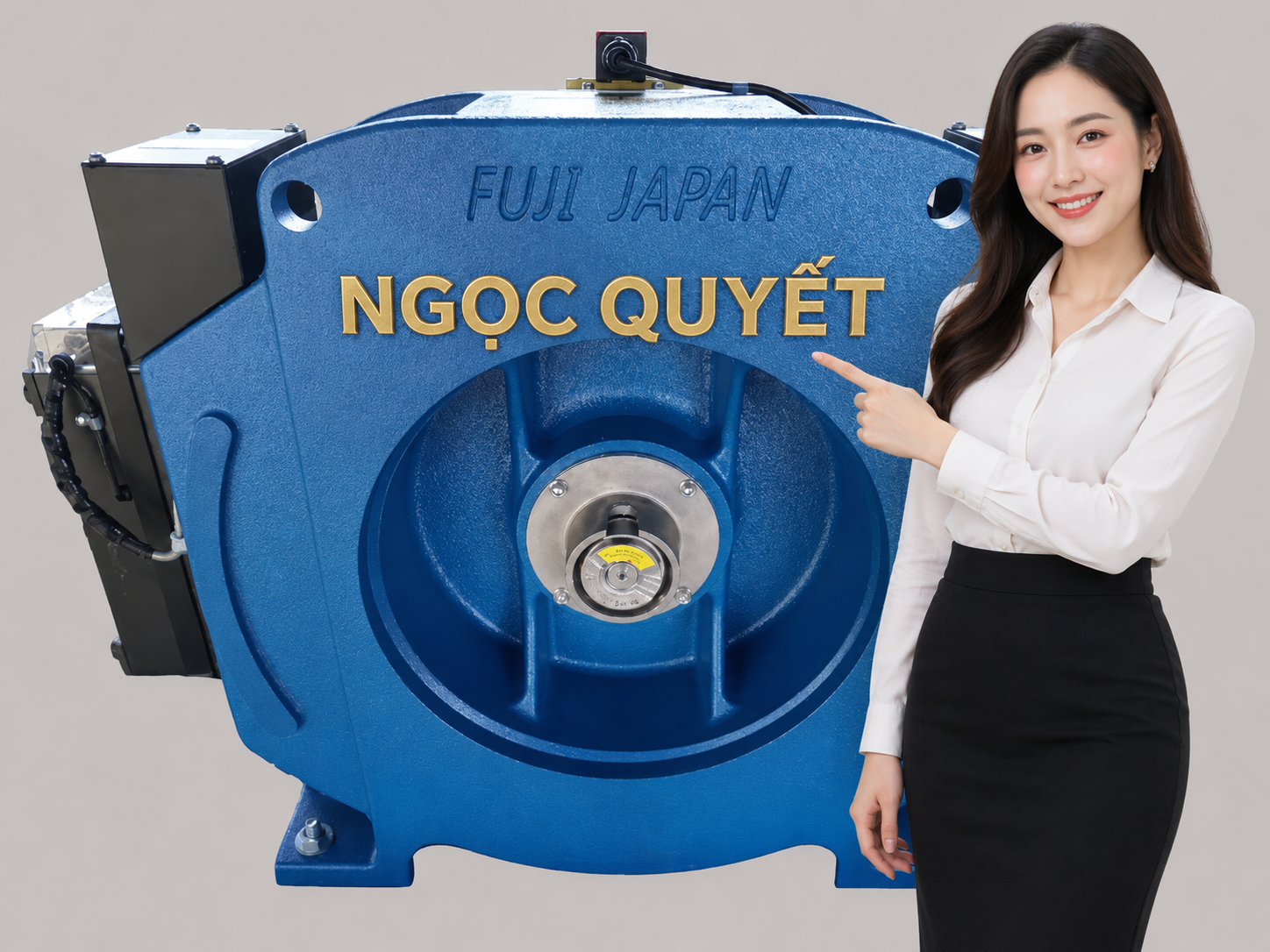
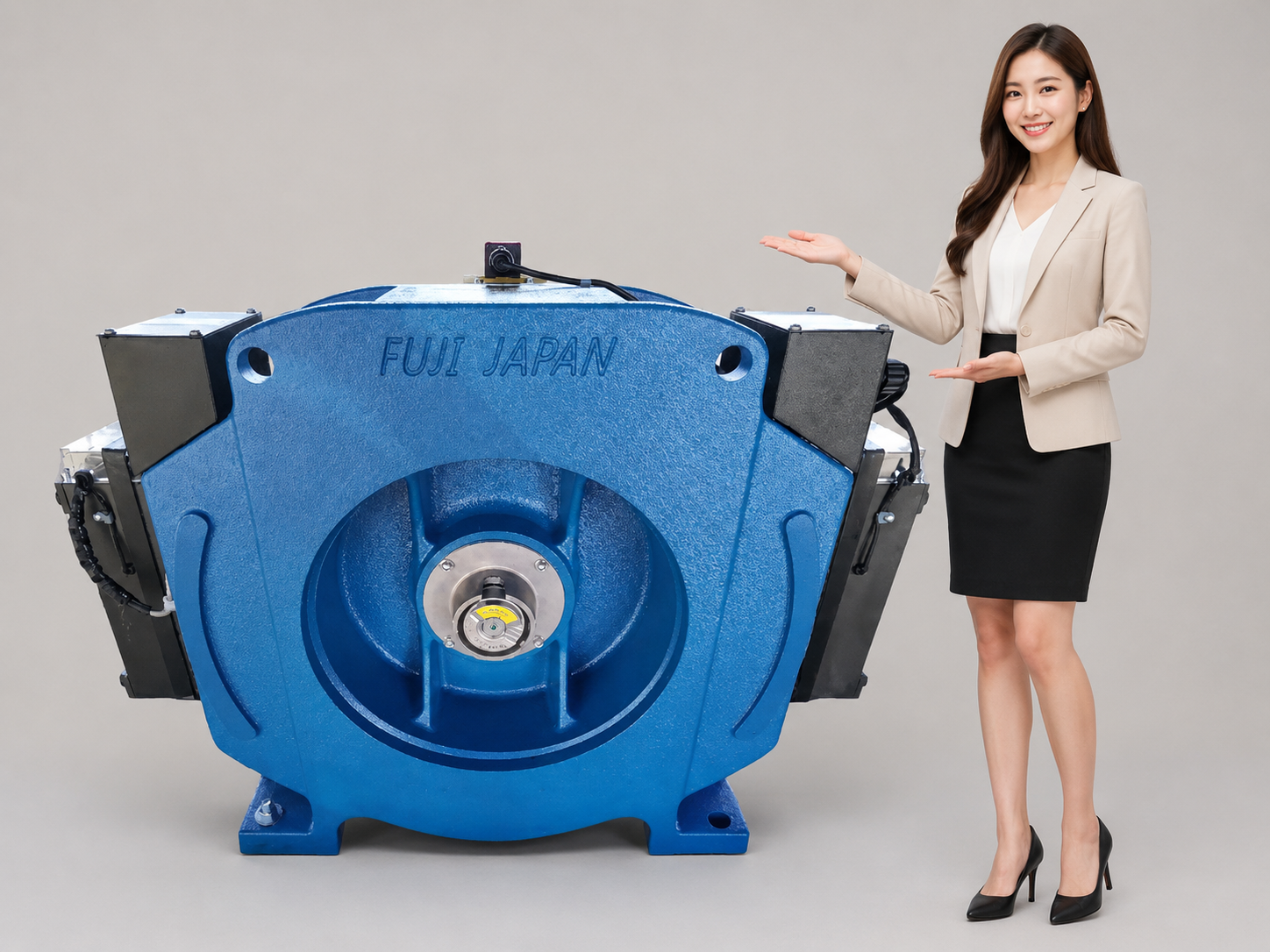
- Fuji: Also a Japanese brand, Fuji offers high-quality elevator products with sophisticated designs and a wide variety of models.
- Cibes and Kalea: Two Swedish brands specializing in machine-roomless screw-driven elevators, suitable for renovation projects and townhouses with limited space.
Each brand has its own unique advantages, so the choice should be carefully considered based on usage needs, budget, and project conditions.