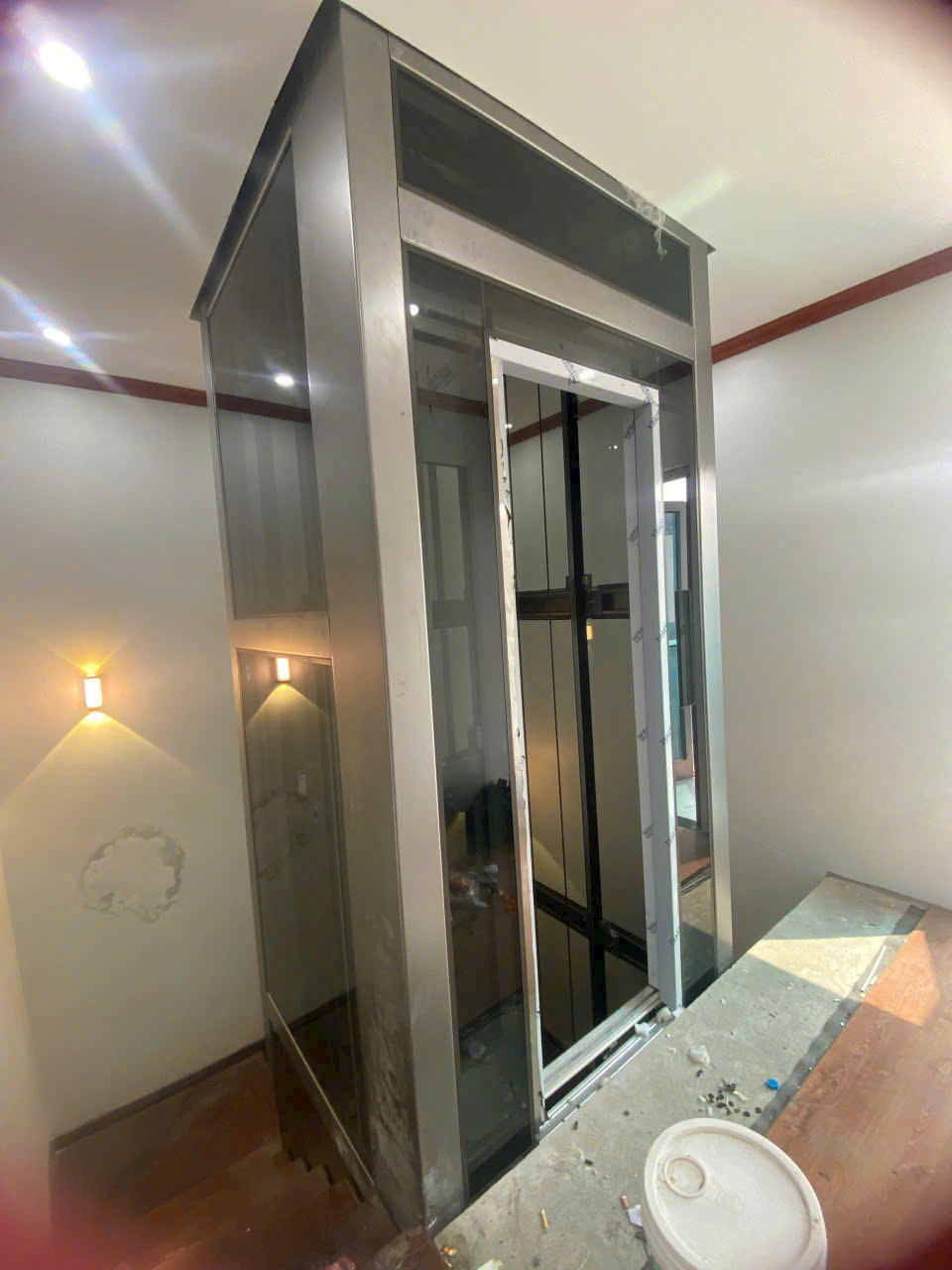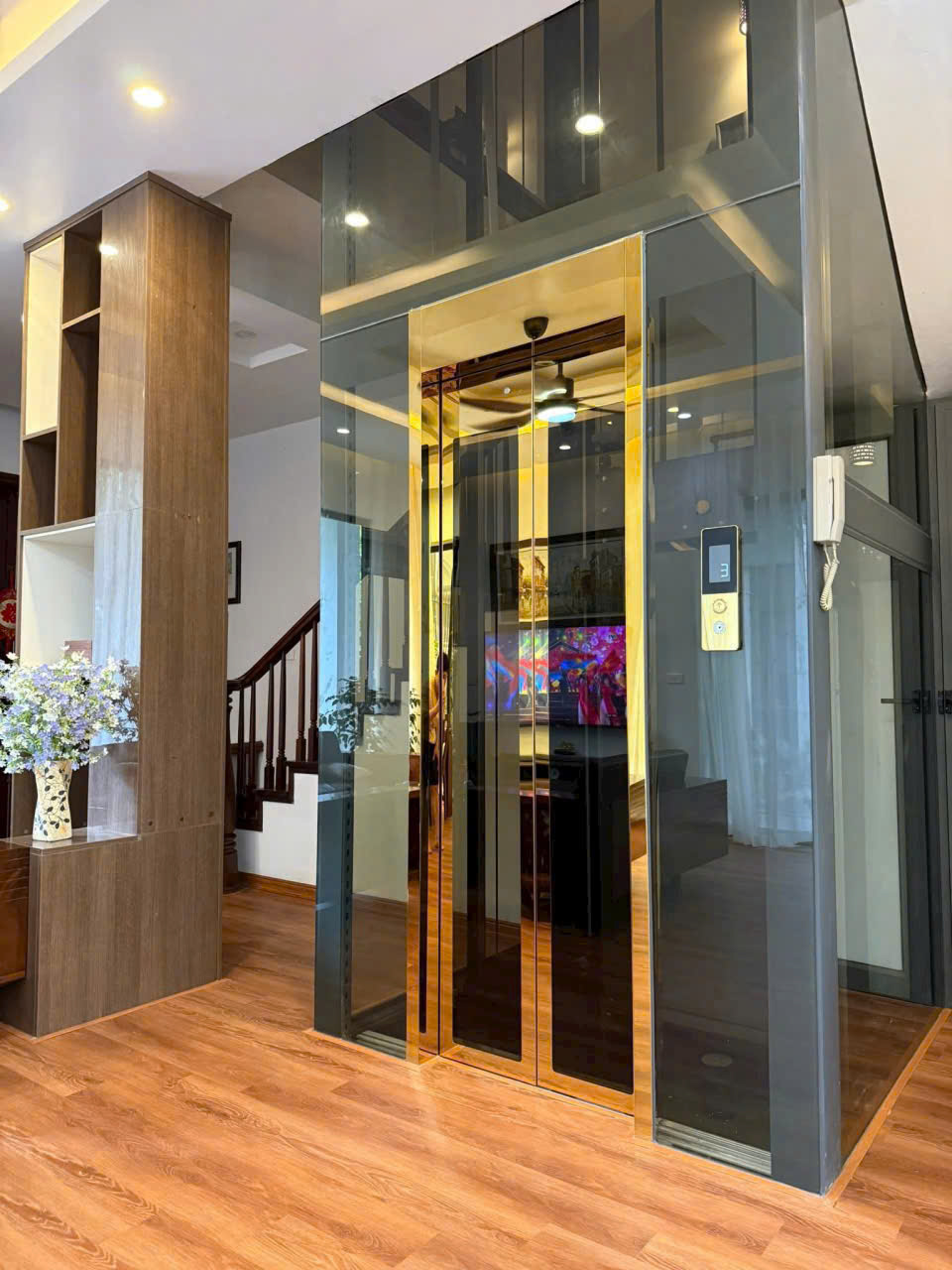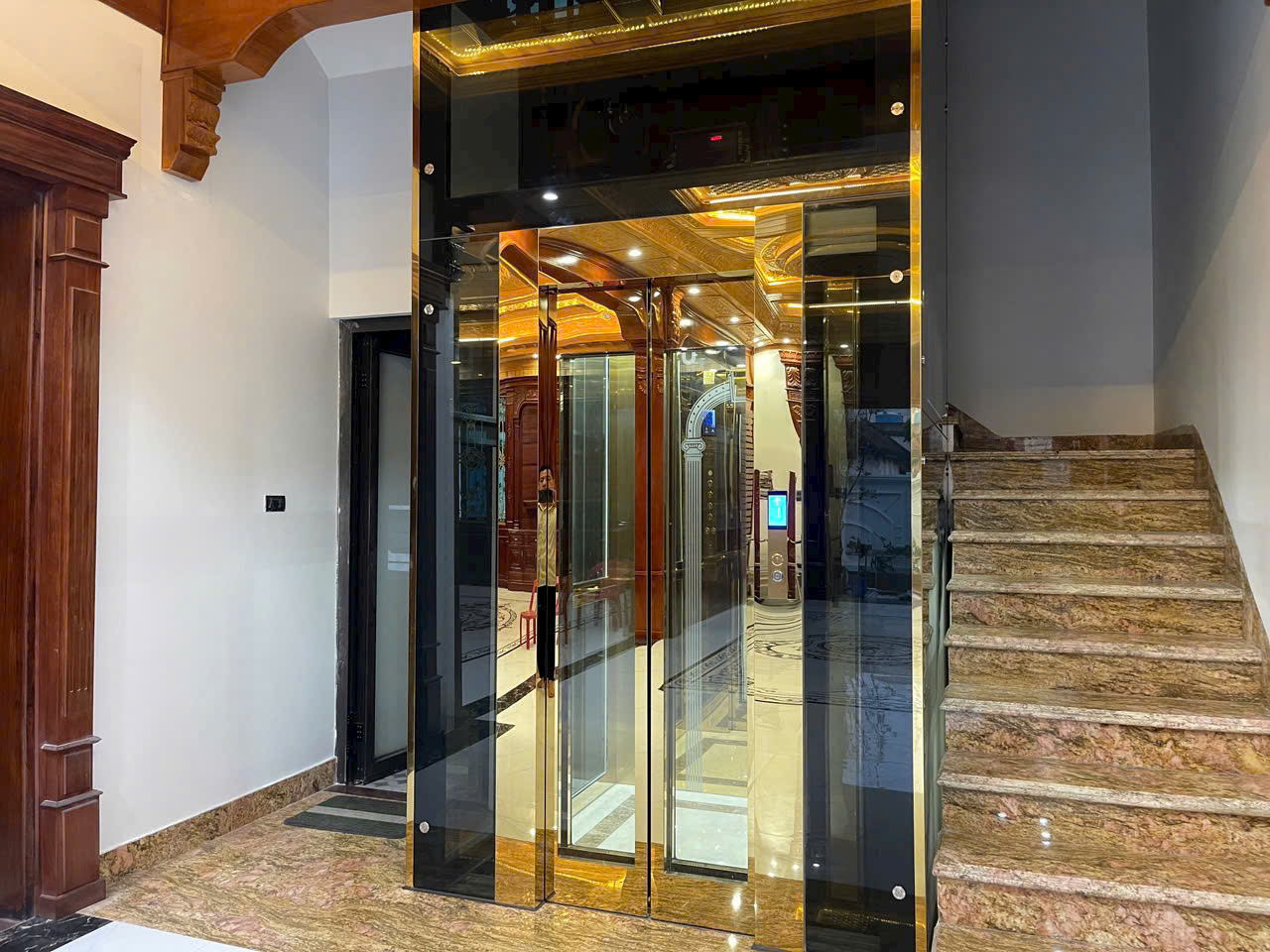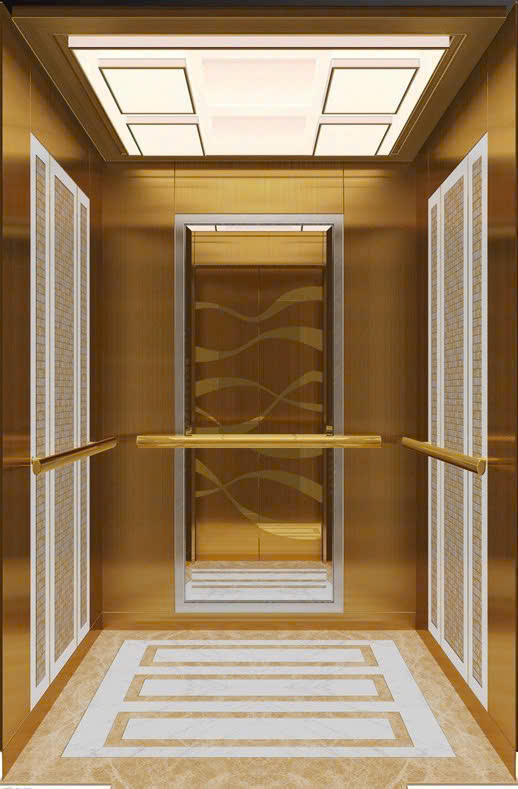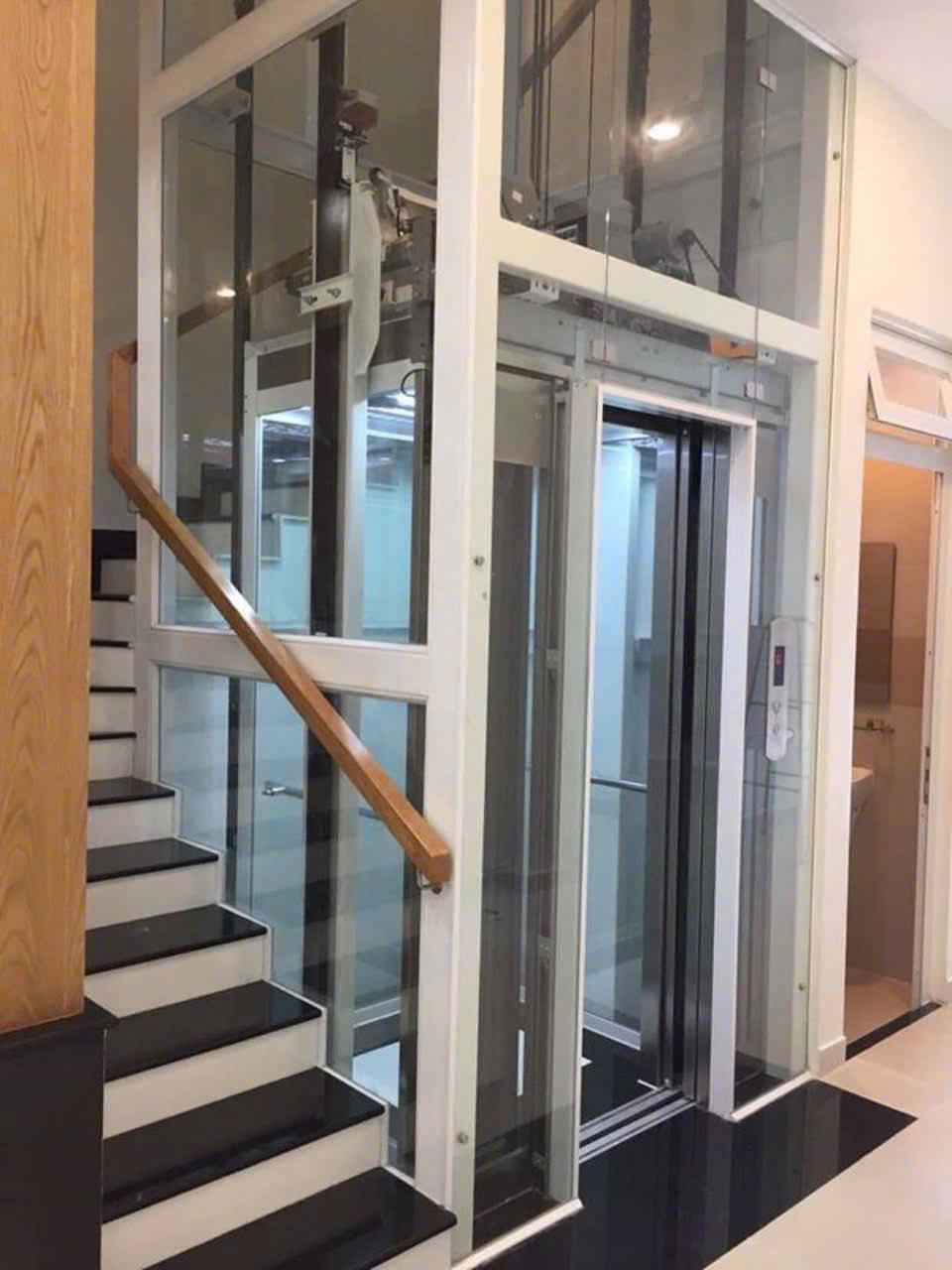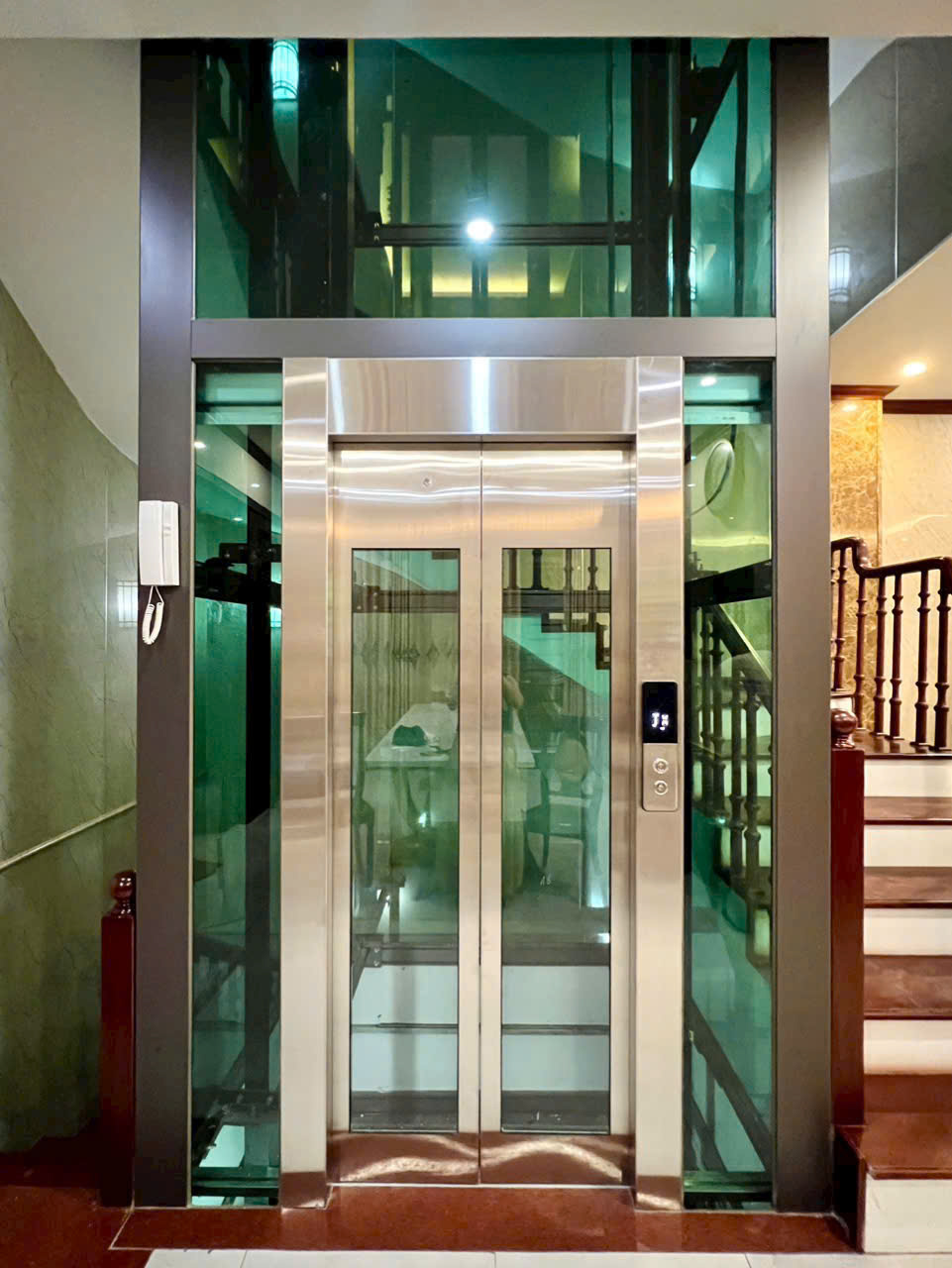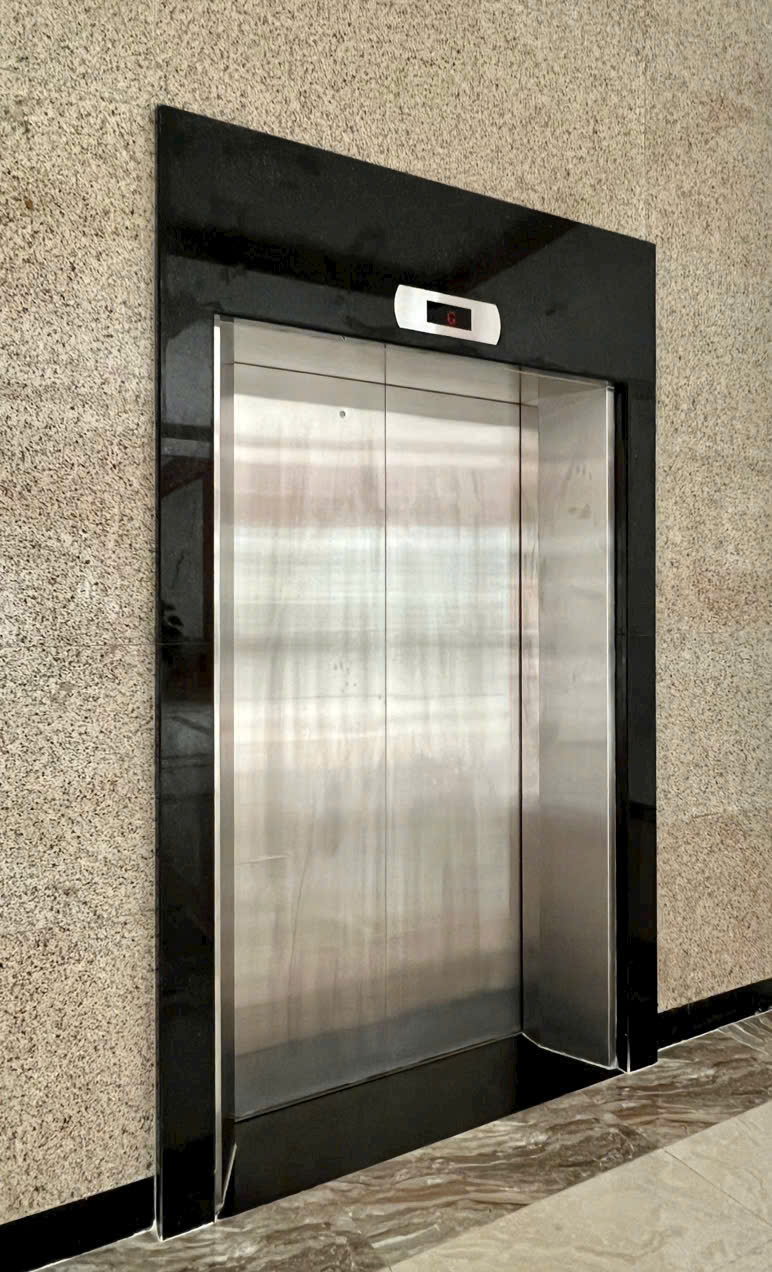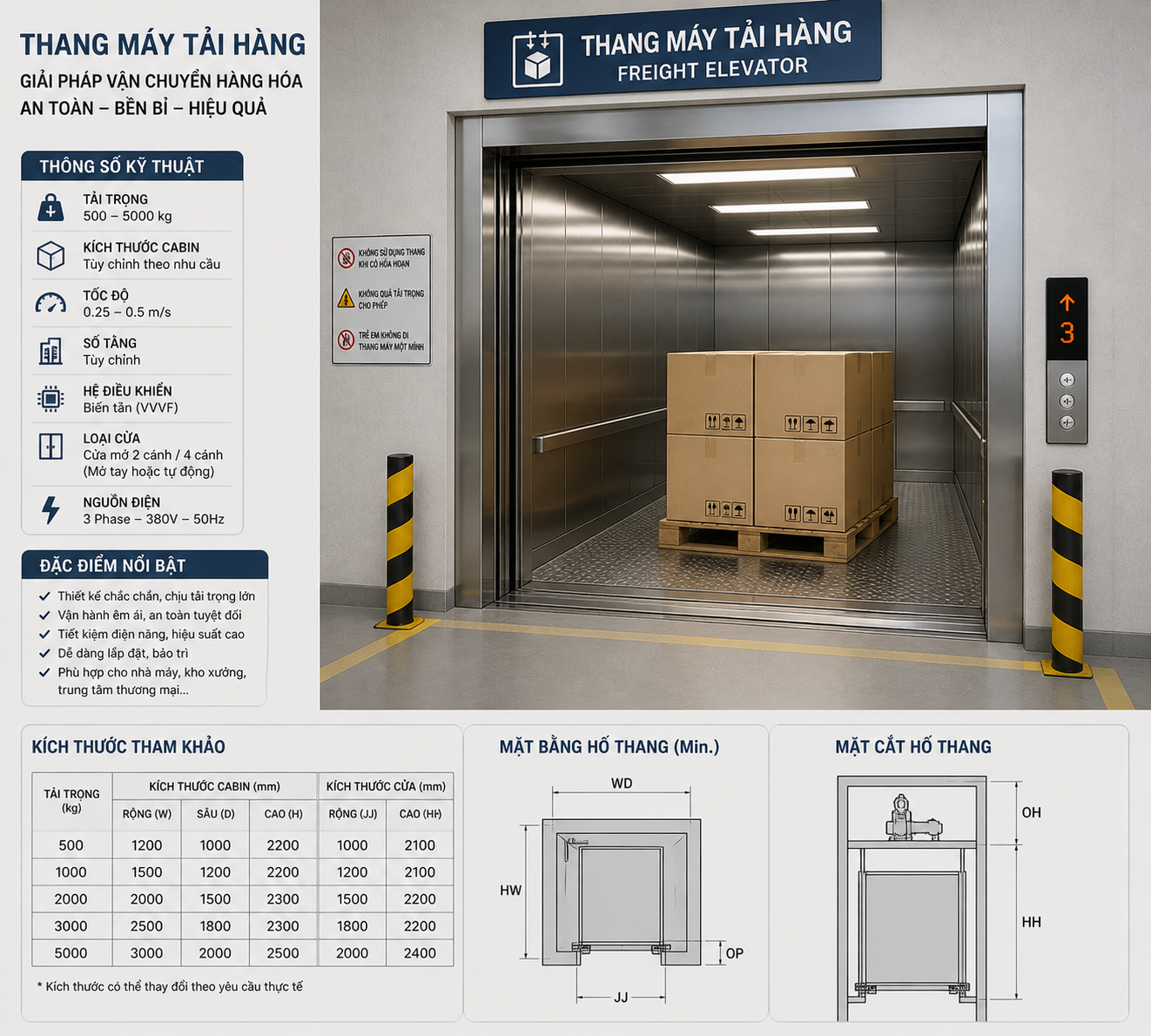


Elevator with a load capacity of 350kg.
Elevator with a load capacity of 350kg.
Concept and scope of application of 350kg capacity elevators.
A 350kg capacity elevator is a small-sized elevator, typically designed for 4-5 people, suitable for family homes, townhouses, villas, offices with limited space, and renovation projects. With a nominal load capacity of 350kg, the elevator effectively meets daily transportation needs, optimizes investment costs, occupies minimal shaft space, while still ensuring safety standards and smooth operation.
In practice, 350kg elevators are often chosen for buildings with heights ranging from 3 to 10 stories, with common travel speeds from 0.6 m/s to 1.0 m/s. This segment strikes a balance between convenience , investment cost , and space-saving construction potential . Compared to larger load capacities such as 450kg or 630kg, 350kg elevators allow for optimized shaft dimensions, reduced load on the building structure, and greater flexibility in existing building renovation plans.
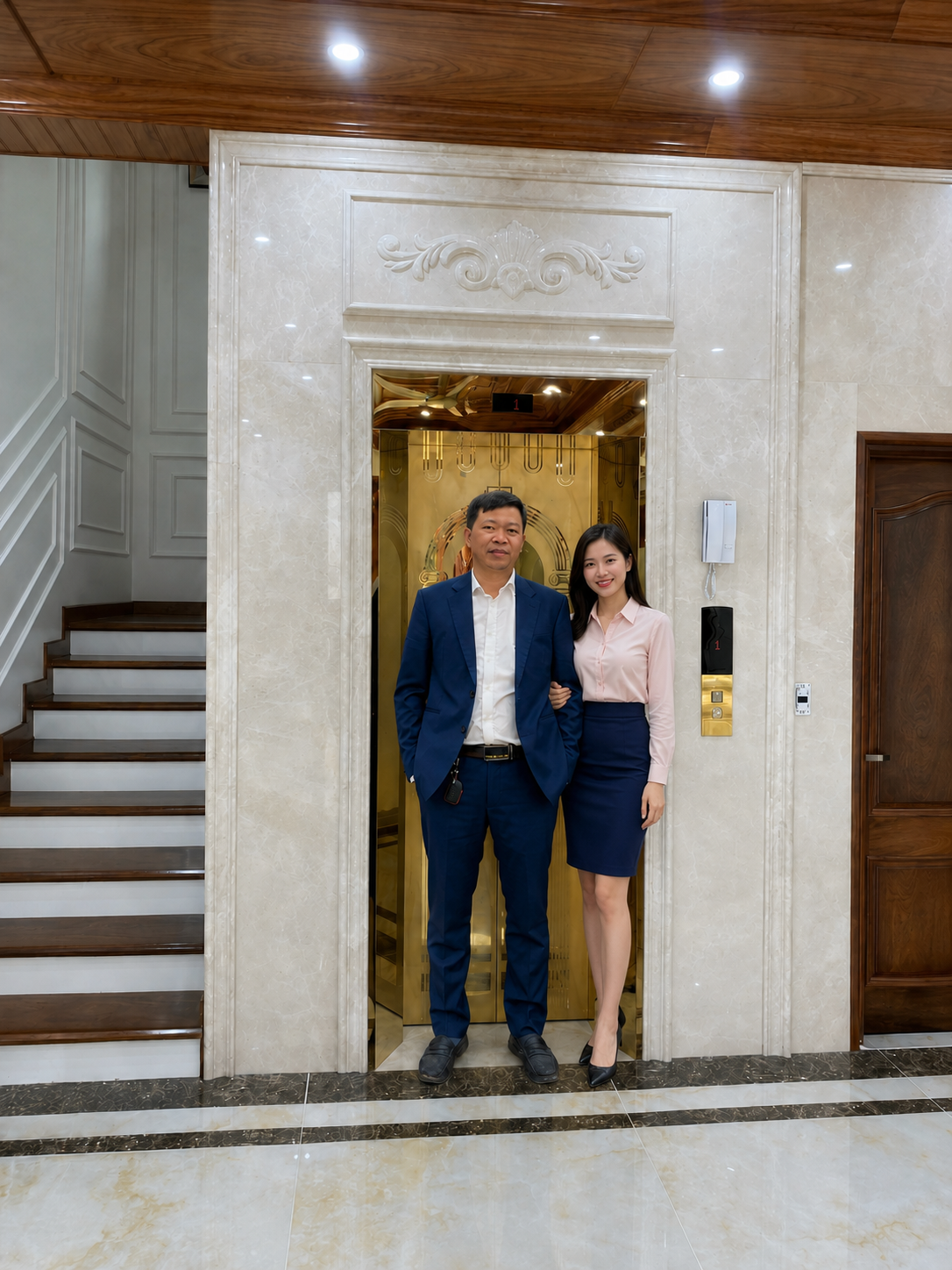
Technical structure and basic specifications of a 350kg elevator.
In terms of construction, 350kg capacity elevators still fully comply with the main components of larger capacity elevators: traction machine, control panel, cabin, counterweight, guide rails, landing door system, safety system, and electrical control equipment. The difference lies in optimizing the size, power, and configuration to suit smaller loads, reducing energy consumption and maintenance costs.
Common specifications for a 350kg capacity elevator include: cabin interior dimensions of approximately 900–1000mm (width) x 1000–1200mm (depth), landing door dimensions of 650–700mm, and shaft dimensions of 1400–1600mm (width) x 1400–1600mm (depth) depending on counterweight configuration. The rated speed is typically 0.6–1.0 m/s, using a 3-phase 380V power supply or a 1-phase 220V power supply for some models using smaller traction motors and dedicated inverters.
Regarding the drive system, 350kg elevators currently mainly use gearless traction machines combined with VVVF inverters , resulting in smooth operation, energy efficiency, and reduced noise. Some renovation projects or special requirements may still use geared traction machines; however, the general trend is towards gearless systems to optimize efficiency and reduce long-term operating costs.
Advanced control and safety systems
The control system of a 350kg capacity elevator typically uses a dedicated microprocessor or PLC, supporting operating modes such as: single floor call, priority floor call, maintenance mode, and automatic rescue mode in case of power failure. The integration of a VVVF inverter allows for smooth speed control, reduces vibration during start-up and stop-down, and extends the mechanical lifespan.
In terms of safety, elevators with a 350kg capacity must still meet standards such as TCVN 6395, EN 81, or equivalent standards. Mandatory safety devices include: overspeed control, safety brake, limit switch, interlocking floor door locks, overload sensor, door sensor (photocell or curtain), automatic rescue system (ARD), emergency alarm, and intercom. These components ensure that the elevator maintains a high level of safety despite its small size and load capacity.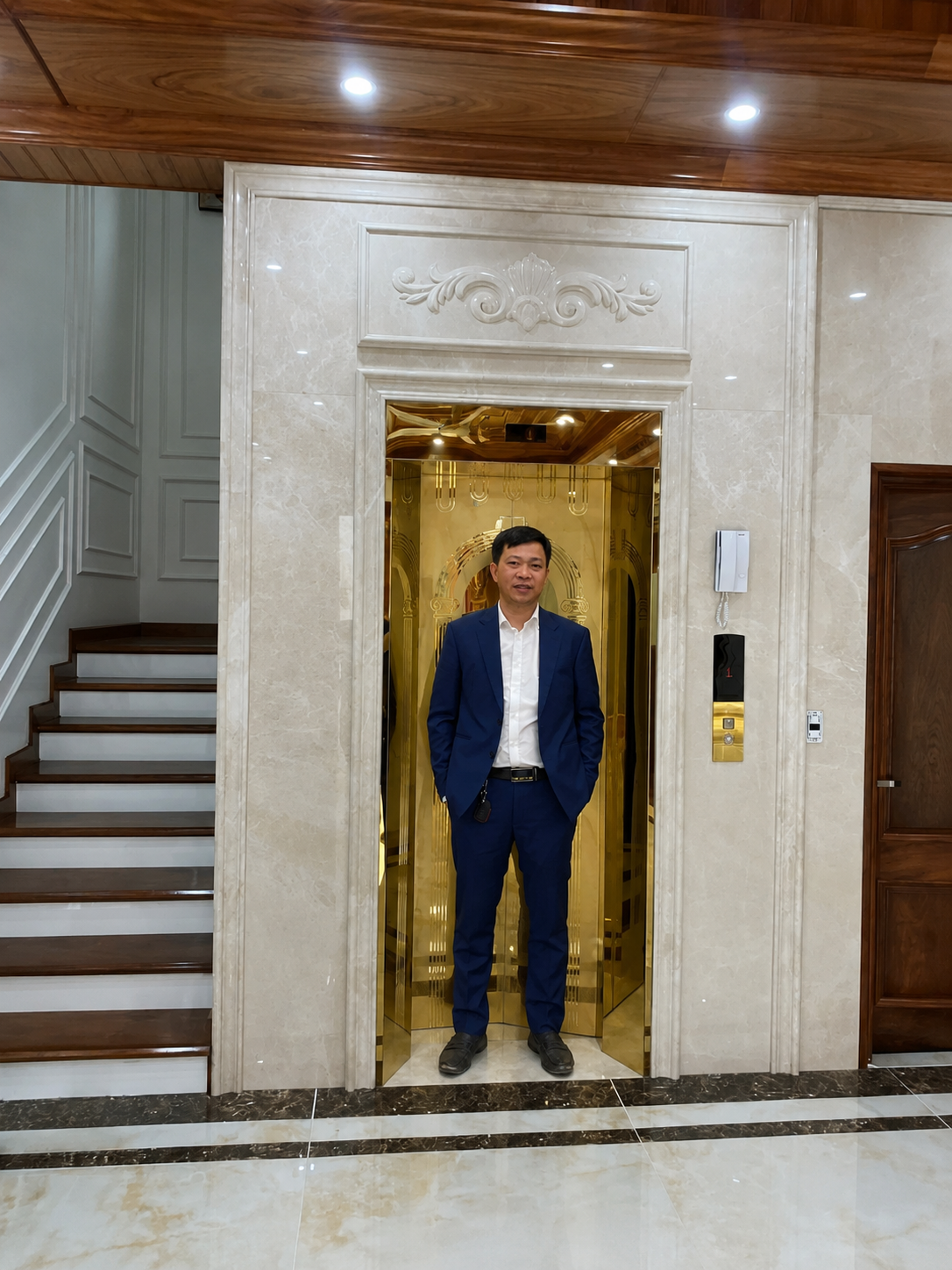
Design, installation, and space optimization solutions.
In design, elevators with a 350kg load capacity are often preferred for buildings with limited space, especially narrow townhouses, terraced houses, or renovated villas. The elevator shaft placement needs careful consideration to avoid impacting the main load-bearing structure while optimizing the functionality of each floor. Common solutions include placing the elevator in the center of the house, next to the staircase, or utilizing the atrium space.
For new constructions, architects can proactively design standard elevator shaft dimensions for a 350kg load capacity from the preliminary design stage, reducing structural and finishing costs. For renovation projects, structural engineers need to conduct detailed surveys and assess the load-bearing capacity of existing beams, floors, and columns. Based on this assessment, they can propose reinforcement options or changes to the elevator shaft's location to avoid excessive intervention that could cause cracks, subsidence, or a decrease in structural integrity.
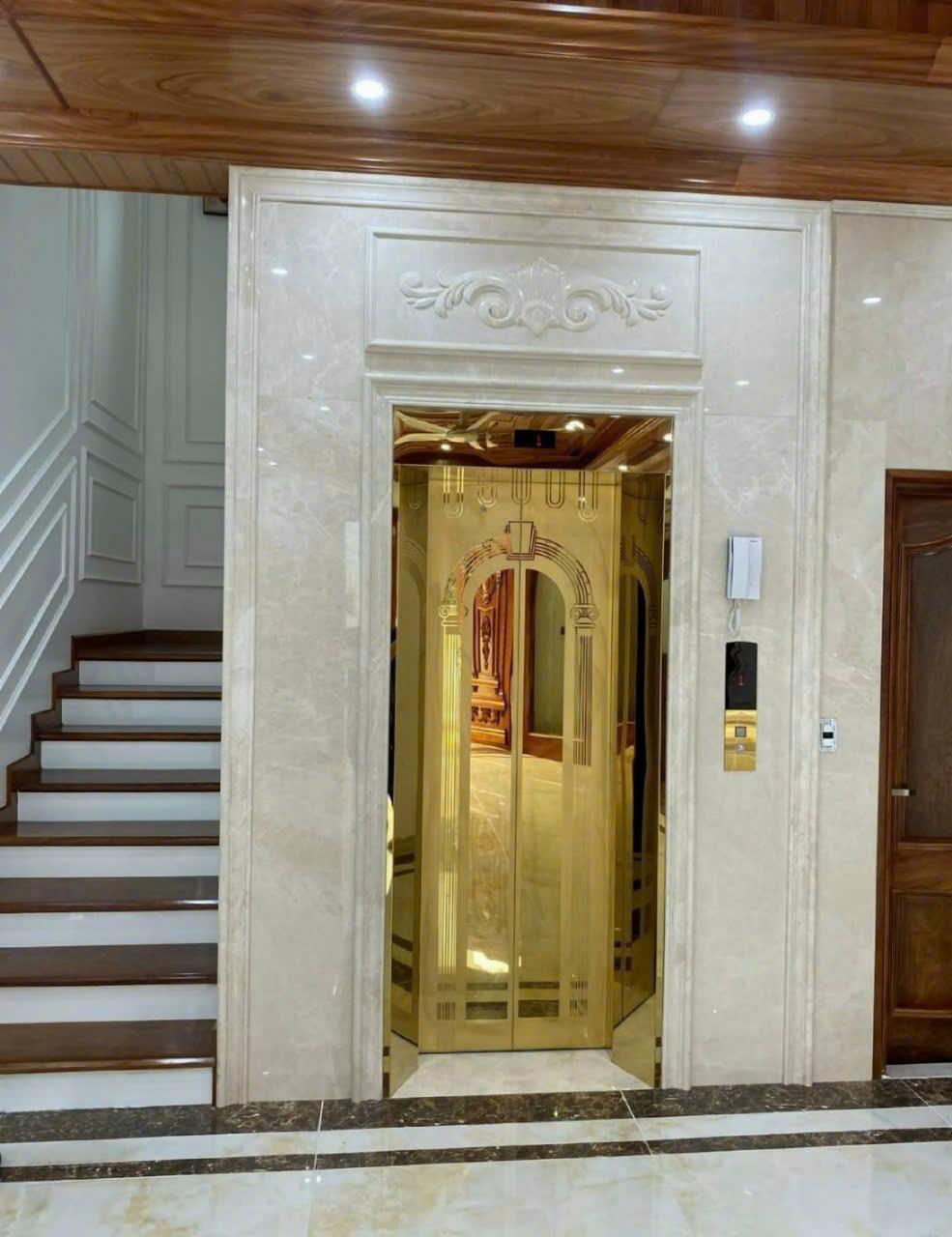
Cabin configuration and material options
350kg capacity elevators allow for diverse configurations to suit various building types. Regarding cabin materials, popular options include: brushed stainless steel, mirror-finish stainless steel, titanium-colored stainless steel, tempered glass, or a combination of materials for aesthetic appeal. Cabin floors are typically made of granite, artificial stone, or specialized anti-slip materials to ensure safety during use.
The cabin lighting system can utilize recessed LED lights, cove lighting, or decorative lights, saving energy while creating a sense of spaciousness in a small space. The cabin control panel (COP) and floor call panel (LOP) can be mechanical, touch-sensitive, or a combination, integrating a display screen showing floor, direction of travel, load, and warning information. For high-end residences, features such as magnetic cards, passcodes, or fingerprints can be added for floor-by-floor access control.
Criteria for selecting a quality elevator with a 350kg load capacity.
When selecting a 350kg elevator, investors need to consider several factors simultaneously: equipment origin, technical standards, supplier reputation, construction capabilities, and maintenance services. Some important criteria include: Certificate of Origin (CO), Certificate of Quality (CQ), safety inspection documents, detailed design drawings, technical specifications, and a clear list of equipment.
The list of priority points may include: energy-efficient gearless traction machines , genuine inverters , control cabinets using common components , European or Japanese standard landing and cabin doors , a stable automatic rescue (ARD) system , a minimum 18–24 month warranty policy , and a clear maintenance contract outlining the frequency and scope of inspections . Thorough evaluation of these factors helps minimize risks during long-term operation.
Investment and operating costs, and new technology trends.
The investment cost for a 350kg capacity elevator depends on the origin of the equipment (imported as a complete unit or joint venture), technical configuration, the level of interior cabin finishing, and construction conditions. Compared to larger capacity elevators, 350kg elevators are generally significantly cheaper due to the use of smaller power traction machines, less material, and simpler shaft construction requirements. However, to ensure safety and durability, core components such as the traction machine, inverter, landing doors, and safety system should not be compromised.
In terms of operating costs, 350kg elevators have a clear advantage due to their smaller motor power, typically only 2.2–3.7kW for household elevators, combined with inverter technology and gearless traction machines to save electricity. Regular maintenance costs are also lower due to the fewer components and smaller load capacity, resulting in reduced mechanical wear. However, adhering to monthly or quarterly maintenance schedules remains mandatory to maintain good technical condition and meet periodic inspection requirements.
New technological trends for 350kg capacity elevators focus on energy-saving solutions , enhanced user experience , and smart connectivity . Some increasingly popular applications include: remote monitoring via the internet, early fault warning, operational history storage, and route optimization based on user habits. In addition, lightweight materials, minimalist cabin designs, high-efficiency LED lighting, and user-friendly control systems are making 350kg elevators a standard choice for modern urban housing.